Saturday, 25 March 2023

Reflections on ... Pearl (2022)


Recently watched: Pearl (2022). Spare a thought for teenage newlywed Pearl (Mia Goth). It’s 1918, the US is plagued by a Spanish influenza epidemic and her husband Howard is away fighting in Europe in World War I, leaving her toiling on the isolated rural farm of her austere German immigrant parents, disabled father (Matthew Sunderland) and sternly disapproving mother (Tandi Wright). Pearl aspires to be a dancer and her sole consolation is going to the cinema. But she also displays hints of madness and a capacity for violence. On the farm, pitchforks and axes are readily available. How can someone so outwardly cherubic be so frightening? 

Pearl lovingly recreates the lush orchestral score and gorgeous faux retro Technicolour (with - inevitably - a focus on the colour red) synonymous with Old Hollywood. Director Ti West stylishly evokes The Wizard of Oz, Psycho and hagsploitation classics What Ever Happened to Baby Jane? and What’s the Matter with Helen? (Pearl is a prequel to West’s excellent earlier film X (2022), but you don’t have to have already watched X to appreciate Pearl. In fact, it might be interesting to watch Pearl before watching X!). 

And boy does Pearl cement angel-faced Mia Goth as a megastar. I venerate her as the Barbara Steele de nos jours. (Or as The Guardian’s savvy critic Peter Bradshaw declares, “Goth is now the Judy Garland of horror”). She also possesses the gawky, pop-eyed charm of Shelley Duvall in films like Thieves Like Us (1974) and The Shining (1980). Her performance here equals Toni Collette’s in Hereditary (2018). (And like Collette's you'll wonder how this didn't get Oscar nominated). Goth has two particularly remarkable moments (these aren’t spoilers!). When Pearl’s well-intentioned sister-in-law Mitsy (Emma Jenkins-Purro) unwisely encourages Pearl to unburden herself and tell her what she’d confide to Howard if she could, it unleashes a torrential soliloquy of pain, self-loathing and alienation – which gradually becomes a serial killer’s lament. Later, in extreme close-up Goth maintains a deranged frozen rictus grin until her eyes well with tears, her lips quiver and a vein in her temple visibly throbs. The concluding macabre feast of suckling pig will haunt you forever. Pearl is a modern horror masterpiece!


/ Mia Goth snapped at the premiere of Pearl at the 2022 Toronto International Film Festival /

Saturday, 18 March 2023

Reflections on ... The Horror Show! Exhibit at Somerset House


/ The entrance to the exhibit at Somerset House suggested a gaping demonic mouth. Come on in! All photos by me unless stated otherwise! / 

As every UK resident knows, contemporary Britain is a total hellscape. The recently closed exhibit The Horror Show! A Twisted Tale of Modern Britain (27 October 2022 – 19 February 2023, co-curated by the duo of Iain Forsyth and Jane Pollard and Claire Catterall) embraced that concept and ran with it! 

From the Somerset House website: 

The Horror Show! is a landmark exhibition that invites visitors to journey to the underbelly of Britain’s cultural psyche and look beyond horror as a genre, instead taking it as a reaction to our most troubling times. Featuring over 200 artworks and culturally significant artefacts from some of our country’s most provocative artists, the exhibition presents an alternative perspective on the last five decades of modern British history in three acts – Monster, Ghost and Witch. Recast as a story of cultural shapeshifting, each section interprets a specific era through the lens of a classic horror archetype with thematically linked contemporaneous and new works.  

The exhibition offers a heady ride through the disruption of 1970s punk to the revolutionary potential of modern witchcraft, showing how the anarchic alchemy of horror – its subversion, transgression and the supernatural – can help make sense of the world around us. Horror not only allows us to express our deepest fears; it gives a powerful voice to the marginalised and society’s outliers, providing us with tools to overcome our anxieties and imagine a radically different future.” 


/ Pal and I at The Horror Show! /

Anyway, the exhibit was a dense, swirling nightmarish swoon that cast a spell on me. As The Guardian’s art critic Jonathon Jones concluded, The Horror Show! was a “witch’s cauldron of an exhibition”, continuing, “There is another Britain, this exhibition convinces you, that exists only as a web of imagination, a phantom realm that defies the reality of the everyday like a ghost channel taking over your TV.” 

The Horror Show! was split into three themes: Monster, Ghost and Witch. Each section had its own unsettling “theme tune” / soundscape, designed to induce maximum dread: “Bela Lugosi’s Dead” by Bauahaus (Monster), “On the Wrong Side of Relaxation” by Barry Adamson featuring the panicked whispers and wails of Diamanda Galas (Ghost) and finally, Mica Levi’s “Lipstick to the Void” from the Under the Skin (2013) soundtrack (Witch).

 My personal highlights: 

The Horror Show! pretty much incorporated all my favourite people and cultural movements (Siouxsie, Jordan, Leigh Bowery, Public Image Limited, Princess Julia, horror movies, punk music) so it was virtually impossible for me not to be enthralled. 

Any time I see old Vivienne Westwood /Malcolm McLaren punk apparel from their SEX boutique in an exhibit, it's like witnessing sacred religious artifacts! 

Sue Webster's customized Siouxsie black leather biker jacket (above. Via). 

“Return of the Repressed3” by Jake and Dinos Chapman 

I could have watched the seemingly endless loop of clubbers arriving at club night Kinky Gerlinky from beginning to end. My boyfriend Pal used to be a Kinky Gerlinky regular, and I was hoping he might appear! He didn’t but I did ask him to describe the wildest outfit he ever wore to Kinky Gerlinky. Totally blasé, Pal recalled, "Oh, one time I dressed as a zebra. Another time, a friend's sister was pregnant, so I made a mould of her tits and pregnant belly and then covered it in flesh-coloured rubber and turned it into a bodysuit and added a wig to the crotch, so it looked like wild pubic hair ..." (That sounds almost like Silence of the Lambs!). 

The footage of members of the public responding to drag terrorist / performance artist Leigh Bowery displaying himself as an exhibit at the Anthony D'Offay Gallery in in 1988 (including some famous people like bad boy of dance Michael Clarke and Brix Smith of The Fall). 

Loved seeing the giant portrait of a pouty young Princess Julia (middle) by Derek Ridgers projected on the wall. 


/ One of Leigh Bowery's costumes /


/ Exterminating Angel by Pam Hogg  /

The whole video installation room devoted to the infamous BBC 1992 broadcast of Ghostwatch, complimented with disturbing music clips from 1990s acts like Prodigy, Portishead, Tricky and Aphex Twin. (The day Pal and I visited, there was a surprising amount of children present in what was most definitely a not “child friendly” exhibit. I truly hope the Ghostwatch room gave them nightmares!). 

Kerry Stewart’s “The Boy from the Chemist is Here to See You” (1993) (Above). 

The Witch room made me reflect on what a totemic film The Wicker Man (1973) is in British culture. In the early seventies it flopped big time and was little seen, and yet The Wicker Man went on to have so much influence, open a whole can of worms and invent "rustic horror" as a genre. Also represented: Nicholas Roeg’s Don’t Look Now (1973) and The Witches (1990). The spiked “self-flagellation” / punishment shoes from Saint Maud (2019). (If you haven’t seen Saint Maud, it’s the most significant British psychological horror film of recent times). The bridle scold from She Will (2021). The oeuvre of maverick British director Ben Wheatley. 

Cathy Ward’s corn husk dolls entitled "Home Rites" (2009) (pictured above) were very Blair Witch Project. 


/ Puppet from the 2018 British horror film Possum / 

And I loved that the finale was a darkened red-lit “decompression room” but rather than offer any consolation, it was a disturbing experience eerily soundtracked by “We Wax. We Shall Not Wane” by Gazelle Twin, featuring actress Maxine Peake channeling the tortured psyches of women accused of witchcraft!   


/ Above: Pal and I at The Horror Show! /

Honourable mentions: Juno Calypso. Helen Chadwick. Gavin Turk’s self-portrait as Sid Vicious. Jamie Reid. Rachel Whiteread. Derek Jarman.  

This is a pretty superficial trawl through a fascinating exhibit! I wish I'd taken more photos. (I tried to go back again before The Horror Show! closed, but it didn't work out). 

Further reading:

The analysis by Jonathan Jones in The Guardian. 

My friend from New York, gal-about-town Emily Colucci swept through London earlier this year and visited the Horror Show! while she was in town. Read her in-depth and perceptive account in the essential Filthy Dreams blog. 


Monday, 6 March 2023

Reflections on ... Mae West: Dirty Blonde (2020)


/ Mae West in 1928 when she was appearing in her play Diamond Lil (which she later adapted for the screen as She Done Him Wrong (1933)) / 

Recently watched: the 2020 documentary Mae West: Dirty Blonde, a breezy, stylish and concise (only 52-minutes) valentine to cinema’s high empress of sex. Among the hipper than usual talking heads:  Dita Von Teese, Lady Bunny, Natasha Lyonne, Candace Bergen, gossip columnist Rona Barrett, Sex and the City’s Mario Cantone and the late Andre Leon Talley (who disappoints by lamely suggesting West foreshadowed “women who dare to be sexy” like Cher, Madonna, Rhianna and Beyonce. Let’s be grateful he didn’t include a Kardashian), plus film historians Jeanine Basinger and Molly Haskell. (And Bette Midler is an executive producer). 

/ Portrait of  Mae West by George Hoyningen-Huene, 1933 /

As Dirty Blonde underlines, West was already 40 years old when she made her film debut in Night After Night (1932). By the time she arrived in Hollywood the Brooklyn-born daughter of a bare-knuckle prizefighter and corset model turned vaudeville performer turned censor-baiting playwright (one review of West’s scandalous 1926 play Sex wails that it’s “a monstrosity plucked from garbage can, destined for sewer!”) had already amassed over three decades of show biz experience. This gave West the confidence to demand creative autonomy from Paramount, and her first starring vehicle She Done Him Wrong (1933) was such a smash it saved the studio from the brink of bankruptcy.

/ Mae West when she appeared on The Red Skelton Show on 1 March 1960 /

You can’t help but get the impression directors Sally Rosenthal and Julia Marchesi (understandably) yearn to hail the tough, independent West as a protofeminist, but she resists that interpretation. (They include audio of West explaining to an interviewer she’s always preferred male company and finds other women hard to relate to).


/ West with young male starlet Tom Selleck in 1970 when they both appeared in the film Myra Breckenridge /

Highlights: Dirty Blonde nicely scrutinizes the complicated depiction of Black maids in West’s 1930s films. While Talley notes that they are kindred spirits and co-conspirators who joke with West and have romantic lives of their own, someone else argues these characters speak in a “Hollywood version of Black vernacular” and Mel Watkins asserts there’s nothing to indicate West supported the civil rights movement in the sixties. But then West fought to have Duke Ellington cast in Belle of the Nineties (1934) and – although not mentioned – it’s widely understood West enjoyed interracial sex relationships long before they were deemed acceptable. And the doc also makes you reappraise West’s reviled later films Myra Breckenridge (1970) and Sextette (1978), asking the viewer why we are so horrified by West still flaunting her sexual appetites into old age. As Basinger claims, “There’s a wonderful courage and defiance” to West’s sheer stubbornness in taking what she had in the 1930s and trying to make it work in the 1970s.  Finally, Dirty Blonde frames West’s long-term relationship with bodybuilder Paul Novak as the great love of her life. (Novak met West when he was one of the oiled muscle men in her Las Vegas revue in the early 1950s and stayed loyal right up to her death in 1980). I watched Dirty Blonde on the streaming platform NOW TV. 


/ Mae West and Paul Novak in the early 1950s / 

Saturday, 4 March 2023

Dolly Parton’s Southern Style Perfectly Moist Banana Flavoured Cake Mix – Part Deux!


In February our much-missed ex-pat friend Louise (aka “Weezie”) blew into London from her adopted home of Galloway, Ohio for a whirlwind visit. As you may recall, for Christmas 2022 Weezie posted me two packs of Dolly Parton’s illicit Southern Style Perfectly Moist Banana Flavoured Cake Mix (accompanied by two tubs of her buttercream frosting). I say “illicit” because Duncan Hines has licensed the whole Dolly Parton baking range for US consumption only – none of it is available in UK grocery stores and non-Americans are blocked from buying it online! I whipped up one of the two banana cake mixes in January, and it was a fluffy light-as-air triumph – exactly the kind of cake a 1970s hostess would produce with a flourish after a dinner party! 

So the day before Weezie arrived to spend the weekend with us, I baked the second cake mix. And this time it was bumpier! I made the cake mix the same as before, using the same cake tins, etc. In the oven, they rose a bit as they baked - and one pan began pumping batter down the sides of the parchment paper onto the baking tray below (which of course began burning). I didn’t “overload” it – both pans were evenly distributed. I'd say about 30% of the cake mix pooled down there and there was nothing I could do to stop it. A total mess! I wondered how much "cake" would be left? Damn, I thought - Dolly Parton has REALLY let me down this time! 


/ Seriously ... what the hell?! / 

But … despite that, after they cooled, and I turned the layers out of the pans … they came out pretty damn perfect. In fact, one layer being slightly smaller made the resulting finished cake more symmetrical when I assembled and frosted it, and the results were prettier than in January. Apologies, Dolly – I’ll never doubt you again!


Postscript: Weezie herself doesn’t possess a “sweet tooth” and doesn’t actually like cake! So, she just sampled a sliver! And she brought with her a treasure trove: two more packs of the banana cake mix AND two of the coconut version! (Plus, more buttercream icing). I’ll let you know when I make the still-untried coconut mix.

/ Weezie and I at The Glory in Haggerston on 26 February 2023 /

Thursday, 2 March 2023

World Book Day 2023!


“Liz Renay is a most unusual woman with a most unusual past. A prominent author recently said, “I looked into her eyes, and they held me, and they haunt me now for in them I saw two thousand years of living!” 

She began as a smalltown girl in Mesa, Arizona as a sibling in a family of religious zealots. Then World War II came and she became a “V-girl”, attracting servicemen with her beautiful face and large breasts.

Thus began the “two thousand years of living” that took her into the world of high fashion models and 52nd Street strippers. The quaint pranks of fate led her into the underworld, and she became known as a Mafia moll, trusted and respected. 

To escape from the world of crime, she went to Hollywood, where she became known as “Mickey Cohen’s girl.” 

She had already won a Marilyn Monroe lookalike contest. Cecil B DeMille was enthralled with her. Opportunities were opening up everywhere. 

Meanwhile, her paintings were selling for as much as $5,000 each. Her poetry was recorded and broadcast. 

And then came 13 Grand Jury appearances and screaming front page headlines. (On one day, nothing but her face and a headline about her filled the front pages of two daily newspapers in New York City on the same day). 

True to the people who trusted and protected her, she refused to cooperate with the efforts to put a gangster behind bars. She was tried and found guilty of perjury. 

Three years in a woman’s prison. Six marriages. More narrow escapes than Hairbreath Harry. And more love relationships than any six swingers of our time can boast of combined. 

And this is only part of the Liz Renay story. Told in her own words and with a candor and honesty unusual in autobiography. (But this still glamorous beauty is an unusual person!). 

My Face for the World to See is her story in her words – without the benefit of ghostwriters and professionals. It is compelling to read and memorable to have read!” 

To commemorate World Book Day (2 March 2023): the blurb from Liz Renay’s 1971 memoirs My Face for the World to See, which I’m currently reading. Her writing style can best be summarized as “chatty.” It really does read like a tipsy, garrulous woman at a cocktail lounge decided to sit next to you and start regaling you with her life story!


Wednesday, 22 February 2023

Next Lobotomy Room Film Club: The Star (1952) on 16 March 2023


/ “Never has the Hollywood story been told so frankly … so boldly … so completely! Here is every woman who ever climbed the stairway to the stars – only to find herself at the bottom, looking up!” /


/ “She fought for the power to stay on top … and almost lost the privilege and glory of being a woman!” Bette Davis and Sterling Hayden in The Star (1952) /

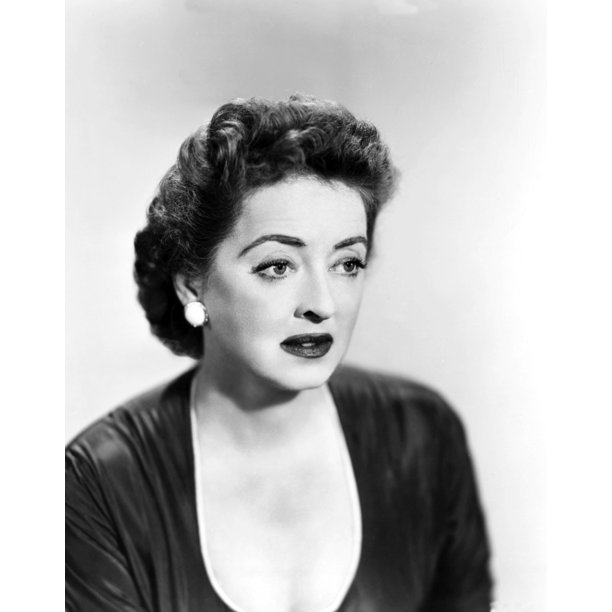
To commemorate “Oscar season” (full disclosure: we don’t actually care or pay attention to the Academy Awards!), on 16 March the free monthly Lobotomy Room film club presents The Star (1952)! Featuring the perennially fierce Bette Davis as Maggie Elliot, a faded fifty-something actress on the skids struggling to reignite her stalled career. “One good picture is all I need!” she screeches to her manager. Later, she confronts a parasitic sponging relative with, “Can’t you get it through your thick head that I’m broke? Dead, flat, stony broke!” 

/ “The orchids … the furs … the diamonds that were the star’s were all gone now … and nothing remained …  but the woman!” /


“ONLY Bette Davis – the star of stars – could accept the challenge of such a role! Only the WOMAN within her could find the penetrating insight to play it! ONLY the two-time winner of the Academy Award could give it such greatness!” /

The Star is comprehensively overshadowed by two other films where Davis played troubled ageing actresses: All About Eve (1950) and What Ever Happened to Baby Jane? (1952). But it’s one of my favourite unsung Davis performances and the film has an appealingly harsh low-budget ambiance that lends it a gritty almost documentary feel.  Years later, Davis herself would argue “I have always felt The Star was very underrated by critics and the public.” 

/  Davis with Sterling Hayden / 

And just wait until you see the camp highlight: slurring “C’mon, Oscar! Let’s you and me get drunk!” and strapping it to the steering wheel, Maggie takes her Academy Award for a drunken joyride - and winds up in a prison cell! (In a “meta” touch, the statuette in question is one of Davis’ own).  Rounding out the cast: Natalie Wood as Maggie’s daughter and hunky Sterling Hayden as a younger actor (who just may be Maggie’s romantic saviour …). And speaking of Oscars: Davis did get nominated for Best Actress for The Star (her ninth nomination), but she lost to Shirley Booth for Come Back, Little Sheba.
 

/ “The story of a woman who thought she was a star so high in the sky … that no man could touch her … until she was no longer … THE STAR!” /


Lobotomy Room Goes to the Movies is the FREE monthly film club devoted to cinematic perversity! Third Thursday night of every month downstairs at Fontaine’s bar in Dalston! Two drink minimum (inquire about the special offer £6 cocktail menu!). Numbers are limited, so reserving in advance via Fontaine’s website is essential. Alternatively, phone 07718000546 or email bookings@fontaines.bar to avoid disappointment! The film starts at 8:30 pm. Doors to the basement Bamboo Lounge open at 8:00 pm. To ensure everyone is seated and cocktails are ordered in time, please arrive by 8:15 pm at the latest.

Facebook event page.


To whet your appetite ... the outrageous trailer! 

Sunday, 12 February 2023

Reflections on ... The Legend of Lylah Clare (1968)

Recently re-visited: The Legend of Lylah Clare (1968). Tagline: “Overnight she became a star. Over many nights she became a legend.” 

Klaxon!! A pristine version of this widely reviled misbegotten camp oddity is currently viewable on YouTube – and it’s compulsory viewing for devotees of “bad movies we love”. I hadn’t seen this one since I was a teenager - and in fact even then I’m not sure I made it to the end. 

Sultry Kim Novak stars as decadent German screen diva Lylah Clare (think Marlene Dietrich or Greta Garbo), who died in her prime in murky circumstances – and urban myth has it she was initially discovered working in a “brothel that catered to some pretty peculiar fantasies.” Now, twenty years after her death agent Bart Langner (Milton Selzer) has terminal cancer and his final wish is to produce a tell-all Lylah Clare biopic. But when Langner pitches the idea to Lylah’s temperamental husband and director Lewis Zarkan (Peter Finch), he’s dismissive anyone could do Lylah justice (“Dreary little pussycats come mincing in here like bitches in heat doing their dirty little business!” Zarkan fumes). But then Langner introduces his discovery and proposed leading lady - a mousey unknown wannabe actress called Elsa Brinkmann (Novak again wearing glasses and a brown wig). “Shoulders. Hips. Cheekbones. Just like Lylah. It’s uncanny!” he raves. 

When she arrives at the mansion Zarkan shared with Lylah, the meek Elsa seems oddly mesmerized by a huge oil portrait of Lylah – and the sweeping dramatic staircase where she plunged to her death. (To be fair, it is a total death trap!). And when the tyrannical Zarkan manhandles her, the angered Elsa suddenly exclaims, “Keep your feeelthy hands off me!” in Lylah’s guttural Germanic voice - and in fact, seems to be possessed by her! (Note that Lylah’s “baritone babe” voice is dubbed by the great German actress and singer Hildegard Knef). Uh oh! From here, things just get weirder and messier … 

Director Robert Aldrich sure loved recycling the show biz-is-hell theme: The Big Knife (1955). Whatever Happened to Baby Jane? (1962). The Killing of Sister George (1968). For good measure, Aldrich also throws in references to other peoples’ movies like Sunset Boulevard (1950), Vertigo (1958) and Valley of the Dolls (1967). (More recently, Lylah Clare belongs in the same lineage as David Lynch’s Mulholland Drive (2001) and Inland Empire (2006) and the ultra-divisive Blonde (2022)). 

Downsides: characters endlessly pontificating at length about the dog-eat-dog cruelty of Hollywood. The furiously hammy spittle-flecked performances of Finch and Ernest Borgnine are insufferable. There’s zero attempt to capture period verisimilitude in the flashbacks to the 1930s (or is it the 1940s? It’s impossible to tell!). Coral Browne plays a malicious dragon lady gossip columnist loosely based on Hedda Hopper and Louella Parsons. The cruel humour poked at the fact she’s disabled and wears a leg brace has aged like an avocado. 

But Novak is always compelling to watch. This is her equivalent of Boom! or Secret Ceremony, the freaky “failed art movies” her peer Elizabeth Taylor made in the same period. Interestingly, Aldrich’s first choice for Lylah was French actress Jeanne Moreau (her presence would have made it feel more cerebral and European art cinema) – which feels inconceivable today considering Lylah Clare (with its themes of shifting female identities and men obsessively making-over women) seemingly makes deliberate allusions to Novak’s earlier film Vertigo.  (Novak had been absent from the screen for three years and Lylah Clare would be her final major starring role). 

Critics were mostly hostile, but some were prophetic. "Not merely awful; it is grandly, toweringly, amazingly so,” Richard Schickel wrote in Life magazine. “I laughed myself silly at Lylah Clare, and if you're in just the right mood, you may too”, while Roger Ebert concluded, “Like the Burton-Taylor Boom, it provides its own grisly satisfaction: You can have fun watching it be so bad.”

Judge for yourself!