Showing posts with label Joan Crawford. Show all posts

Friday, 14 November 2025

Next Lobotomy Room Film Club: Berserk! (1967) on 20 November 2025


OK, so Halloween is over but let’s extend the horror vibe this November when the FREE monthly Lobotomy Room cinema club (committed to Bad Movies for Bad People) presents ultra-kitsch, gloriously lurid British-made shocker Berserk (1967)! 


“This absurd suspense melodrama was the next-to-last film of Joan Crawford’s career. She’s cast as Monica Rivers (a typically glamorous Joan Crawford character name), owner and ringmistress of a circus where strange murders occur. In the very first scene, a tightrope walker falls to his death. Joan takes charge immediately, shooing away the paparazzi and sending out a contingent of clowns, who flap their arms to amuse and distract the audience. “We’re running a circus, not a charm school!” she points out, “and, most importantly, people have to be entertained!””
/ From High Camp: A Gay Guide to Camp and Cult Films Volume 2 (1997) by Paul Roen /

Never was a film more aptly titled – and boy, does it earn that exclamation point. Highlights to anticipate: 1) 62-year-old leading lady Joan Crawford (in her second last film) is on fearsome scary diva form as hard-as-nails circus ringmistress Monica Rivers (a serial killer is gruesomely picking-off her circus’ performers one by one). Crawford’s portrayal can be summarized as “lipstick over concrete.” And don’t even get me started on the insane auburn wiglet Her Serene Crawfordship wears, or the special “glamour lighting” that ensures a flattering dark shadow is cast under her chin at all times. 2) Anytime impossibly hunky Ty Hardin (Crawford’s love interest) takes his shirt off. (Hardin is so devilishly handsome he’s like a homoerotic Tom of Finland illustration came to life). Note also that Hardin’s death-defying tightrope act involves him wearing a face-obscuring hood, which enables a body double to do it all on his behalf! 3) Zaftig British sex goddess Diana Dors’ juicily bitchy performance (and her straw-like bouffant hairstyle) in a supporting role. 4) The plot is considerably padded out with circus performance footage (which you see in all its plodding entirety), but Phyllis Allan and her Intelligent Poodles are delightful! 5) Not a spoiler, but the abrupt, lunatic ending (just after the murderer exclaims, “I killed them ALL! I HAD to! Now I’m going to kill YOU!”) ensures the scriptwriters are freed from explaining how any of this could have been feasible! 


“Berserk! was a lurid tale of murder in the circus and while it offered little to challenge Crawford’s dramatic talent, she was still able to display here commendable figure in a leotard as ringmistress. “What about these?” she said, exhibiting her breasts to her producer Herman Cohen. “And no operations on ‘em, either.” She wore her own clothes in the film - “Save your money, Herm; I’ve been hustling clothes all my life” – but asked that Edith Head design the leotard.”

/ From Joan Crawford: A Biography by Bob Thomas (1978) / 

Join us at Fontaine’s on 20 November to embrace the full lunacy of Berserk! (over cocktails!). Reserve your seat by emailing bookings@fontaines.bar. Full details here. 

Lobotomy Room is the FREE monthly film club committed to cinematic perversity. Third Thursday night of every month downstairs at Fontaine’s cocktail lounge in Dalston. Numbers are limited, so reserve your seat via Fontaine’s site. Alternatively, phone 07718000546 or email bookings@fontaines.bar. The film starts at 8:30 pm. Doors to the basement Bamboo Lounge open at 8:00 pm. To ensure everyone is seated and cocktails are ordered on time, please arrive by 8:15 pm at the latest.


Friday, 5 January 2024

The Next Lobotomy Room Film Club ... Strait-Jacket (1964) on 18 January 2024


Considering campy horror masterpiece Strait-Jacket turns sixty this month (it was released on 19 January 1964), it’s only fitting that it’s the first Lobotomy Room presentation of the New Year!

Call it “hagsploitation” or “psycho-biddy”, Strait-Jacket (directed by low-budget trash maestro William Castle – one of John Waters’ primary influences) is a stark, vicious little b-movie featuring a truly berserk and mesmerizing performance from bitch goddess extraordinaire (and perennial Lobotomy Room favourite) Joan Crawford as a deranged axe murderess! If you liked What Ever Happened to Baby Jane? (1962) or Hush … Hush, Sweet Charlotte (1964), you’ll LOVE Strait-Jacket! In fact – and I appreciate this is a controversial opinion – I’d argue Strait-Jacket is the superior film. Join us at Fontaine’s on Thursday 18 January and I’ll explain why over cocktails! But take note – as the original poster exclaimed, “Warning! Strait-Jacket vividly depicts axe murders!”


Lobotomy Room is the FREE monthly film club devoted to Bad Movies for Bad People. Third Thursday night of every month downstairs at Fontaine’s cocktail lounge in Dalston. Numbers are limited, so reserving in advance via Fontaine’s website is essential. Alternatively, phone 07718000546 or email bookings@fontaines.bar. The film starts at 8:30 pm. Doors to the basement Bamboo Lounge open at 8:00 pm. To ensure everyone is seated and cocktails are ordered on time, please arrive by 8:15 pm at the latest.

“As a movie, Strait-Jacket is no better than adequate. As myth however, it’s something else again. For homosexuals this is a remarkably resonant film. Few images could be more iconic than Joan Crawford as the ultimate castrating mom: an axe murderess who carries a weapon which has a handle that seems to grow longer with each successive reel. Add to this the fact that she’s all dolled up in forties finery, including a shoulder-length hairstyle and a flashy flowered dress. Her mouth is a livid, lipsticked slash. To complete the ensemble, she sports a set of charm bracelets which clank and tinkle ominously whenever she’s hefting her hatchet.”

/ From High Camp: A Gay Guide to Camp and Cult Films, Vol 2 by Paul Roen (1997) / 


“Strait-Jacket continued Joan Crawford’s descent into grand guignol. She played an axe murderess in the film by William Castle, who had achieved fame by dangling skeletons over audiences and wiring seats with electrical charges. Joan was paid $50,000 and a percentage of the profits, which were considerable, but the film seemed to lower her reputation.”

/ From Joan Crawford: A Biography by Bob Thomas (1978) /


“After seeing What Ever Happened to Baby Jane? fifteen times, [William] Castle dreamed of hitting the big time, of working with stars like Bette Davis and Joan Crawford. One evening at a party in Beverly Hills, he had the good fortune to be introduced to Crawford. “He almost fell at her feet,” said writer Hector Arce. “He told her he had a script that he had written specifically for her. It was called Strait-Jacket. It was written by the man who wrote the Hitchcock classic Psycho. “I’m listening, Mr. Castle,” said Joan … After Crawford read Strait-Jacket, she called the director. The woman was supposed to age from thirty to fifty. Joan wanted to make the character younger, to lop off five years at each end. Castle agreed. He also said yes to her salary, percentage and contract demands.”

/ From Bette & Joan: The Divine Feud (1989) by Shaun Considine /

[Crawford was approximately 59 at the time (her precise birth year is disputed –somewhere between 1904 and 1908) so in the opening epilogue, she’s playing a woman of 25].


Sure, Strait-Jacket is a gruesome serial killer exploitation flick – but deep down, is the real subject motherhood? Let’s have a heated debate on Thursday 18 January!


Yes! Come see Joan Crawford wearing the harshest jet-black wiggiest wig ever committed to celluloid at Fontaine’s bar in Dalston on 18 January! 


Full putrid details here. 


Wednesday, 4 January 2023

Next Lobotomy Room Film Club: This Woman is Dangerous (1952) on 19 January 2023


“Every inch a lady – until you look at the record! Part of her was Ritz – part of her was “racket” – all of her was exciting! Beth Austin – stylish dame with a stylish name who lived by jungle law in a big city and clawed her way to where the money was …”  

From the trailer:


“It’s that Austin woman!” 

“She’s front-page dynamite!” 

“How does she get away with it?” 

“Yes, they talked about this woman whose name was in the social register – and the police blotter. This lady who graced a millionaire’s mansion one night and a mobster’s hideout the next. Living dangerously, loving dangerously, she used each new romance to claw her way from the rackets to the Ritz. Into the careers of many men – into the hearts of two. One who saved life. One who took life. And she made them both pay the price of her reckless ambition.”

“A rancid melodrama” is how Joan Crawford’s biographer Bob Thomas disparages this low-rent 1952 noir crime thriller. "I must have been awfully hungry,” La Crawford herself bemoaned. “The kids were in school, the house had a mortgage. And so, I did this awful picture that had a shoddy story, a cliché script and no direction to speak of. The thing just blundered along. I suppose I could have made it better, but it was one of those times when I was so disgusted with everything that I just shrugged and went along with it. It was the worst picture I ever made." And remember - she’s including Trog (1970) in that assessment! 

In Woman, Crawford is Beth Austin, ersatz high society matron and mastermind of a criminal hold-up gang. (I love the idea of Crawford as a decorous “lady mobster” wearing little gloves and fur stoles, whose brooch matches her earrings). Oh, and did I mention Beth is wracked by headaches, at risk of going blind and urgently requires vision-saving experimental surgery? Seriously, she has a LOT on her plate! 

Is This Woman is Dangerous the worst film Crawford ever made? And what if you (like me) like “rancid melodramas?” Judge for yourself when the Lobotomy Room film club (our motto: Bad Movies for Bad People) presents This Woman is Dangerous on Thursday 19 January in the glittering Art Deco environs of Fontaine’s cocktail lounge in Dalston! 

Lobotomy Room Goes to the Movies is the FREE monthly film club devoted to cinematic perversity! Third Thursday night of every month downstairs at Fontaine’s bar in Dalston! Two drink minimum (inquire about the special offer £5 cocktail menu!). Numbers are limited, so reserving in advance via Fontaine’s website is essential. Alternatively, phone 07718000546 or email bookings@fontaines.bar to avoid disappointment! The film starts at 8:30 pm. Doors to the basement Bamboo Lounge open at 8:00 pm. To ensure everyone is seated and cocktails are ordered in time, please arrive by 8:15 pm at the latest.

Facebook event page.


Sunday, 22 March 2020

Reflections on ... The Damned Don't Cry (1950)


For the first Lobotomy Room film club of 2020, let’s bask in some old-school pagan diva worship! As is tradition, the first film club of the New Year stars eternal Lobotomy Room favourite - Golden Age Hollywood’s bitch goddess extraordinaire Joan Crawford! (In January 2018 we screened Strait-Jacket. In January 2019, Sudden Fear).

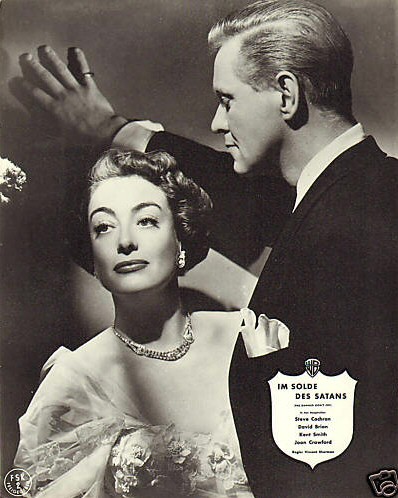
If you enjoy watching the reliably intense Crawford suffering in mink, irresistibly tawdry noir melodrama The Damned Don’t Cry (1950) is the movie for you! Thursday 16 January! Hear her snarl hard-boiled dialogue like “Don’t talk to me about self-respect! That’s something you tell yourself you’ve got when you’ve got nothing else!” No spoilers, but it begins with Crawford as downtrodden housewife from the wrong side of the tracks Edith Whitehead, who climbs to the top of high society … one man at a time! (Edith’s mantra: “I want something more than what I’ve had out of life. And I’m going to get it!”). Unfortunately – she soon finds herself embroiled in the murky realm of organized crime (and sexy gangster Steve Cochran!).

Lobotomy Room Goes to the Movies is the FREE monthly film club downstairs at Fontaine’s bar (Dalston’s most unique nite spot!) devoted to Bad Movies We Love (our motto: Bad Movies for Bad People), specializing in the kitsch, the cult and the camp! Third Thursday night of the month. Doors to the basement Bamboo Lounge open at 8 pm. Film starts at 8:30 pm prompt! We can accommodate 30 people maximum on film nights. Remember: the film is FREE so you can buy more cocktails! (One drink minimum).


/ "She’s as tempting as a cupcake - and as tough as a 75-cent steak!” / 

It was never intentional, but in recent years it’s become a Lobotomy Room film club ritual to screen a Joan Crawford film to usher in the new year. Maybe it’s a subconscious act of pagan goddess worship? Anyway, we showed Strait-Jacket in January 2018, Sudden Fear in January 2019 and now The Damned Don’t Cry in January 2020. When I introduced Damned onstage, I quoted Crawford’s line of dialogue from the film, “I want something more than what I’ve had out of life - and I’m going to get it!” and urged the audience to embrace this mission statement as their new year’s resolution for 2020.


/ “Call me CHEAP?” Nothing’s cheap when you pay the price she's paying! /

After Crawford’s Oscar-winning, career-reviving comeback victory with Mildred Pierce (1945), her studio Warner Bros clearly decided: don’t mess with the formula. Subsequent films like Flamingo Road (1949), The Damned Don’t Cry (1950) and This Woman is Dangerous (1952) are all increasingly threadbare and repetitive variations of the Mildred Pierce template, cleaving to the same essential noir crime melodrama style and theme. As The Chiseler concisely summarizes, the narratives of these Crawford pictures all “follow a woman as she claws her way out of dreary poverty, attains a pinnacle of penthouse luxury, and plunges from there into the abyss”. So yes, it’s a formula - but hell, it’s a juicy, lurid and insanely enjoyable formula, and these films are understandably embraced today as both exemplars of mid-century “women’s pictures” and camp classics.  Think of it this way: imagine there was an all-night Joan Crawford film marathon on TV. If you started watching The Damned Don’t Cry, fell asleep mid-way through, woke up in middle of This Woman is Dangerous and continued watching, you probably wouldn’t notice any discrepancy. (It helps that Crawford co-stars with silver fox David Brian Flamingo Road, Damned and This Woman is Dangerous!).


/ Joan Crawford with David Brian in The Damned Don't Cry /

As a Joan Crawford star vehicle par excellence, Damned certainly delivers on showcasing the diva’s considerable mid-period strengths. It ticks all the boxes: Crawford gets beautifully lit and flattering close-ups, copious costume changes (charting her trajectory from drab housewife to upper-crust socialite), gets to have big emotional confrontations, snarl hard-boiled dialogue and slap men’s faces. (Just to shake things up, in Damned, Crawford herself also gets slapped around and roughed-up a lot). Characteristically of this period, Crawford’s leading men are mostly secondary considerations, with minimal threat of challenging her dominance. (The exception: smoldering noir tough guy Steve Cochran. More of him later).


/ Suffering in mink: Joan Crawford in The Damned Don't Cry /


/ Check out those gams! Yes! Scary diva Joan Crawford at full voltage in torrid melodrama The Damned Don’t Cry (1950) /

Vincent Sherman directs Damned with verve and economy, ensuring the story unfolds in broad strokes and dramatic flourishes. Boiling with ambition and hunger, Crawford swaps identities with remarkable ease, swiftly re-inventing herself from frumpy small town hausfrau Edith Whitehead to elegant heiress Lorna Hansen Forbes (“the darling of café society”) under the tutelage of her new friend, shifty posh-voiced grifter Patricia Longworth (exquisitely performed with the perfect amount of patrician anxiety by scene-stealing Selena Royle). Sherman neatly contrasts the visual signifiers of Crawford’s new realm (cocktails (vermouth and cassis!), gold cigarette cases, mink coats, orchids, swimming pools) and her discarded working-class origins (derricks pumping in the Texas oil fields belching sooty plumes of pollution, blue collar men in hardhats and overalls, a wardrobe of cloth coats and aprons, no make-up, scraped-back hair).


Initially Damned positions Crawford in a conventional romantic triangle. Edith / Lorna must choose between impoverished, honest (and dull) accountant Marty Blackford (Kent Smith) or sociopathic but rich and suave organized crime kingpin George Castleman (David Brian). But then mid-way through the film Castleman’s dangerously volatile mobster associate Nick Prenta (Steve Cochran) arrives and explodes the movie apart. If you’re unfamiliar with hirsute and broodingly handsome Cochran (1917 - 1965), he’ll be a revelation. Probably best-remembered for the film White Heat (1949), Cochran is worthy of comparison to peer Robert Mitchum: both invested unexpected complexity and humanity to their portrayals of sexy noir thugs. 


/ “A woman who crossed the paths of many men … and double-crossed every one of them!” Steve Cochran and Joan Crawford in The Damned Don't Cry /


Great as Crawford is – she is never less than majestic and mesmerizing to watch here – she is also sticking with what she already knows in Damned. (By 1950 Crawford could play a role like Edith / Lorna with her eyes closed). I’d argue Damned really belongs to Cochran, whose performance feels modern, nuanced and surprising. For a macho gangster, Nick (as Cochran plays him) reveals intriguing fissures of sensitivity and insecurity seething below the surface. At times, Cochran almost suggests Nick is a little boy playing at being a mobster. For example, even while Nick strives to maintain his taciturn demeanor, it’s also clear he’s astounded a classy high falutin' dame like Lorna could be romantically interested in him (watch the way Nick proudly escorts her through his swanky Palm Springs nightclub, hoping to impress her), and he’s quick to bristle with offense when he suspects she’s belittling him. Cochran does nothing to solicit the audience’s sympathy – and yet Nick is easily Damned’s most compelling character. He’s also sex on legs: watch for the poolside scenes of Cochran in clingy swimming trunks or a terry cloth robe, with his impressive chest pelt on full display. The cruel and sensual face, lush dark brows and mane of oiled, combed-back black hair also anticipates Elvis Presley. Read more about essential noir icon Cochran in this lyrical, perceptive essay.


Speaking of male pulchritude, Cochran is rivaled here by Richard Egan (1921 – 1987) as Roy Whitehead, the laborer husband who Edith abandons. Egan's appearance is fleeting but – phew! – memorable. With his brawny physique, stubbled face, leather jacket, pomaded hair and visible chest hair, Egan suggests a hunky escapee from a Bob Mizer / Athletic Model Guild beefcake photo shoot. Interestingly, there is reason to believe that various points, the cougar-ish Crawford was romantically involved with virtually every man involved in The Damned Don’t Cry. She’s been "linked" to director Vincent Sherman and leading men David Brian, Steve Cochran and Egan.


/ Above: Egan with Crawford in The Damned Don't Cry (1950) and below in a candid social shot from what appears to be the early sixties /


 / Above: as a bonus for reading this far, some beefcake pin-ups of the wondrous Richard Egan. You're welcome! Read more about him here /


/ Two things: apparently at some point Crawford had off-screen "intimate knowledge" of each of her leading men in this shot (and director Sherman). And I love how this smiling publicity photo wildly misrepresents The Damned Don't Cry as a romantic comedy / 


/ Portrait of a bitch goddess extraordinaire: Joan Crawford in The Damned Don't Cry /

To the surprise of no one, now that London is on lock-down with the dreaded Coronavirus, the monthly film club is on indefinite hiatus. (We were meant to screen Desert Fury in March). But as god as my witness, Lobotomy Room (and Fontaine's bar) will be back! Watch this space.

Further Reading

Read my analysis of the Joan Crawford films Sudden Fear (1952) and Autumn Leaves (1956). 


Monday, 4 February 2019

Reflections on ... Sudden Fear (1952)


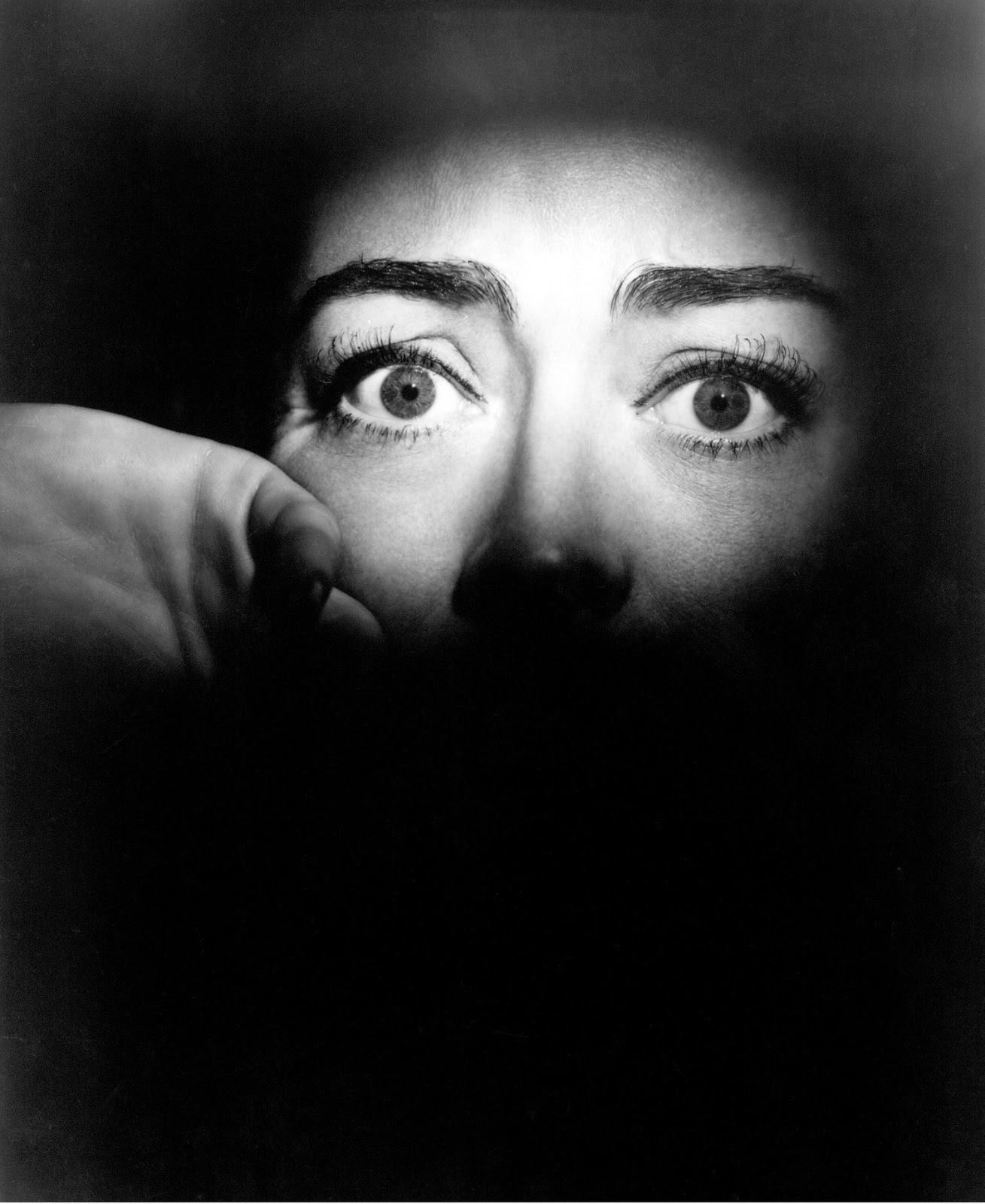
/ “Heartbreak … poised on a trigger of terror!” An agonized Joan Crawford in Sudden Fear (1952) /

From the Facebook event page:

Lobotomy Room Goes to the Movies is the FREE monthly film club downstairs at Fontaine’s bar (Dalston’s most unique nite spot!) devoted to Bad Movies We Love (our motto: Bad Movies for Bad People), specializing in the kitsch, the cult and the camp!

For the first Lobotomy Room film club of the New Year, let’s revel in some old-school pagan diva worship with Sudden Fear (1952) starring cinema’s bitch goddess extraordinaire (and eternal Lobotomy Room favourite) Joan Crawford! Wednesday 16 January 2019!

In the 1950s the perennially-fierce Crawford made a cycle of melodramas in which she played middle-aged women-in-peril tormented by younger lovers, including Autumn Leaves and Female on the Beach. All these films are genuinely great, but the zenith is hard-boiled film noir thriller Sudden Fear in which Crawford is a wealthy San Francisco socialite menaced by the duplicitous Jack Palance and the pouty and perverse Gloria Grahame. (Bad girl Gloria Grahame and Joan Crawford in the same film?! You don't want to miss this!).

Doors to the basement Bamboo Lounge open at 8 pm. Film starts at 8:30 pm prompt!


Seven years prior to Sudden Fear, Joan Crawford had won the Best Actress Oscar for her triumphant comeback role in Mildred Pierce (1945). But Crawford’s lengthy career was characterized by peaks and troughs and by the end of the decade, the juicy roles had dried-up once again. You can’t keep a gritty and resilient veteran diva like Crawford down for long, though, and she bounced back in the early fifties with an impressive string of hit movies. Sudden Fear is perhaps the most notable: the film was both a critical and commercial success in 1952 and earned Crawford her third and final Best Actress Academy Award nomination. (She was defeated by Shirley Booth in Come Back, Little Sheba).


/ "Every Suspenseful Moment... Every Embrace... Every Kiss - A Breathtaking Experience!" /

I’m the first to admit I know nothing about director David Miller (and judging by his filmography, he was something of a journeyman who did everything from war films to Westerns to Marx Brothers comedies) but he confidently and stylishly navigates the twists and turns of Sudden Fear. Set in San Francisco, it begins as an absorbing, soap-y love story between wealthy middle-aged playwright and high-society heiress Myra Hudson (Crawford) and ambitious, enigmatic young actor Lester Blaine (Jack Palance) and then dramatically shifts tone and becomes a tense, white-knuckle ride thriller when Myra begins to suspect Lester intends to murder her.


/ “Her one love shattered - her rival laughing - her life in danger – a new high in suspense melodrama!” /

Crawford was 47-years old at the time and Palance was 33. Crawford was a pioneering onscreen “cougar” in the fifties, routinely partnered with significantly younger leading men. Around this time, Crawford made multiple films where she portrayed middle-aged women-in-peril tormented by younger lovers. Tough guy Steve Cochran had already slapped her around in lurid noir melodrama The Damned Don’t Cry (1950). Female on the Beach (1955) and Autumn Leaves (1956) would follow. While all these films are irresistible must-sees, Sudden Fear is arguably the definitive in the cycle.


Crawford’s contract entitled her to dictate her leading men and her first choice for Sudden Fear was her old friend (and former lover) from the 1930s, Clark Gable – who would have been entirely wrong for the role! (Not to mention too expensive for the film's relatively modest budget). Her second choice was Marlon Brando. She had to be persuaded that the young and then mostly unknown Palance was the right choice to play the sinister and duplicitous husband. Palance - a former boxer with a strikingly battered face and a nose that had been broken multiple times - brings the perfect amount of convincing Brylcreemed menace, charm and sleazy urgency to the part of Lester.


Sudden Fear is a romantic triangle and co-stars the sin-sational Gloria Grahame (below) as Jack’s treacherous secret girlfriend Irene. Luscious Grahame excelled at playing film noir tarts, floozies and bad girls and her sullen, cat-like presence instantly makes any film she appears in more interesting. No one else ever looked or sounded remotely like Grahame (that quivering nasal voice!) and any time she rocks up in a movie, you know there is going to be trouble! (I still haven’t seen the 2017 biopic Film Stars Don’t Die in Liverpool starring Annette Bening).


It just wouldn’t be a Joan Crawford film without her feuding with someone – and she clashed with both Palance and Grahame during production. Crawford and the younger Grahame were both temperamental, strong-willed women, so the two of them intensely disliking each other was perhaps inevitable.  This story feels apocryphal, but this is what IMDb claims: “According to Jack Palance, Joan Crawford and Gloria Grahame did not get along and got into a physical altercation at one point during the filming. The fight started after Grahame sat on the edge of the set during one of Crawford's close-ups and very loudly sucked a lollipop in an attempt to anger Crawford. It worked, and Palance noted that the all-male crew watched the fight for a few moments rather curiously before stepping in to break it up.” With the intense Palance, she was mystified by his aloof moodiness and his commitment to then-revolutionary New York Actors Studio “Method”-school of acting. Watching Sudden Fear, the antipathy between the actors is probably a bonus, adding to the film’s sense of seething tension. Certainly, the trio of Crawford, Palance and Grahame is film noir heaven.  


/ “I was made to live for him … to die for him … but now I could KILL him!” / 

Ultimately, Sudden Fear succeeds as true gold-plated “star vehicle” designed to showcase the mood swings of Crawford to maximum advantage. (Note that Miss Crawford’s wardrobe gets its own separate screen credit, split into gowns, lingerie, furs and hats). Sudden Fear finds her at the height of her powers as a seasoned, authoritative mature actress. Crawford, of course, began her film career as a hungry young starlet in the silent cinema of the 1920 and there are powerful wordless sequences in Sudden Fear where Crawford is essentially drawing on that history of silent acting. Watch how Crawford uses just her eyes and facial expressions to convey her anguish when she listens in horror to the crucial tape recording in which Lester and Irene are heard planning her murder, or the later scene where she’s hiding in a closet (and tormented by that unforgettable mechanical toy dog!). As the perceptive critic Sheila O’Malley has eloquently extolled, “In her half-century career, Joan Crawford was a master of so many elements of her craft: gesture and silhouette (a lost art), using the shape of her body to tell the story (another lost art), stepping into key lights with emotions at full-throttle (lost art, etc.), as well as the eternal arts of great actresses through time: belief in the reality of the story, understanding her role on an intimate level and a fearlessness in showing qualities considered unladylike or unattractive (rage, ambition, envy).” All of these qualities are abundantly demonstrated in Sudden Fear.


It’s gratifying to see how Crawford continues to be rehabilitated in recent years as the memory of the reputation-destroying Mommie Dearest (both book and film) recedes in the popular imagination.  (Credit should also be given to Jessica Lange’s complex and nuanced, ultimately sympathetic depiction of Crawford in Ryan Murphy’s deluxe 2017 TV mini-series Feud: Bette and Joan). At her best, Crawford is utterly mesmerizing to watch. If ever anyone inquired, “What was the big deal about Joan Crawford?”, point them towards Sudden Fear.


The February 2019 film club:


Lobotomy Room Goes to the Movies is the FREE monthly film club downstairs at Fontaine’s bar (Dalston’s most unique nite spot!) devoted to Bad Movies We Love (our motto: Bad Movies for Bad People), specialising in the kitsch, the cult and the queer!

Considering February is the month of Valentine’s Day, we’re presenting a love story: irresistible tear-jerking melodrama There’s Always Tomorrow (1956) by Hollywood’s undisputed maestro of deluxe “women’s pictures”, Douglas Sirk! Wednesday 20 February! Warning: this film is a masterpiece of romantic agony – you WILL cry! You bring the tissues, Fontaine’s will provide the cocktails!

There’s Always Tomorrow is unusual in the Sirk canon for two reasons: it focuses on the heartbreak of a man rather than a female protagonist. And it’s in black and white instead of Sirk’s trademark vivid Technicolour. Despite his outwardly perfect life, Clifford Groves (Fred MacMurray) is an affluent but unhappy Californian toy company executive in late middle age, taken for granted by his selfish family. Out of the blue, Norma Vail (Barbara Stanwyck), a former employee he hasn’t seen in years (now a chic and successful fashion designer) returns to his life – and represents one last chance at happiness. Will Clifford succumb to temptation? 

Doors to the basement Bamboo Lounge open at 8 pm. Film starts at 8:30 pm prompt. 

Event page.

Further reading:

Read my appreciation of Gloria Grahame in Human Desire (1954) - one of her definitive, masochistic roles - here. 

Read my reflections on Feud: Bette and Joan (2017) here.

Read my analysis of the 1956 Joan Crawford melodrama Autumn Leaves here.

Read Farran Smith Nehme's tribute to Crawford's performance in Sudden Fear here.

In August 2018 I spoke my brains to To Do List magazine about the wild, wild world of Lobotomy Room, the monthly cinema club – and my lonely one-man mission to return a bit of raunch, sleaze and “adult situations” to London’s nightlife! Read it - if you must - here. 
Follow me on twitter!
"Like" and follow the official Lobotomy Room page on Facebook if you dare!