“Grace Jones’ Nightclubbing album was the hippest record of
1981 … a reinvention of Roxy Music’s too-much-too-soon ennui, with sublime
reggae and funk rhythms from the rhythm section of the era, Jamaica’s Sly
Dunbar and Robbie Shakespeare … Grace Jones, an intimidatingly androgynous and
Amazonian New York model – born in Jamaica … looked like a sleek, purpose-built
alien, and spoke-sang her lyrics with adominatrix-like authority, developing and transcending her early career
as a gay-scene disco diva …”
/ From the 2002 book This is Uncool: The 500 Greatest
Singles Since Punk and Disco by Gary Mulholland /
Released 45 years ago today (11 May 1981) by Island Records:
Nightclubbing, the fifth studio album by everyone’s favourite post-punk freak
diva / Afro-Dietrich / futuristic dominatrix from outer space Miss Grace Jones!
Nightclubbing is the second (and most commercially successful) entry in the fierce
fashion model-turned-New Wave chanteuse’s timeless bleeding-edge trilogy of albums
recorded at Chris Blackwell’s Compass Point Studios in The Bahamas (the other
two are Warm Leatherette (1980) and Living My Life (1982). All three are
essential!).
The title track of course is courtesy of Iggy Pop’s 1977 The Idiot
album. “Jones’ skill as a facilitator as well as pop cultural icon is exposed
in the way the original song is converted from Krautrock-damaged, Suicide-aping
sleaze fest into sophisticated, lightly-dub inflected, disco reggae,” criticJohn Doran argues. “The conceptual joke of the song is clear: Grace doesn’t
hang around in the same horrible dives as Mr James Osterberg, but you can be
sure that the experience is just as existential and soul-draining. She has just
applied Pop’s lyrics to the cocaine-and-champagne instead of
amphetamine-and-vodka lifestyle.”
I love the dramatic accordion-laced “I’ve
Seen That Face Before (Libertango)”, “Walking in the Rain” and “Demolition Man”
but understandably most people remember Nightclubbing as the album featuring eternal
dancefloor favourite “Pull Up to the Bumper”! I’d also argue that the
confrontational cover image (a “painted photograph” entitled “Blue-Black in
Black on Brown” by Jean-Paul Goude, Jones’ then-lover and artistic collaborator)
is as impactful as Robert Mapplethorpe’s shot of Patti Smith on the cover of Horses.
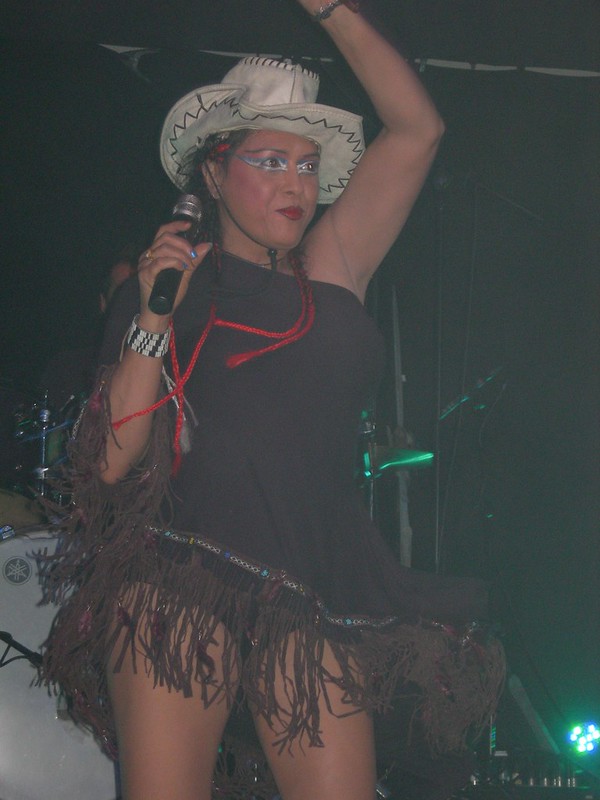
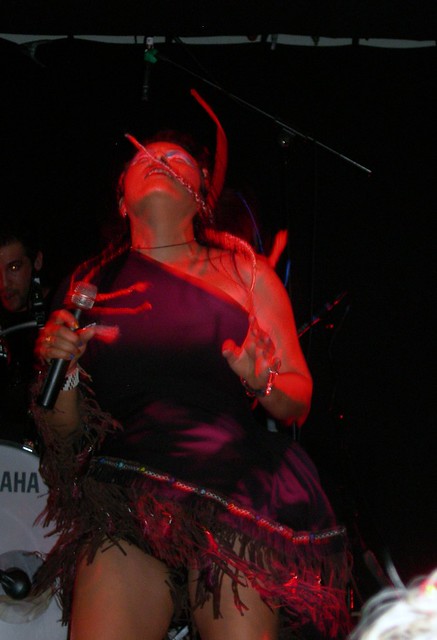
/ Grace Jones photographed by Rob Verhorst onstage at the Carre Theatre in Amsterdam, September 1981 /
Further reading:
Read my notes on Grace Jones’ concert at Royal Albert Hall in 2010 here.
Read about Grace Jones' memorable book signing in London in 2015 here.
Read my reflections on Grace Jones' Warm Leatherette (1980) album here.
“Hagen recorded Nunsexmonkrock in New York
with a band that included Paul Shaffer and Chris Spedding. To describe it as
wild hardly suffices – the drugs-sex-religion-politics-mystical imagery that
spills out is nearly incomprehensible in its bag-lady solipsism, but the music
and singing combine into an aural bed of nails that carries stunning impact. It
almost doesn’t matter that Hagen sticks to English; what counts is the
phenomenal vocal drama. Her range seems limitless, and the countless characters
she plays makes this fascinating.”
/ The Trouser Press Record Guide (1991) review
of Nina Hagen’s 1982 album Nunsexmonkrock /
“Nina Hagen’s 1982 album NunSexMonkRock is one of the single most
ground-breaking and far-out things ever recorded and it deserves to be
considered a great - perhaps the very greatest - unsung masterpiece of the
post-punk era. I’ll take it even further: To my mind, it’s on the same level as
PiL’s Metal Box, Captain Beefheart’s Trout Mask Replica or Brian
Eno and David Byrne’s My Life in the Bush of Ghosts. Or The Dreaming by
Kate Bush. There I’ve said it … Nunsexmonkrock could have been recorded 40
years ago, yesterday, or a thousand years from now and it just wouldn’t matter.”
/ From Dangerous Minds website /
Unleashed on this day forty years ago (12
June 1982): berserk German punk diva Nina Hagen’s debut solo album and definitive
artistic achievement, futuristic 1982 post-punk masterpiece Nunsexmonkrock –
hailed by a Rolling Stone reviewer as the "most unlistenable" record ever
made. Au contraire! Hagen’s confrontational Exorcist-style vocals and crackpot
flights of fancy are (mostly) grounded in experimental but tough and danceable New
Wave rock. Opener “AntiWorld” invents an operatic / Biblical / gypsy punk hybrid.
“Smack Jack” - her spooky anti-heroin diatribe - nails a sense of junkie panic.
"Iki Maska" is anchored to the same Henry Mancini / Peter Gunn guitar
riff as “Planet Claire” by the B-52’s. The irresistible “Born in Xixax” bristles
with paranoid conspiracy theories predicting World War III but vows, “One day
we will be free!” Best of all, the extraterrestrial “Cosma Shiva” marries blaxploitation
funk bass with samples of the gurgles and squeals of Hagen’s baby daughter, and
concludes with Hagen declaring, “And my little baby, I tell you - God is your
father.”
Hagen would go on to make two more fun, interesting records (Fearless (1983)
- her foray into disco - and the heavy metal-leaning In Ekstasy (1985)), then seemingly
run out of inspiration (which unfortunately didn’t stop her from continuing to
record). Four decades later, Nunsexmonkrock still sounds like bleeding-edge science
fiction. If any of this tempts you, the album is on Spotify.
Recently watched: Voyage of the Rock Aliens
(1984). Tagline: “the story of a guy, a girl and an alien... and one night they
will always remember!” I’m using this period of enforced social isolation to
explore the weirder corners of YouTube for long forgotten and obscure movies.
(My boyfriend is accompanying me only semi-willingly).
Incomprehensible. Stultifying. Bizarre.
Botched! In the early eighties, former child actress, cherub-faced starlet and
“triple threat” Pia Zadora reigned as the undisputed queen of bad movies. (Her
filmography-from-hell includes crimes-against-cinema like Fake-out (1982) and The
Lonely Lady (1983)). Enduring the 97-minute duration of misbegotten low-budget New
Wave musical comedy Voyage of the Rock Aliens certainly justifies how Zadora earned
that title. (Note: don’t confuse Voyage of the Rock Aliens with Voyage to the Planet of Prehistoric Women (1968) – an entirely different but equally
terrible film starring that earlier queen of bad movies, Mamie Van Doren).
Voyage was calculatedly formulated to
promote Zadora as a viable pop siren in the vein of Madonna or Cyndi Lauper. In
fact, it opens with an epic rock video for “When the Rain Begins to Fall”, Zadora’s
hi-NRG disco duet with Jermaine Jackson. The video has that artfully distressed
post-apocalyptic / post-punk look typical of the era (it’s hard to overstate the
stylistic influence of Mad Max in the eighties). Seemingly tacked-on at random,
the video bears zero relation to what unfolds next. How to explain Voyage of
the Rock Aliens? According to Wikipedia, its scriptwriter conceived it as a deliberately
campy tongue-in-cheek spoof hybrid of fifties and sixties b-movie genres. A postmodern
mash-up of science fiction, beach party musicals, monster movies and rock’n’roll
juvenile delinquent flicks sounds potentially amusing in more competent hands,
but the conception and execution here is frankly - if cheerfully - inept.
Zany hijinks, wacky misunderstandings and “what-the-fuck”
moments ensue when a group of rock’n’roll-crazed aliens (styled to vaguely
resemble Devo) land their guitar-shaped spaceship on earth and try to
ingratiate themselves with the local teenagers of a town called Speelburg. Voyage’s
tone is established with an introductory Beach Blanket Bingo-style musical
number. The song is grating. The choreography is clunky. The weather is visibly
overcast and chilly. Some of the “high schoolers” are seemingly well into their
late twenties. To be fair, it does offer a time capsule of eighties fashion
trends: it’s a veritable day-glo riot of ra-ra skirts, crimped hair, fingerless lace
gloves and wraparound sunglasses. Dee Dee (Zadora) yearns to sing with her
boyfriend Frankie’s band (Frankie and The Pack) at their high school’s upcoming
cotillion. But surly delinquent hoodlum Frankie (Craig Sheffer) is such a
selfish, insecure jerk he won’t let her. (This scenario reminded me of Lucy
constantly wanting to crash Ricky’s stage show in old episodes of I Love Lucy).
The leader of the aliens (Tom Nolan) develops a crush on Dee Dee and has no qualms
about her joining his band, inciting Frankie’s jealousy.
Proceedings are padded-out with some annoying
sub-plots. Two homicidal killers escape from a high security mental facility. The
eccentric elderly female sheriff investigates the town’s UFO sighting. (This surely
represents an unseemly career low for Academy Award-winning veteran character
actress Ruth Gordon of Rosemary’s Baby and Harold and Maude fame). There’s also
a sea monster whose tentacle pops up at random and is never explained.Storytelling coherence isn’t one of Voyage’s
strengths: it frequently feels like some pages have gone missing from the
script, or some crucial explanatory scenes have been accidentally deleted.
Anyway, Zadora gamely tackles the acting, singing
and dancing with more enthusiasm than skill. Frankie’s bandmates are played by
a genuine Los Angeles psychobilly band called Jimmy and The Mustangs - a poor
man’s Stray Cats, although it must be said they do provide eye candy in their
mesh t-shirts and studded leather biker jackets. Speaking of which: pretty boy Sheffer’s Frankie (pouting as if his life depends on it) is filmed like an escapee from an eighties
gay porn film, with a homoerotic focus on his sinewy torso and painted-on black
jeans. (For which I thank you!). With horrible symmetry, Voyage concludes by reprising “When the Rain
Begins to Fall” (with Scheffer lip-syncing to Jermaine Jackson’s vocals) with
some of the most half-assed green screen technology ever captured on celluloid.
Clearly the filmmakers had stopped caring by then. Problem is, you will have
too!
Voyage of the Rock Aliens is FREE to view
on Amazon Prime. In the meantime, here's the trailer.
Postscript: the last time I attended the
Viva Las Vegas Rockabilly Weekender over Easter 2019, my friend Kevin and I
made a point of checking out Pia Zadora’s jazz revue at an Italian restaurant
called Piero’s. In between sets, the lady herself pulled up a chair, joined us
and hung out! We interrogated the effervescent Zadora about her wayward film career and trust me
– she couldn’t have been more hip, knowing or self-deprecating. She's well aware that films like Voyage of the Rock Aliens were terrible and is able to laugh at them (and herself) now. Read more about this historic encounter here.
It started with a photo. Entitled Samurai
Sissy, the stark black and white 1979 portrait by French artist and
conceptualist Jean-Paul Goude depicted steel-cheekboned Amazonian black
supermodel turned actress and disco chanteuse
Grace Jones wrapped in a dramatic padded-shouldered Issey Miyake creation. At
the time Goude and Jones were both artistic and romantic collaborators (he’s
the father of Jones’ only child, Paulo born in 1979. In fact Jones is pregnant
with Paulo in Samurai Sissy). Sinister but sexy, the image is so powerful,
androgynous and alluring it suggested a world of possibilities: Jones as a panther
in human form. Black Marlene Dietrich.
Female Bowie. Space-age
Nefertiti. Dominatrix from outer space. In
her 2015 autobiography I’ll Never Write
My Memoirs, Jones herself describes it as “me as an ominous hard-eyed
samurai filtered through something occult and African, the killer clown
interrupting some mysterious ceremony.” Chris Blackwell, head honcho of Island Records,
had the photo enlarged and stuck to the wall of his deluxe Compass Point
recording studio in the Bahamas, instructing his crack team of musicians, “Make
a record that sounds like that looks.”
The resulting album – Warm
Leatherette (1980), a masterpiece of style and substance – succeeded. And
now – over thirty five years later – Warm
Leatherette is being reissued in a sumptuous digitally re-mastered two CD box
set encased in sleek black leatherette packaging, with rare re-mixes, extended
liner notes and lavish photos.
Call it death disco, Afro-punk or simply black alternative
music, Warm Leatherette probably
invented it. Menacing but sensual, over
three decades later the album still sounds futuristic and bleeding-edge. Considering Jones herself was Jamaica-born,
the album was recorded in Nassau and most of the backing musicians were
Jamaican it’s no surprise the sound of Warm
Leatherette is primarily rooted in reggae. But this isn’t straight reggae in any sense: spiked
with New Wave rock, Warm Leatherette suggests
eerie art-damaged cobwebbed reggae reverberating out of a haunted house.
But ultimately the identity of Warm Leatherette is dictated by Jones’ own haughty, scolding
dominatrix voice. The album represented
a dramatic reinvention for Jones both sonically and visually, jettisoning the disco
frivolity of her earlier recordings for something infinitely scarier, artier and
punkier. From Warm Leatherette onwards, Jones would have more in common with,
say, Klaus Nomi, Nina Hagen or post-Broken
English Marianne Faithfull than Donna Summer or Sister Sledge. (Not to malign Jones’ three disco records,
which are campy as hell and deeply enjoyable; listening to them you can almost
smell the amyl nitrate). On Warm
Leatherette Jones emerges as a woman of mystery from everywhere and nowhere,
a world-weary escapee from the most decadent nightclubs and catwalks of Paris,
Berlin and London. Jones took the template
established by Josephine Baker and Eartha Kitt (black female singers as exotic
Continental sophisticates mostly divorced from blues, jazz and soul traditions)
and updated the persona for the post-disco and post-punk generation.
On later albums Jones would write her own lyrics. Here she
(mostly) radically reinterprets New Wave hits by others in her own inimitable
style. The title track sees The Normals’ stark electro-punk minimalism
transformed into lacerating blaxploitation funk. Jones amps up the sexual
tension in Roxy Music’s “Love is the Drug.” Just try not to get goose bumps when Jones contemptuously snarls, “Your
sex life complications / are not my fascinations” to a would-be suitor on The
Pretenders’ ghostly “Private Life”. Jones’ take on Smokey Robinson’s 1966 hit “The
Hunter Gets Captured by The Game” – one of Warm
Leatherette’s poppier and more charming moments – uses the sound of
electronic birds chirping to convey an urban jungle realm. French chanson “Pars” confirms Jones is at her
most seductive crooning en francais (think
of her initial 1977 breakthrough hit “La vie en rose” or the accordion-laced “I’ve
Seen That Face Before”). Best of all is
Jones’ deranged rampage through Joy Division’s “She’s Lost Control” (re-titled
“I’ve Lost Control”), a nervous breakdown set to music.
Needless to say all of this was catnip for a queer audience.
Warm Leatherette turned a lot of
people gay (or at least confirmed it). It certainly consolidated Jones’ status
as a perennial gay favourite. In fact from Jones’ first album onwards she was
deliberately marketed towards a hip gay urban audience on the (correct)
assumption they would get her – an
artist too barbed and strange for mass appeal. Jones is our kinky freak diva and an honorary gay (her reputation as a
joyous and unapologetic bisexual probably helps). She continues to influence queer artists likes
Zebra Katz, Peaches and Christeene.
Warm Leatherette
would be followed by Nightclubbing (the
one with “Pull Up to The Bumper”) and Living
My Life (the one with “My Jamaican Guy”). Jones closed the eighties with
two frankly terrible albums (Inside Story
and Bulletproof Heart – avoid at all
costs) and then – except for the occasional film appearance - vanished from the
pop radar for almost twenty years until her majestic 2008 comeback Hurricane. Jones reportedly has an album
of new material due out later this year. Warm
Leatherette, though, represents the origins of Grace Jones’ mystique.
(The Warm Leatherette boxed set was reissued by Island / UMG on 17 June 2016)
/ Grace on Chilean TV in 1980. This TV show is fascinating for several
reasons. Musically it captures Jones in mid-transition: in an odd set, she
performs a combination of her new edgy post-punk tracks from Warm Leatherette (“The
Hunter Gets Captured by the Game” and “Bullshit”) with her earlier disco
material (“La vien en rose”, “Fame” and a spectacularly dramatic “Autumn Leaves”
as the grand finale). On opening number “Hunter Gets Captured by the Game”
Jones sings live, prowling and stalking like a tigress. It will gradually dawn on
you as the programme progresses that – even though she is wielding a microphone
- she is lip-syncing the rest of the time. For all we know, this was standard
procedure on Chilean television at the time (certainly all musicians
lip-synced on Britain’s Top of the Pops throughout the seventies and
eighties). To be truthful, it hardly matters: even lip-syncing Jones makes for
dramatic and riveting performance art. In fact, Jones is fragile and intense
throughout (during her febrile mood swings she confesses to the host she has
the flu). It’s also interesting to compare and contrast Jones with the people comprising
the studio audience. They’re wearing earth toned casual lounge wear, flared trousers, have
blow-dried feathered coiffures and facial hair (I mean the men, of course) and seem firmly
rooted in the seventies. Jones – especially in the sensational dominatrix
catsuit and headdress ensemble she rocks at the beginning – looks like a
visitor blasted in from the future or another galaxy /
/ Grace Jones performing "Private Life" on Top of the Pops in 1980. (The single scraped the UK Top 40). I love how minimalist this is, And I wonder what the teenage girls in the audience made of it? /
Further reading: This review already appeared on Loverboy website in summer 2016. I'm posting it here for my archives in case it eventually gets deleted The time I met Grace Jones in the flesh at a book signing in 2015!
I blogged my account of seeing Jones perform at the Royal Albert Hall in 2010 here.
Check out my photos of Jones performing at The Roundhouse in Camden in 2009 here.
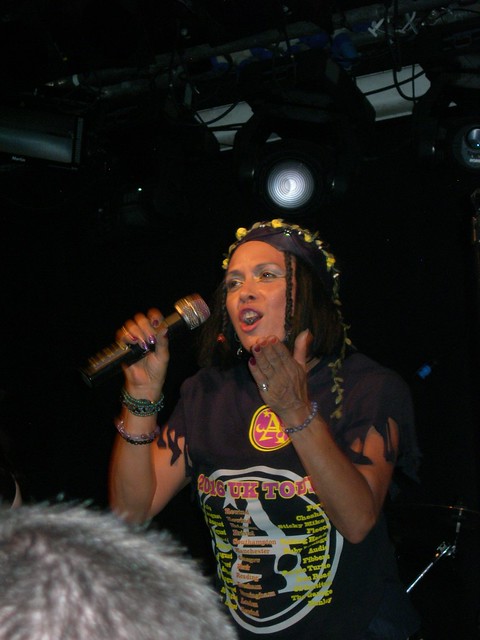
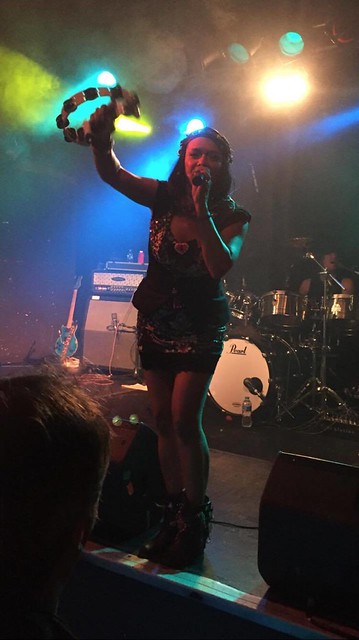
/ The original 1980s line-up of Bow Wow Wow: guitarist Matthew Ashman. bassist Leigh Gorman, vocalist Annabella Lwin and drummer David Barbarossa /
The last time I saw Bow Wow Wow was in 2012 at The Islington Academy and the line-up featured two of the original members: singer Annabella Lwin
and bassist Leigh Gorman. Since then, Annabella and Gorman have clearly
fallen-out (Bow Wow Wow was always a rancorous band) and she’s now doing her own incarnation of Bow Wow Wow in which she
is the sole originator and is backed by entirely new musicians. (Her version of
the band is called Annabella’s Original Bow Wow Wow. Confusingly, Gorman is continuing with his
own edition. Seriously, that would be like Blondie touring without Deborah
Harry or The Banshees minus Siouxsie). For all I know a lawsuit has been
involved at some point between Gorman and Annabella over ownership of the name.
In her between-song banter Saturday night at The Garage Annabella said something along the lines
of, “If there are any of my original musicians in the crowd tonight, I hope you
understand why I need to do this ...”
Much as I enjoyed Saturday night, the 2012 gig was infinitely
better in musical terms. Bow Wow Wow’s best New Wave-era tunes are catchy and
minimalist but deceptively complex and sophisticated with African and Latin polyrhythms
and surf guitar influences. It felt like the newbies in the band were loud and
powerful, but steamrolled over those nuances.
The 2012 concert really was a definitive greatest hits
performance and I couldn’t complain about the track selections. Last night’s set
list was weird and patchy. On plus side: essential stone-cold classics like “C30,
C60, C90 Go!”, “Louis Quatorze”, “Mile High Club”, “Aphrodisiac”, “WORK”, “I
Want My Baby on Mars”, “Baby Oh No”, “See Jungle (Jungle Boy).” They sounded as
sexy, funny, punky and exotic as ever. On the downside: no “Uomo Sex Al Apache”
(a 2012 concert highlight), “Elimination Dancing”, “Sexy Eiffel Tower”, "TV Savage" or “Chihuahua”.
(To be fair, they seemingly never play “Chihuahua” live. I’d argue that song is
Bow Wow Wow’s magnum opus. I suspect
this is because Malcolm McLaren forced Annabella to sing lyrics like “I can’t
dance / And I can’t sing / I can’t do anything ... I’m a rock’n’roll puppet in a band called Bow
Wow Wow .. I’m a horrid little idiot / can’t you see ...” etc). They treated “I
Want Candy” as the climactic big finale – understandably, because it was their
biggest chart hit but it’s not their best song by a long shot (I bet Annabella
is secretly sick to death of it).
Annabella is presumably calling the shots now and she displayed
a strange lack of confidence in her own back catalogue. They padded things out
with a cover of Nancy Sinatra’s “These Boots Are Made for Walkin'” (an interesting
experiment to hear that given a Burundi beat / tribal make-over but hardly
essential) and then she introduced a brand new song. And with the best will in
the world, it wasn’t good. They really tried to sell it, with Annabella delivering
it enthusiastically and grinning hard for the duration (and urging us that “it’s
available on iTunes and Amazon.com”) and the bassist giving the thumbs-up
(cringe!). But it was frankly mediocre, with
a tired eighties slapped-bass funk sound (Pal said it sounded like the
Red Hot Chilli Peppers).
The charismatic Annabella herself was on great form. At 49
she’s still gorgeous (killer cheekbones, shapely legs), still kinetic (she
dances hard the whole time – she’s like a whirling dervish) and her voice is
still an alluring girlish punkette coo. Why isn’t Annabella celebrated as one
of the great punk frontwomen just a few notches below Siouxsie and Deborah Harry
or the equal of Poly Styrene and Ari Upp? I suspect the rockist Mojo generation simply don’t
rate Bow Wow Wow.
Anyway, something was clearly riling Annabella because a few
times between songs she demanded, “Am I too old? Do you think I’m too old? I’ve
been told I’m too old.” I’d love to know what that was about. (For what it’s
worth: considering she was only 14 when she joined Bow Wow Wow, Annabella is substantially
younger than most of her post-punk peers). Her stage-wear was disappointingly lacklustre:
she was wearing one of her own tour
merchandise t-shirts! She’d customised it (shredding it up and wearing it
backwards) – but still! This is someone who used to wear head-to-toe Vivienne
Westwood pirate gear! And her hair was a shiny, jet-black 100% acrylic wig. In 2012
she sported her own hair in long cornrow braids tied with ribbons. The wig was
an odd touch. If Annabella was worried about her hair, she should just resurrect
her trademark early eighties Mohawk: no woman ever looked more beautiful with a
Mohawk than Annabella.
Similarly, the crowd was a mixed bag: it’s been a while
since I’ve been to a gig where the audience was predominantly older first or
second-generation punks. Life had clearly been tough on some of these people. As
I hoped, some looked great in vintage Vivienne Westwood. But there was a
dismaying amount of older guys wearing anoraks, dad jeans and trainers! You’re
letting the side down, people!
Playing us out: classic-era Bow Wow Wow captured onstage in 1982.
/ Portrait of the Author: present-day Brix Smith photographed by Amelia Troubridge /
[I
was commissioned to write this book review of Brix Smith Start’s memoirs a while
back, it seemingly got “spiked” and rather than let it go to waste I’ve posted
it as a blog entry!] Brix Smith Start has a knack for self-reinvention, from punk
guitarist to Shoreditch fashionista and boutique proprietor to TV presenter. She also seemingly possesses great timing: her
autobiography follows on the heels of successful recent efforts by the likes of Sonic Youth's Kim Gordon, The Pretenders' frontwoman Chrissie Hynde and Viv Albertine of The Slits. Confessional memoirs
by veteran rock chicks are red-hot right now.
Born Laura Salenger in 1962 in Los Angeles to an affluent family
with show business connections, as a teenager she embraced punk rock (the
nickname “Brixton” came from her love of The Clash song “Guns of Brixton”).
Following a whirlwind romance with Mark E Smith (frontman of hard-edged Mancunian
band The Fall), in 1983 Brix impulsively marries him, relocates from sun-kissed
LA to drab and overcast Manchester and joins his band as guitarist. The book is
especially funny describing her horrified culture shock at her new Northern
husband’s grimy poverty. (“Mark’s parents suggested we have the reception in
the Eagle and Child pub and that we serve sausage rolls, salt and vinegar
crisps and pickled onions to our guests,” she shudders).
“The Brix years” were arguably The Fall’s creative and
commercial peak. Her towering, catchy
riffs, steeped in surf instrumentals and rockabilly, injected The Falls’ music with
a new accessibility. Diminutive, blonde and beautiful, she also added a jolt of
Californian glamour to one of the most austere and uncompromising of post-punk
bands. The Falls’ artistic zenith would perhaps be in 1988 performing onstage
with drag monster Leigh Bowery in queer bad boy of dance Michael Clark’s avant-garde
ballet I Am Curious, Orange. (Brix played guitar while seated atop a giant
Pop Art hamburger).
/ Art-rock heaven: The Fall meets Michael Clark / A volatile musical genius Mark E Smith may be, but he didn’t
make for ideal husband material. Brix
depicts him as an unhinged alcoholic and speed freak with an increasingly ugly
temper. Once their romantic and musical partnership
imploded (they divorced in 1989), Brix would struggle with low self-esteem,
depression, dysfunctional relationships, career disappointments, eating
disorders and sleeping pill addiction (very Valleyof the Dolls).
/ One of my favourite Fall songs and videos. The skunk-striped black and white Cruella de Ville hairstyle was one of Brix's best looks /
Her lowest point sees Brix back in Los Angeles and broke
after leaving The Fall, unable to play guitar because of painful tendinitis and
supporting herself as a waitress while hustling for acting jobs. One night a group
of Mancunian musicians recognise her at the restaurant and ask, “Didn’t you
used to be Brix Smith?” (To her credit, she replied, “I still am”).
Gossip hounds will find much to savour here. Brix seemingly
crossed paths with everyone over the years. Her mother used to work in the
television industry. As a child Brix would watch transfixed as Sonny and Cher
rehearsed for their TV show (“even in street clothes she radiated glamour ...
Cher is my jeans idol”). As student at
Bennington College Brett Easton Ellis and Donna Tartt were fellow pupils in her
creative writing class. Later she would rub shoulders with everyone from Morrissey
(“he was always so unfriendly, prickly and weird”) to Courtney Love (she almost
joined Hole in the nineties) and even Princess Diana (“I’ve rarely seen a woman
turn it on the way she did”). And then of course there’s Gok Kwan. Let’s face
it: for a generation of gay guys Brix is inevitably best known as co-host of Gok’s Fashion Fix.
For anyone allergic to New Age self-help speak this probably
isn’t the book for you (Brix underwent years of therapy and it shows in her
writing). But she’s so effervescent and disarmingly likable you can’t help but
root for her as Brix – now 53, happily remarried and playing music again -
overcomes adversity and ultimately emerges resilient and serene.
[The Rise, The Fall and The Rise by Brix Smith Start is out now, [published by Faber & Faber]
"It started with a photo. Entitled Samurai Sissy, the stark black and white 1979 portrait by French artist and conceptualist Jean-Paul Goude depicted steel-cheekboned Amazonian black supermodel turned disco chanteuse Grace Jones wrapped in a dramatic padded-shouldered Issey Miyake creation. At the time Goude and Jones were both artistic and romantic collaborators (he’s the father of Jones’ only child, Paulo born in 1979. In fact Jones is pregnant with Paulo in Samurai Sissy). Sinister but sexy, the image is so powerful, androgynous and alluring it suggested a world of possibilities: Jones as a panther in human form. Black Marlene Dietrich. Female Bowie. Space-age Nefertiti. Dominatrix from outer space. In her 2015 autobiography I’ll Never Write My Memoirs, Jones herself describes it as ‘me as an ominous hard-eyed samurai filtered through something occult and African, the killer clown interrupting some mysterious ceremony.’ Chris Blackwell, head honcho of Island Records, had the photo enlarged and stuck to the wall of his deluxe Compass Point recording studio in the Bahamas, instructing his crack team of musicians, ‘Make a record that sounds like that looks.’"
A deluxe digitally re-mastered box set of Grace Jones’ 1980 stone-cold classic Warm Leatherette - the ultimate punk-disco hybrid - is out now. Read my full review for Loverboy Magazine here.
/ Fragment from Grace Jones' avant garde 1982 performance art /concert film A One Man Show. Why oh why has this essential art statement never been digitally remastered and reissued on DVD?! /
Further reading: I've blogged about The Jones Girl - one of my all-time favourite artists - a few times now:
/ The sublime Danish actress Anna Karina in Jean-Luc Godard's Vivre sa vie (1962) /
Anna Karina – the elfin Bambi-eyed star of French New Wave
1960s cinema - graced The British Film Institute in person on Saturday 16
January 2016 last night as part of its Jean-Luc Godard season. (Godard and
Karina were married between 1961-1967. She was Godard’s muse and the leading
lady of his definitive early films). First was a screening of Godard’s sublime
1962 nouvelle vague masterpiece Vivre sa vie (in which Karina plays a wannabe
actress who drifts into prostitution with tragic consequences. She is wrenching in the film). Then Karina was
invited onstage for an interview (by film critic Jason Solomons) followed by a Q&A
session with the audience.
Pal and I were in the back row, but I can confirm the
75-year old Karina is still svelte and her heart-shaped cheekbones still intact,
although her voice is now a raspy croak – Karina has evidently smoked a lot of
Gauloises (or Gitaines?) over the decades. She was endearingly dotty and
eccentric – clearly still a mischievous free spirit and bohemian. It’s hard to
believe Karina isn’t French (she’s Danish, born in 1940 in Copenhagen): her
accent sounds impeccably French, her demeanour is so old-school Parisian and
she’s the absolute mistress of the dismissive Gallic shrug.
And Karina did a lot of Gallic shrugging! There was
definitely a language barrier. Karina’s answers would drift, dither and meander,
sometimes missing the point. After an audience
member would ask a question, Karina would turn to the onstage interviewer with
a quizzical expression. After a while Solomon exclaimed, “Don’t look at me – I didn’t ask the question!” When
someone asked what her strangest experience was working on a film, she snapped
“Strange? What’s strange?” When people probed too deeply about Godard’s
motivations and thought processes, she replied, exasperated, “I didn’t direct
the film!” Asked whether it was provocative or scandalous to play a prostitute
in 1962, she demurred, “Because I played a prostitute didn’t mean I was a
prostitute!” (But Karina added the Parisian “working girls” she encountered on
the street afterward would approach her and say they approved of her
portrayal and found it truthful).
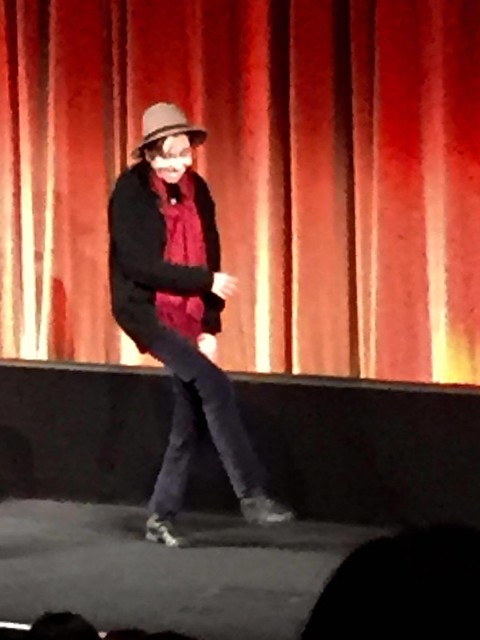
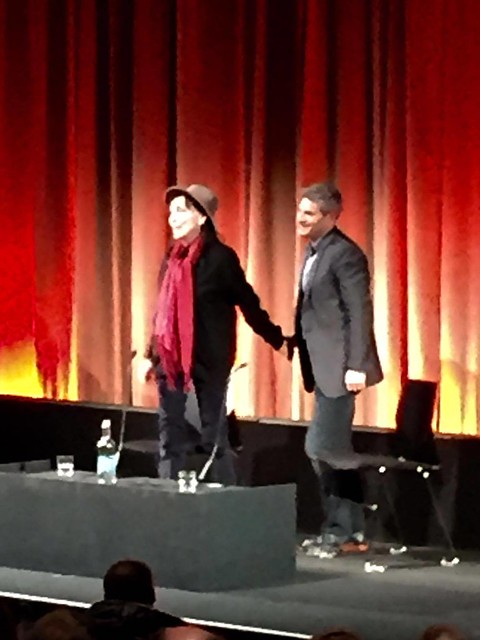
/ Above: some pretty grainy and pixellated shots of Karina onstage at The BFI with journalist Jason Solomons (Pal took them on his iPhone from the back row!) /
The questioners seemed fixated on Karina’s hairstyle and
wardrobe in Vivre sa vie, which she accepted with good grace. Was the black bob
inspired by Louise Brooks? Karina
revealed her hair in the film was actually a wig. It began as a very long wig
and the stylist kept cutting it shorter and shorter. She didn’t know – maybe!
People compared it to Louise Brooks afterwards. As for the clothes: they look astonishingly
cool to modern eyes - that late fifties / early sixties period was the acme of
style for both men and women (same era as the early seasons of TV's Mad Men). The 22-year old Karina certainly looks
sensational in her simple pencil skirts, ruffled blouses and cardigans –
although she would have looked chic in a potato sack.
One annoying question actually led to an interesting
response. Weirdly, one woman asked Karina what young modern actresses she
admired. (Did the questioner honestly think Karina was going to reply, “Jennifer
Lawrence!”?) Karina seemed nonplussed, asked her to repeat the question and
then confessed she has a hard time keeping track of new actors, there are so
many. They don’t usually make an impression on her unless they’ve been around
a few years and become established. Then somehow the subject changed to what
actresses Karina admired when she was growing up and the answer was more
illuminating: Judy Garland, Ava Gardner and Edith Piaf. In terms of warmth,
radiance and the capacity for expressing both hurt and happiness, you can
clearly see the influence of Garland and Piaf on Karina’s acting.
I learned afterwards of one fascinating movie factoid from
one of Karina’s other onstage interview sessions for a different film at The
BFI. (Karina was interviewed about three times at The BFI while she was in London). She was asked about Godard’s Le Mepris (1963), in which Karina herself does not appear. Instead, Brigitte Bardot gives one
of her best performances in the role of Camille. Bardot was always Godard’s first
choice – but according to Karina, the producers pressured Godard to consider
another great European art cinema leading lady of the period – Italy’s tousle-haired blonde lioness and Michelangelo Antonioni's muse, Monica
Vitti. I revere the gorgeous Vitti and she would have been great – but very different – as Camille.
Godard met with her in Rome to discuss Le Mepris. Vitti arrived an hour late
and reportedly stared out the window the whole time, indifferent. So the role
went to Bardot instead and the rest is history. Interestingly, for segments of
Le Mepris Bardot dons a short jet-black wig that recalls ... Anna Karina in Vivre
sa vie!
/ Brigitte Bardot in Le Mepris (1963) /
My highlights: Karina described how, when she first arrived
in Paris as a 17-year old runaway, she was “discovered” in the cafe Les Deux Magots and
snapped-up to be a fashion model. One day on a photo shoot she was telling the
hair stylist or make-up artist she wanted to be an actress; an older woman with
a big hat smoking a cigar overhead and inquired what Karina’s name was. When Karina
replied “Hanne Karin Blarke Bayer”, the woman announced, “You should call
yourself Anna Karina!” Afterwards Karina learned the mysterious older woman
was – Coco Chanel! The final question of the night was: what was Karina’s
mindset as a teenager, hitchhiking to Paris on her own, not speaking a word of
French? Karina recalled how poor she was on arrival (she owned one pair of high
heels and one black dress) and expressed astonishment at how brave and gutsy she’d
been. (Karina admitted her motivation was to escape her unhappy home life with
her mother and abusive stepfather). How lucky for generations of cinema goers Anna
Karina that did flee to Paris when she did!
Annabella Lwin of the mighty Bow Wow Wow in London. 30 April 2012
Was there ever a band as underrated or misunderstood as Bow Wow Wow? Suspicion about the anarcho-delinquents's “authenticity” (that tiresome preoccupation of rockist killjoys) dates all the way back to their origins as the band “manufactured” by Malcolm McLaren as his new post-Sex Pistols shock tactic. As their own Wikipedia page baldly states: “Bow Wow Wow are an English 1980s New Wave band created by Malcolm McLaren to promote his and business partner Vivienne Westwood's New Romantic fashion lines.” This is like waving a red rag to the kind of people who fret about “style over substance.” I would argue: to model Vivienne Westwood’s cutting-edge pirate and buccaneer range – what better reason to form a band?! But that’s just me.
Anyway, in 1981 the Situationist punk instigator lured the backing musicians away from Adam Ant’s band (Adam’s Ants, if you prefer) and installed as their front woman a nubile but musically inexperienced half-Burmese 14-year old ingénue discovered working at the local drycleaners. (Legend has it Annabella Lwin – real name: Myant Myant Aye - was overheard singing along to a Stevie Wonder song on the radio. In a fun pop footnote, Bow Wow Wow was initially meant to have two lead singers: punk Lolita Annabella plus a pre-Culture Club Boy George, then billed as Lieutenant Lush. He didn’t make the final cut). Eternal agent provocateur McLaren must have been doing something right if he’s still so reviled and divisive even in death (he died aged 64 in 2010). To me, the man was a truly Warholian figure, a conceptualist, and (like former partner Westwood) a genuine English eccentric. As a person, he was seemingly an amoral and disloyal prat, but he was also a twisted pop visionary. Anyone who dismisses his influence needs to read England’s Dreaming (Jon Savage’s definitive account of UK punk history, which gives a great warts-and- all appraisal of McLaren’s accomplishments).
And if McLaren was “guilty” of cynically contriving a band to score hits, Bow Wow Wow’s rowdy but adventurous left-field mixture of influences (thunderous “tribal" African Burundi drums, lacerating guitar that variously evokes surf, rockabilly, Ennio Morricone Spaghetti Western soundtracks and African/Latin sounds, all overlaid with an unpolished teenage punkette alternately ranting and cooing) was hardly a safe guaranteed commercial bet!
Another reason Bow Wow Wow might not have been taken as seriously as they merit becomes apparent when you compare them against their post-punk peers circa 1981. The stark likes of Siouxsie and The Banshees, Joy Division and Public Image Ltd were self-evidently serious, art-y and gloomy, and therefore instantly credible. With their riotously funny and sexy songs and Day Glo pop choruses, colourful modern-primitive Vivienne Westwood wardrobes, Mohawk haircuts and dodgy genesis, Bow Wow Wow were clearly an entirely different proposition.
Anyway, what does it matter when 1) Bow Wow Wow’s songs still sound strange, fresh, exotic and intoxicating a good thirty years later and 2) they were (and are) an absolutely ferocious live act onstage? I don’t know how many people under forty even know who Bow Wow Wow are, but for the most part they’re remembered with genuine affection, and Bow Wow Wow’s musical DNA is audible in the disparate likes of MIA, The Red Hot Chilli Peppers, No Doubt, the Ting Tings and Vampire Weekend. Even Madonna’s recent (less than rapturously received) single "Give Me All Your Luvin'", with its spelled-out and chanted chorus and minimalist twang-y surf guitar sound, would appear to owe Bow Wow Wow a debt as much as Toni Basil’s “Hey Mickey”.
Bow Wow Wow’s existence was always tumultuous. The original line up formed in 1981 by McLaren split acrimoniously by 1983. Annabella (now residing in Los Angeles) and bassist Leigh Gorman reconciled and revived varying line-ups from 1997 onwards to hit the punk revival circuit, but only performing in the US. I never thought I’d get to see them here in the UK, where they hadn’t toured since their early 1980s heyday. So when this London “comeback” gig was announced, I leapt at the chance to see them – a band that had thrilled my punk heart as a teenager growing up in rural Quebec. For this UK tour, the only original members are Annabella and Gorman: Lanky Mohawked guitar genius Matthew Ashman tragically died of diabetes-related causes aged only 35 in 1995, and drummer David Barbarossa apparently declined to participate.
They opened with the storming “Giant Sized Baby Thing”, which starts with Gorman singing/rapping lead, allowing Annabella a delayed “star entrance” and creating a sense of building anticipation. When she finally shimmies onstage, raving like a female Mark E Smith of The Fall, everyone gasps and starts frantically snapping her picture with their camera phones (me included). To me, she’s always looked like one of the golden-skinned Tahitian girls from a Paul Gauguin painting given a radical punk make-over. At 46, Annabella is still exquisite (and because she started so young is a good decade younger than most of her punk peers). Obviously she grew-out her signature Mohawk long ago (did any woman ever look more beautiful with a Mohawk?). Radiantly smiling, tiny and more voluptuous these days, she’s gone heavy on the silver Cleopatra/Nina Hagen eyeliner winged all the way up her temples. It looked dramatic and punk-y, but her face is so delicately beautiful she could have easily gone without it.
Sorry to keep gushing about one of my teenage crushes, but Annabella is an utterly charismatic front woman and vastly underrated as a singer. Her truly beguiling voice is sometimes bratty, sometimes alluring (within the same song!) and worthy of comparison to Deborah Harry or Poly Styrene. And like Madonna, Annabella’s voice remains girlish and kittenish in middle age. Annabella is also still a whirling dervish onstage, with a different dance for every song (when they lash into “Uomo Sex Al Apache”, for example, she does a sexy Indian squaw rain dance).
The current line-up is killer (special kudos to the drummer for nailing the trademark galvanising Bow Wow Wow drum sound). My friend Lisa and I mosh and pogo by the very front of the stage. (You’d have to be dead not to dance to the likes of “Aphrodisiac” and “Go Wild in the Country”). The music is too vital and frantic for it to feel like a golden oldies nostalgia concert. A true punk gig, Bow Wow Wow plays for a tight hour, no flab, and return for a two song encore. Every song is a catchy bubblegum punk tantrum: Bow Wow Wow may not have scored that many chart hits, but they have more great sly, funny, cheeky and provocative songs than people give them credit for. So many in fact they tore through the old favourites (the only song that felt a bit rote was “I Want Candy”: I bet they secretly hate it but feel obligated to include it!), but still left out “Chihuahua”, for me their most melancholic and haunting moment. Perhaps Annabella is sick of singing the line “I’m a horrid little idiot in a band called Bow Wow Wow ...”
The reviews of Bow Wow Wow's UK tour have been pretty glowing so far: Louder Than War website reviewed their Southampton concert. Couldn't agree more with Simon Price of The Independent's assessment "Lwin delivers one of the most life-affirming, smile-inducing performances I've seen all year." The Guardian's critic was perhaps a bit dismissive, but they also ran a fascinating interview with them.
Even if you’ve seen her perform before, it’s always genuinely astonishing to see Grace Jones in the flesh. The imperiously beautiful face with sculpted bone structure Nefertiti herself would envy; the taut and sinewy Amazonian limbs seemingly carved out of ebony. Onstage Jones is completely mesmerizing (and, at 62, eerily ageless). Her sexy but sinister and androgynous persona suggests a combination of dominatrix / alien / android and warrior.
Like her January 2009 gig at The Roundhouse in Camden, the Royal Albert Hall show melded tracks from her majestic 2008 comeback album Hurricane with classics culled from her essential trio of early 1980s recordings Warm Leatherette, Nightclubbing and Living My Life; songs which don’t just still sound modern, they still sound futuristic.
Thirty minutes later than scheduled, the curtain fell to reveal Jones isolated onstage entirely concealed within a silver tinfoil-like burka. She sang the opening song “This Is” from inside it, throwing art-y sculptural shapes within its folds. Withholding her appearance when everyone was gagging to see Jones made for a dramatic entrance but the song was a good five minutes long: you kept expecting her to burst out of her shroud but she stayed inside it for the entire duration of the song. Not being able to see her became anticlimactic, creating a sense of impatience.
When she unveiled herself from her burka, Jones was revealed in a brown and white striped catsuit that turned her into human / zebra hybrid, with a waist length mane of platinum white albino hair: the first of an amazing series of costumes by Eiko Ishioka, which included a black and red PVC catsuit and mask combo that turned Jones into a Spiderwoman/Medusa combo, and ancient Egyptian pharaoh chic.
(Ishioka’s costumes cleverly evoked memories of Jones’s key looks and images over the years. The brown and white stripes of the zebra catsuit recalled photos of the late Keith Haring transforming a nude Jones into a Masai warrior with white body paint).
For the first part of the RAH show the choice of song sequence felt disjointed and abrupt. And while her costume changes were remarkably speedy (her band continued playing, extending the ends of songs, and Jones herself kept up banter from the wings while changing) so many pauses couldn’t help but disrupt the momentum.
Keeping the band virtually concealed at the very back of stage was an odd choice (at first I feared she was performing to musical backing tracks until I started seeing the tops of the musicians’ heads bobbing on the horizon). It meant no opportunity for interaction or chemistry between Jones and her (awesomely tight and versatile) band, but then traditionally when a diva like Marlene Dietrich performed her musicians would have been hidden in the orchestra pit with her the sole focus onstage, so it did make a kind of sense.
The gig was also bedevilled by a surprising amount of technical glitches: no fan positioned where it should be (“I may have legs like a racehorse, but I don’t like to sweat,” she grumbled), no stool placed centre stage for the mournful ballad “Sunset, Sunrise”. The video for “Corporate Cannibal” stopped playing midway through the song. The eerie lookalike mannequin she was meant to tango with during “Libertango” was missing (which makes you wonder just how chaotic and disorganized it was backstage for such an important prop to be missing in action). “This is the Royal Albert Hall!” she fretted. “This isn’t supposed to happen at The Royal Albert Hall!”
(Corporate Cannibal costume)
They hardly mattered though, when Jones and her band were on such fierce form. As the gig progressed things began to flow better, sustaining a sinuous and alluring mood and Jones herself was utterly magnetic. Her bossa nova-tinged disco interpretation of “La Vie en Rose” was tender and dramatic.
(Note: for this number Jones wore an outrageous exploding flame burst orange dress and headpiece; towards the end she began twirling, revealing it was backless and she was naked except for a g-string. Except for anyone in the front you could clearly see she was in fact wearing a bronze catsuit that zipped down the back!).
Jones tore into the autobiographical “Williams Blood” like a tigress, working herself into a rage recalling her strict religious Jamaican upbringing. Both “My Jamaican Guy” and “Pull Up to the Bumper”, meanwhile, showcased Jones at her most warm, frankly lewd, relaxed and funny.
A hard rock “Love is the Drug” with green lasers pointed at the mirrored surface of her silver bowler hat, transformed Jones into a human disco ball.
Jones often makes musical and sartorial references to iconic chanteuses like Edith Piaf, Marlene Dietrich and Josephine Baker. She’s one of the few modern performers who belong in their otherworldly company. Seeing Jones live is a reminder she is the modern equivalent of a Dietrich or Baker: she transfixes and seduces us the way they did for earlier audiences.
/ Marlene Dietrich in butch Navy drag in Seven Sinners /
Hollywood 90028 (1973)
-
*Hollywood 90028* was written, directed and produced by Christina
Hornisher. She seems to have worked on it intermittently in 1969 and 1970
but it was no...
THE GO-BETWEEN 1971
-
*"You flew too near the sun; you were scorched."*
Spoiler Alert. This is a critical essay, not a review, so plot points are
revealed for discussion
Gee, I...
The end is near
-
Cookie has, for some time now, thought about closing up shop on this blog.
I mean DHTiSH has had a good run, but after 15 years, it's time for a
diff...
Grace Jones
-
Artist: Grace Jones
LP: 7" single
Song: "I've Seen That Face Before (Liber Tango)"
[ listen ]
The incredible Grace Jones turned 76 one month ago today. ...
National Silent Movie Day: Manhandled (1924)
-
Wednesday, Sept. 29, 2021, is National Silent Movie Day. New York City's
beloved Film Forum is celebrating with a screening of Allan Dwan's 1924
silent...
SHABLAM:
-
While we are speaking in onomatopoeia,
"Girl, what did that girl just say, girl?" This queen is giving basic boot
camp for drag queens as she throws an a...
Who was Tamara Matul?
-
[image: Marlene Dietrich, Josef von Sternberg, Rudolf Sieber, Tamara Matul
at Olympic Auditorium, Los Angeles, 1934]
Rudolf Sieber, Tamara Matul, Marlene...
-
Welcome Refugees from tumblr!
[image: Christofascists.]
I'm busy exporting what's left of Drifting over the Ether & A Long Lunch. I
will be posting upda...
My Baking Supervisor
-
Meet Mr. Caspurr Burgers. He says:
"I helped you get up three hours earlier than usual this morning and this
is how you repay me? What is with this glass...
Béatrice Dalle Day
-
'Driving south on the A7 from Lyon to Marseille, I find my thoughts turning
to some of the scenes associated with the name of Béatrice Dalle. They
incl...
A BOGUS SPEECH BY A BOGUS PRESIDENT
-
Yesterday, Obama spoke in New Orleans at the 10 year anniversary of
Katrina. I'm not quite sure why we celebrate disasters' anniversaries, but
it was a ch...
DJ. Journalist. Greaser punk. Malcontent. Jack of all trades, master of none. Like the Shangri-Las song, I'm good-bad, but not evil. I revel in trashiness