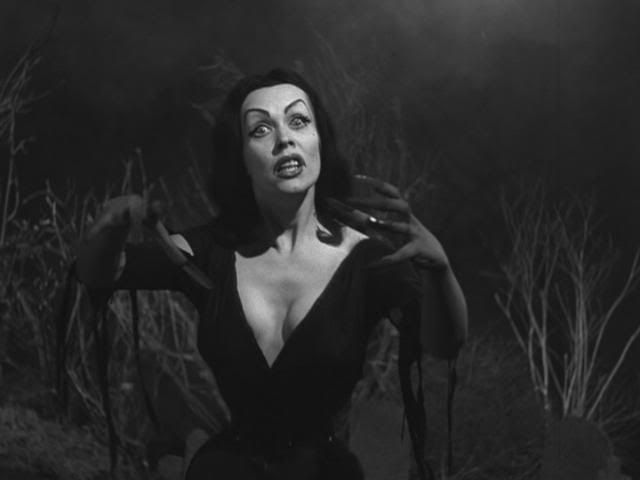
Showing posts with label Juliette Greco. Show all posts

Sunday, 23 September 2012

20 September 2012 Dr Sketchy Set List


/ Bettie Page demonstrating how to fill out a pair of fishnet tights /

This Dr Sketchy (held at the ever-dissolute and nicotine-stained Royal Vauxhall Tavern) represents my first time DJ’ing since 1) Bestival and 2) getting back from my long weekend in Paris. (I might well do a separate blog on my Parisian misadventures). I’d gone straight into work on the Monday morning after getting back from Paris late Sunday night, and had a really draining week. So I was pretty dead on my feet and mellow at this Dr Sketchy.

For this night, Dr Sketchy’s own glamorous promoter / stage manageress Clare Marie was on emcee duties. The burlesque performer was curvaceous redhead Violet Strangelove (who doesn't appear to have a website for me to point you towards, sadly). And as an added bonus, the bill included a special musical guest: Gracie and The G-Spots. With effervescent blonde Gracie on smoky vocals (she can really belt it out!) accompanied by keyboardist and saxophonist, they tore through some great jazz and cabaret standards (“Whatever Lola Wants”, “Stormy Weather”, “Perhaps, Perhaps, Perhaps”) plus some more raunchy material I assume was original compositions (songs about lesbian sex, and how to not lose your page in Fifty Shades of Grey while masturbating!).

Early on when the RVT was still filling up and I was easing my way into things with exotica and lounge music, I played “Misirlou” by Martin Denny and “Les amours perdues” by Serge Gainsbourg. Just to be perverse, am posting videos for two different interpretations of these tracks!


/ Korla Pandit performing "Misirlou" on his TV Show Korla Pandit's Adventures in Music in the fifties /

I’ve got to thank Moses Longpiece for turning me onto Korla Pandit (I have no CDs by him, which I clearly need to rectify). Eerie, sensual and hypnotic, the enigmatic Pandit was one of the pioneering godfathers of exotica, to be mentioned in the same breath as Denny, Les Baxter and Yma Sumac. In the early 1950s he created a sensation on American TV with his own daily 15-minute programme Korla Pandit’s Adventures in Music. Every episode featured Pandit (sporting his signature jewelled-turban) seated at his Hammond organ (often playing piano simultaneously), inscrutably silent but wielding his dreamy liquid doe eyed-gaze at the viewer while he played. Apparently the sight and sound of this mysterious Indian musician cast a potent spell on his audience, especially love-struck housewives. It’s not hard to see why: in surviving clips, the dusky and androgynously pretty Pandit packs a genuine erotic charge. (Thankfully, an amazing amount of Adventures in Music seems to have survived; you can find a treasure trove of Pandit in performance on Youtube).

All of this is already fascinating enough. In 2001, though, Los Angeles Magazine published an article entitled “The Many Faces of Korla Pandit” which tore the lid off the facade Pandit had scrupulously maintained until his death in 1998. The piece revealed that Pandit was in fact a light-skinned African-American born John Roland in Missouri in 1921. To bypass the racism of the period, he re-christened himself as the Mexican “Juan Rolando” and played Latin music. Later on, he found fame by adopting the jasmine-scented persona of New Delhi-born Indian organist Korla Pandit – and kept his secret intact for decades, even from close intimates. How incredible! In this regard, Pandit has much in common with Anglo-Indian Hollywood actress Merle Oberon, who denied her mixed race origins and would pretend her dark-skinned sari-clad Indian mother was her maid, or notorious literary hoaxster JT LeRoy.

In 1994, not long before his death, Tim Burton cast Pandit as himself for a memorable cameo appearance in Ed Wood. (The only Tim Burton-Johnny Depp film I’ve ever liked). It makes for a nice epitaph for Korla Pandit. 


Read more about Pandit here, or on his own official website.


My reverence for quintessential French beatnik chanteuse  Juliette Greco is pretty well-documented. Here is the high priestess of French chanson in 1959, at the height of her witchy Morticia Addams beauty, singing the great Serge Gainsbourg song “Les amours perdues” while reclining on a giant slowly-revolving record, her drowned Ophelia hair spread out like long black seaweed beneath her. Exquisite!


Juliette Gréco - Les amours perdues (1959) by sylvainsyl


Finally: I posted this blog using the new blogger.com interface. What a nightmare! Like Facebook with Timeline, the change to the new interface had long been threatened and wasn’t optional. It was simple, elegant, functional and user-friendly before. Creating this post took about five times longer than normal – ugh! I’d be curious to hear how other bloggers on here are finding it.

Moon Mist - Les Baxter
Xtabay - Yma Sumac
Misirlou - Martin Denny
Monkey Bird - The Revels
Les amours perdues - Serge Gainsbourg
Run - Jeri Southern
Cocktails for Two - Claude Duphiney
I Remember You - Chet Baker
Smoke Gets In Your Eyes - The Mallet Men
Drive-In - The Jaguars
Fever - Nancy Sit
The Mexican - The Fentones
Little Ole Wine Drinker Me - Robert Mitchum
One More Beer - The Earls of Suave
When I Get Low I Get High - Florence Joelle's Kiss of Fire
Frenzy - The Hindus
Madness - The Rhythm Rockers
Jim Dandy - Sara Lee and The Spades
Wiped-Out - The Escorts
You Done Messed Around and Made a Mean Woman Mad - Julia Bates
Screwdriver - Luchi
Night Scene - The Rumblers 8 Ball - The Hustlers
La valse des si - Juliette Greco
The Immediate Pleasure - John Barry (Beat Girl soundtrack)
Willow Weep for Me - Nina Simone
Night Walk - The Swingers
Is You Is Or Is You Ain't My Baby? Ann Richards

The Beast - Milt Buckner
Love for Sale - Eartha Kitt
Margaya - The Fender Four
Caterpillar Crawl - The Strangers
Oo Ba La Baby - Mamie Van Doren
Scorpion - The Carnations
Sick and Tired - Lula Reed
I Walk like Jayne Mansfield - The 5,6,7,8s
That Makes It - Jayne Mansfield
Baby Blues Rock - Carl Simpson
Are You Nervous? The Instrumentals
Dance with Me, Henry - Ann-Margret
The Flirt - Shirley and Lee
Yogi - The Bill Black Combo
He's The One - Ike and Tina Turner
Let's Twist Again - Johnny Hallyday
Sweetie Pie - Eddie Cochran
Strollin' After Dark - The Shades
Mack the Knife - Hildegard Knef
Begin the Beguine - Billy Fury
One Mint Julep - Sarah Vaughan
I Was Born to Cry - Johnny Thunders and Patti Paladdin
Ain't That Lovin' You, Baby - Elvis Presley
Dragon Walk - The Noble Men
Beat Party - Ritchie and The Squires
Get Back, Baby - Esquerita


Saturday, 1 January 2011

Juliette Greco at The Royal Festival Hall


/ Juliette Greco in the 1960s: trademark black dress and black eyeliner /

“When I was a young girl, Juliette Greco was my absolute idol ... If I want to be anybody, I want to be Juliette Greco.” Marianne Faithfull

I last saw Juliette Greco perform in June 2000 at The Barbican – one of the most mesmerising concerts I’ve ever seen. After a decade-long gap, she returned to London to cast another spell, this time at The Royal Festival Hall on 21 November 2010 to conclude the 2010 London Jazz Festival. My initial impression at seeing the now 83-year old grand dame of French chanson take the stage was to note that she looks regal but frail– until she opened her mouth. Greco’s impossibly deep and sensual voice, saturated in a lifetime of Gauloises (or Gitanes?) smoke and vin rouge, is still lacerating. (Someone once described Marlene Dietrich’s voice as sounding like autumn leaves being crunched under leather boots. It equally applies to Greco’s expressive throaty rasp). Then, that she is reassuringly still beautiful and her incredible charisma and sense of drama more potent than ever. Onstage, chanson’s great living exponent remains a torrent of seething emotion and volcanic intensity.

A quick summary for any newcomers to the magic of Juliette Greco: She emerged from the smoky cellar dives of post-war Left Bank Paris like Le Tabou and La Rose Rouge to achieve international stardom as both a chanteuse and an actress. Greco and her family had been active in the French Resistance, and her music and image are steeped in the rebellious, politicised bohemian French intellectual life centred around Saint-Germain-des-Prés. From early on she was encouraged to sing by the likes of by Jean-Paul Sartre and Boris Vian, and besotted leading French poets and philosophers wrote lyrics specially tailored for her (wonderful songs like “"Si tu t'imagines”, her first hit), establishing Greco as the black-clad high priestess of existentialism and a strong, enduring female presence in French popular culture. In the late 1940s she began an interracial affair with visiting American jazz star Miles Davis. Author Lewis MacAdams argues “the offspring of their three-year, long-distance liaison – of the marriage of bebop and existentialism – was the birth of cool.”

/ Beatnik icon: a very young Greco at the beginning of her career in the early fifties /


/ The birth of cool: Miles Davis and Juliette Greco in the fifties /


But hey I’m superficial, so it doesn’t hurt that in the 1950s Greco was lusciously, wantonly beautiful and nailed a timeless, striking almost Morticia Addams-esque look: tousled mane of dark hair, all-black wardrobe, kohl-blackened eyes under a Bettie Page fringe. The liner notes to one of her 1950s albums swoons about “the fascinating child-woman with the wild black hair and the deep-set burning eyes ...” Greco’s magnetic image set the template for female beatniks worldwide, who ironed their hair and donned winged black Cleopatra eyeliner and black polo neck sweaters in emulation. (As a fashion icon Greco belongs up there with countrywoman Brigitte Bardot and Edie Sedgwick. These days, fashion stylists and photographers probably reference the Greco style without realising where it originated).

/ Juliette Greco eyeliner technique /


/ Juliette Greco paper doll: weirdly, there's no black dress in the wardrobe selection! /


/ Various Greco faces over the years (during her fifties Hollywood stint, she had two nose jobs, which dramatically changed her appearance) /


/ Greco in Hollywood: co-starring with Richard Todd in the 1958 film The Naked Earth /


Anyway, it could have been a nostalgic trawl through Greco’s greatest hits, written for her by the likes of Jacques Brel and Serge Gainsbourg – which would still have been spellbinding. Instead it was an evening of stark minimalism: a black stage, Greco in her signature severe black dress (a floor-length bat wing-sleeved velvet shroud worthy of Vampira), and the formidable Greco songbook stripped down to just accordion (accordionist Jean-Louis Matinier) and piano (her husband and long-time accompanist Gérard Jouannest, who composed the music for many of Jacques Brel’s classics).

And while Greco has over 60 years of songs to chose from (she made her singing debut in 1949), she obviously chose the songs that have the greatest personal meaning for her, drawing largely from her majestic late-period work (like 1998’s Un jour d’ete et quelques nuits... and 2006’s Le temps d’une chanson) rather than solely 1950s and 60s crowd-pleasing material (for example, no “Sous les ciels de Paris”, and instead of "Les feuilles mortes", she sang Gainsbourg’s song about “Les feuilles mortes”,” La Chanson de Prevert”), although the set was certainly generously studded with Greco’s classics.

With her commanding theatrical gestures, Greco is as much an actress as she is a singer. Certainly she acts as much as she “sings”: melody definitely isn’t one of her priorities. Over the years Greco’s voice has coarsened and darkened, and is noticeably harsher and more guttural than on her old recordings. But it’s something she works to her advantage: Greco belongs to that elite group of female song stylists whose husky ravaged tones were powerful rather than pretty, and ideal for conveying romantic suffering and world weariness: think late-period Billie Holiday, Nina Simone, Hildegard Knef, Lotte Lenya, Dietrich, and younger singers like Nico and Marianne Faithfull, who very much followed in Greco’s tradition.

Greco hurled herself into every song, transforming each one into performance art. Her songs evoke a variety of moods: she tore into Brel’s "Bruxelles" with an almost angry glee, whereas Gainsbourg’s “La Javanaise” was spine-tingling, slowed-down and delicate. One thing she demonstrated is that at 83 she still retains her sensuality. Introducing “Deshabillez Moi” (Undress Me) she joked she really shouldn’t be singing it at her age, but it’s such a great song she will anyway – and then became the consummate self-mocking sex kitten, which she maintained for the rousing “Jolie Mome” and “L'Accordeon” (during which she played her own body with her fingertips as if it were an accordeon). Greco still has the erotic confidence of a great beauty (whose admirers included Miles Davis, Marlon Brando, Prince Aly Khan, Serge Gainsbourg, Sacha Distel and the film mogul Darryl F Zanuck, who tried to launch her as a Hollywood star in the 1950s), and clearly doesn’t doubt her allure. (In this regard, she reminded me of another slinky octogenarian chanteuse of the same vintage,Eartha Kitt, who we saw perform in 2007).


JULIETTE GRECO - Déshabillez-moi
Uploaded by currerbell. - Watch more music videos, in HD!


"Jolie Môme" Juliette Greco
Uploaded by lemondedeyanis. - Explore more music videos.

Ultimately, though, Greco is the consummate tragedienne and the most affecting songs were the bleak dirges. The old Edith Piaf standard “Les Amants d’un Jour” told the eerie story of the suicide pact between two doomed lovers. In her intro to “C’Etait un Train de Nuit” she explained that torture, war and death are all encompassed in the song, and then sang it with her eyes squeezed shut as if in horror. In it, she repeatedly gasps, “Je me souviens” (“I remember ...”) and describes scenes of prisoners on a train en route to a concentration camp. Brel’s tender “La chanson des vieux amants” ended with her covering her face in her hands as if in agony. Greco originally recorded another Brel masterpiece, “J’Arrive” in 1970, but the song – in which she confronts death, imploring, “Pourquoi moi? Pourquoi déjà?”(Why me? Why now?) -- obviously has added poignancy and greater intimations of mortality now that she’s singing it towards the end of her own life.

/ Greco performing "La chanson de vieux amants" in 2004 at The Olympia in Paris /


/ Autumn Leaves: Greco photographed by Pierre et Gilles in the eighties /

After seeing one of Marlene Dietrich’s last concerts in the 1970s, the film critic Kevin Thomas reflected, “she regarded her talent as a rare and precious wine that she would pour out drop by drop, and until it was gone it would be the most perfect, most refined of all.” Before Greco’s 2000 Barbican concert, she hadn’t performed in London since 1989 and then she waited a decade before returning. It was bittersweet knowing it was unlikely we’d ever see Greco again. For her Royal Festival Hall finale she sang a devastating “Ne Me Quitte Pas”. Greco’s is the angriest version you’ll ever hear of this Brel standard, shredding the elegant melody until it’s a savage plea (she virtually stamps her foot and shakes her fist when she sings it). Afterwards, drinking at the bar and reflecting on Greco’s artistry, commitment and urgency, we appreciated that we may have been born in the wrong era to have seen Edith Piaf, Billie Holiday or Dietrich perform, but we got to see Juliette Greco – every bit their equal. If this is the defiant but vulnerable Juliette Greco’s last performance in London, it was one none of us who saw it will ever forget.

/ Greco singing "Ne me quitte pas" on Italian TV /


/ Obviously photography was strictly forbidden, but at the very end of the night when La Greco came back out to take her curtain calls (and got a standing ovation), I managed to snatch this shot./


/ And Christian took this one: /


/ Someone shot this surprisingly good video of Greco performing "Avec le temps" at The Royal Festival Hall /


/ Strange, interesting litte clip of Greco filmed in 1966 in which she sings two of the songs she performed at The Royal Festival Hall: "Jolie Mome" and "Un Petit Poisson, Un Petit Oiseau." Most fascinating is the glimpses of her backstage in her dressing room, applying her thick black Cleopatra eyeliner /

A LOOK AT JULIETTE GRECO


The Royal Festival Hall concert didn't get much coverage in the press, but it got reviewed in The Telegraph. Not exactly the hippest publication (!), but you can read it here. To their credit they also interviewed her.

Excellent, very thorough overview of Greco's career here

I wrote this piece about Greco for the American punk website Razorcake way back in the early 2000s. I'd write it very differently now -- but here it is

Monday, 11 October 2010

Dr Sketchy 4 October 2010 Set List


/ Above: Perma-pouting film noir icon Gloria Grahame in sweater girl mode, demonstrating how best to fill out a bullet bra /

Getting to the venue was a chaotic, sweat-drenched nightmare, but even the tube strike didn't dampen what turned out to be a fun night. The featured performer and model was Beau Burlington. For one of her poses she worked a motorcycle mama / rock chick look (black leather jacket, long black boots), so I cranked up some female-fronted rockabilly: Wanda Jackson, Jackie De Shannon and a sultry psychobilly deconstruction of the old Peggy Lee standard “Woman” by my old mates Empress of Fur.

For one of Beau’s earlier poses I played a great new discovery. I love the jazz staple “Caravan”, and this accordion-driven version by The Dell Trio is the most berserk I’ve ever heard – so lurching, abrasive and frantic, it sounds like it could be played under the opening credits of a horror film. Listen to it here on the great blog The Homoerratic Radio Show.

Little Ole Wine Drinker Me - Robert Mitchum
Stranger in My Own Home Town - The Earls of Suave
Love Potion # 9 - Nancy Sit
Tonight You Belong to Me - Patience and Prudence
Drums A Go Go - The Hollywood Persuaders
Oh Lonesome Me - Ann-Margret
You Ain't Nothin' But a Hound Dog - Little Esther
Yogi - Bill Black Combo
Oo Bala Baby - Mamie van Doren
Hearts Made of Stone - Otis William & The Charms
I'll Upset You Baby - Lula Reed
Poontang - The Treniers
Fool I Am - Pat Ferguson
My Heart Goes Piddily Patter Patter - Nappy Brown
I Would if I Could - Ruth Brown
Too Old to Cut the Mustard - Marlene Dietrich & Rosemary Clooney
Honey Rock - Barney Kessel
Comin' Home - The Delmonas
Gizmo - Jimmy Heaps
Tight Skirt, Tight Sweater - The Versatones
Caravan - The Dell Trio
Teach Me Tonight - Dinah Washington
Too Close for Comfort - Eartha Kitt
Yes Sir, That's My Baby - Ann Richards
Baby Won't You Please Come Home - Julie London
Spring, Sprang, Sprung - Jack Fascinato
I Wanna Be Loved - Ann-Margret
Les Feuilles Mortes - Juliette Greco
Autumn Leaves - Eartha Kitt
Petite Fleur - Chet Baker
Crazy Horse Swing - Serge Gainsbourg (Strip-tease soundtrack)
My Heart Belongs to Daddy - Hildegard Knef
Tuxedo Junction - Bill Black Combo
I Did What You Told Me - Adam Faith (Beat Girl soundtrack)
Woh! Woh! Yea - The Dynamos
If I Could Be with You - Mae West
Night Scene - The Rumblers
Lucky - Lizabeth Scott
Beaver Shot - The Periscopes
Woman - Empress of Fur
You Don't Know, Baby - Wanda Jackson
Trouble - Jackie De Shannon
The Strip - The Upsetters
Harlem Nocturne - The Viscounts
L'Eau à La Bouche - Serge Gainsbourg
Strip-tease - Nico (Strip-tease soundtrack)
Misirlou - Laurindo Almeida
You're My Thrill - Chet Baker (instrumental version)
Mack the Knife - Hildegard Knef
Begin the Beguine - Billy Fury
Boulevard of Broken Dreams / Fever - Sam Butera
I Wanna Be Loved by You - Marilyn Monroe
Everybody Loves My Baby - Brigitte Bardot

Sleazy does it ... my all-time favourite actor, the ultra-suave Robert Mitchum, was an underrated singer.


Resident emcee Dusty Limits suggested the theme "autumn" -- a good excuse to play Juliette Greco's version of the classic chanson "Les Feuilles Mortes", followed by Eartha Kitt singing the English language version, "Autumn Leaves." Here La Greco gives an exquisite and intense performance of "Les Feuilles Mortes" on German TV in the early 70s -- but check out how stony-faced and unmoved the tuxedo-clad audience is at the end. Tough crowd!


People often ask me, So what kind of music do you play at Dr Sketchy? Obviously it covers a wide range of various styles of kitsch and vintage sleaze, but strictly speaking the technical term for much of what I play is “Tittyshaker.” Think desperate, grinding instrumentals propelled by honking saxophone designed for strippers to rotate their nipple tassels to; the soundtracks of grainy black and white 1950s and 60s sexploitation B-movies; sequinned go-go dancers writhing in a cage ... and you’re on the right track. If you're curious to hear more, this excellent website is devoted to the dark art of the tittyshaker.

A prime example ...


For all your Dr Sketchy needs, go to the website.

Saturday, 21 August 2010

Gainsbourg: La vie heroique

Saw the new Serge Gainsbourg biopic earlier this week. Not sure what to make of it: the tone and pacing of the film strange and uneven, some of the more whimsical bits really grated on me (am unconvinced by the puppet representing Gainsbourg’s subconscious – if you see the film, you’ll know what I mean!). On the plus side, it looked stunning, the performances were great (was really enjoyable seeing how the likes of Brigitte Bardot and Juliette Greco portrayed) and Gainsbourg’s music on the soundtrack gave me goose bumps. Many years ago I wrote a piece about Gainsbourg for the punk zine Razorcake. Seeing the film inspired me to dredge it up again: I’d write it very differently now, but in any case here it is!

The UK trailer for the film:


Gainsbourg at his finest:

Friday, 16 July 2010

Dr Sketchy Set List for 14 July 2010

Another great Dr Sketchy night at The Royal Vauxhall Tavern, probably my favourite venue to DJ at. Because it fell on 14 July, the night had a Bastille Day theme -- which explains why you see more French music than usual by the likes of Serge Gainsbourg, Juliette Greco, Edith Piaf and Brigitte Bardot twined amongst the customary vintage sleaze. A particular highlight: our glamorous Parisian model Mam'zelle Maz demonstrated she was talented as well as beautiful by warbling a husky-voiced French chanson.

Frankie and Johnny - Bill Black Combo
Wino - Jack McVea
Wait a Minute Baby - Esquerita
Evil Gal Blues - Ann Richards
Bop Pills - Macy "Skip" Skipper
Cafe Bohemian - The Enchanters
Baby Let Me Bang Your Box - The Bangers
Monkey Bird - The Revels
Taki Rari - Yma Sumac
Chihuahua - Luis Oliveira and His Bandodalua Boys
Jim Dandy - LaVerne Baker
Frenzy - The Hindus
Salamander - Mamie van Doren
Drive Daddy Drive - Little Sylvia
Tight Skirt, Tight Sweater - The Versatones
Nosey Joe - Bull Moose Jackson
The Whip - The Originals
Rock Me All Night Long - Ella Mae Morse
Roll with Me Henry - Etta James
Fool I Am - Pat Ferguson
Blue Kat - Chuck Rio & The Originals
I Was Born to Cry - Dion
Fever - Ann-Margret
Beat Girl - John Barry (Beat Girl Soundtrack)
Crazy Horse Swing - Serge Gainsbourg (Strip-Tease soundtrack)
Lover - Peggy Lee
Paris Canaille - Juliette Greco
Sexe - Line Renaud
Dormir - Denise Darcel
The Touch - Eartha Kitt
The Beast - Milt Buckner
Night Train - Alvino Rey
Je Sais Que Vous êtes Jolie- Marlene Dietrich
My Man - Denise Darcel
T'es Beau Tu Sais - Edith Piaf
He Is A Man - Lizabeth Scott
My Man - Eartha Kitt
I Want a Boy - Connie Russell
Bewildered - Shirley and Lee
Yogi - Bill Black Combo
Call Me Irresponsible - Dinah Washington
Hearts of Stone - Rudy Grey
Sous Les Ciels de Paris - Juliette Greco
The Girls of Paris - Lee Hazlewood
The Boulevard of Broken Dreams - Sam Butera
Je T'Aime, Moi Non Plus - Serge Gainsbourg & Brigitte Bardot
La Vie en Rose - Edith Piaf
Uptown to Harlem - Johnny Thunders & Patti Paladin
No Good Lover - Mickey & Sylvia
Lucille - Little Richard
Little Things Mean a Lot - Jayne Mansfield
Chicken Grabber - The Nite Hawks
I'm In Love for the Very First Time - Diana Dors
Shangri-La - Spike Jones New Band
All of Me - Mae West
Oh, Baby - Esquerita
I'm a Bad, Bad Girl - Little Esther
Je Me Donne a Qui Me Plait - Brigitte Bardot
Les Cigarillos - Serge Gainsbourg

The delectable Brigitte Bardot in her sex kitten prime singing "Je Me Donne a Qui Me Plait" in a strange bouffant black wig:


One of my perennial favourite tunes to play at Dr Sketchy is the sleazy and atmospheric bump and grind instrumental "Blue Kat" by Chuck Rio & The Originals -- that saxophone! I first heard it on the soundtrack of John Water's 1974 trash epic Female Trouble and it's haunted me ever since. (John Waters soundtracks are an endless source of inspiration for me). I can't imagine not playing this song at a Dr Sketchy.


Keep track of upcoming Dr Sketchy events here.