Showing posts with label John Waters. Show all posts

Wednesday, 6 August 2025

Reflections on ... My Mom Jayne (2025) for Filthy Dreams

“Jayne Mansfield was the ultimate sex kitten-gone-berserk, the eternal starlet grasping for fame with both hands, Kenneth Anger’s cooing, squealing Hollywood Babylon made flesh. What, one might justifiably wonder, must it have been like having this outrageous creature for a mother?” 


/ Jayne Mansfield and daughter Mariska Hargitay, 1964 /

Yes! Read my new article “Bow Down Before Jayne Mansfield, the Queen of Low-Brow Trash Culture” which features my reflections on Mariska Hargitay’s 2025 HBO documentary My Mom Jayne on FilthyDreams – the provocative blog (for minorities who don't even fit into our own minorities) that analyses art, politics, and culture with a touch of camp! 


/ Pictured: a glamour shot of Jayne Mansfield promoting the 1963 film Homesick for St Pauli /

Saturday, 7 October 2023

Reflections on ... Little Richard: I am Everything (2023)


I finally watched the 2023 documentary Little Richard: I Am Everything. (It's streaming on Amazon Prime). Director Lisa Cortés succeeds in making it feel cinematic, and the archival performance footage of Richard in his prime alone is worthwhile. The best “talking head” contributors are Richard’s late exotic dancer girlfriend Lee Angel and pioneering transgender nightclub entertainer Sir Lady Java - and John Waters, of course! (Waters recalls he used to shoplift Richard’s records as a kid, and that his signature pencil-line mustache is a direct “twisted tribute”). By comparison, big name guests like Mick Jagger and Tom Jones mostly offer show biz platitudes (and Billy Porter is self-aggrandizing). 

One thing it accomplishes nicely: so often hidebound rock critics and filmmakers get hung up on "who influenced who" which descends into "who ripped off who" as if it’s always a negative thing. It's common knowledge that when “the Georgia Peach” was just starting out as a performer without his persona cemented, two flaming queer Black male rhythm and blues musicians - Billy Wright and Esquerita - inspired his musical approach and appearance (the towering, processed conk, thick make-up and mustache). As one of the talking heads savvily argues, Richard didn’t “steal” from them: rather, they provided a mirror for Richard to see his true self. 

Similarly, Cortés gives Ike Turner his due. A musical expert notes that Richard's piano playing was beholden to Turner’s, something Richard admitted (he raved about the impact of hearing "Rocket 88", the 1951 Kings of Rhythm track widely considered the first-ever rock'n'roll single). Yes, Ike was a monster to Tina, but his trailblazing musical genius must be acknowledged. 

Also: I am Everything zeroes in on Richard’s commercial eclipse. Various theories are offered: all the acclaim went to Elvis. Richard was simply so black and queer that he threatened the musical establishment. And, of course, he kept jettisoning rock’n’roll to record gospel music instead. But ultimately, as someone clarifies, in the fifties, Richard’s primary audience was teenagers – the ficklest audience of all! By the early sixties, they’d simply moved on to the next big thing. 

The finale where Cortés demonstrates Richard’s effect on modern pop culture with a montage presumably meant to represent his spiritual descendants (Cher! Harry Styles! Lady GaGa! Lizzo!) is misbegotten. Are we meant to think anyone who ever wore sequins owes Little Richard a debt? (At least the inclusion of Lil Nas X - a modern flamboyant Black male performer - is apt). Richard was instilled with a sense of shame and guilt as a child, and throughout his life alternated between extreme hedonism and extreme fundamentalist Christianity. Sadly, as one commentator argues, Richard set a great liberating example for other people but rarely truly enjoyed that liberation himself.

Monday, 21 August 2023

Remembering Jean Hill (15 November 1946 – 21 August 2013)


“The doorbell rang, I opened the door and there she was – my dream-come-true, four-hundred pounds of raw talent. I carefully invited Jean in, and the first thing she did was goose me to totally unnerve me. She asked for a drink and got it. She laughed and said she had no objections to nudity (“I’ve got a lot to show, honey”), would certainly dye her hair blonde (“Big deal. I’ve had blonde hair twice before”) and asked for a special chair that wouldn’t break when she sat on it. After listening to her give a hilarious reading from the script, we went over the contract, I gave her an advance on her salary, and it was settled.” 

/ John Waters recalling his first encounter with Jean Hill when she auditioned for Desperate Living in the book Shock Value (1981) / 

“Could the mighty Jean Hill in her very heart have been a deeply sincere, vulnerable and perhaps even a (gasp!) shy person? Actually, I think she was, and her outrageous persona was a way to compensate for this and connect with people and get them to drop the bullshit, prejudice and affectation and deal with her person-to-person. She refused to be labelled. She was fat, she was black, and her health problems forced her to become a kind of permanent “patient,” and she was sometimes on welfare, so she was also filed as a “charity case,” but she refused to be put in any of these boxes or to be looked down upon. She was forged in defiance. There is nothing unique about that — the ghetto is full of defiant people, but it becomes special when that defiance is coupled with intelligence, wit, humour, compassion and a flair for the absurd, and that’s what made Jean stand out in any crowd.” 

/ From the Bright Lights Film Journal's lyrical, sensitive obituary for Jean Hill by Jack Stevenson / 

Died on this day ten years ago: John Waters’ majestic “soul diva” Jean Hill (15 November 1946 – 21 August 2013), unforgettable as Grizelda in his 1977 bad taste punk classick Desperate Living. (She also makes a fleeting but vivid cameo appearance in Waters' 1981 film Polyester). 


Saturday, 15 April 2023

Reflections on ... David Hurles of Old Reliable (12 September 1944 – 12 April 2023)

“David Hurles, the photographer and filmmaker whose models were plucked from the obscurity of the seedy streets and onto rolls of film shot for his small company Old Reliable, has died today, April 12. Hurles’ longtime friend, author and editor Dian Hanson announced his passing to The Bob Mizer Foundation this afternoon. Hurles acted as the sole employee of Old Reliable, a pornographic media company that he founded in the 1970s in San Francisco. Prior to its founding, Hurles shot his first professional model in 1968. As a photographer, Hurles focused his lens on the unsavory dregs of society – notably, tattooed, shaggy-haired, and sneering drug addicts and convicts – a far cry from the cleaner-cut models who had appeared throughout the magazine pages and film loops until that time ...” 

/ From the latest Bob Mizer Foundation e-newsletter dated 14 April 2023 / 

“Danger is a turn-on for Mr. Hurles. Marines aren’t butch enough or scary enough. No, David likes psychos. Nude ones. Money-hungry drug addicts with big dicks. Rage-filled robbers without rubbers. And of course convicts – his ultimate Prince Charmings. In the last three decades David Hurles has picked up rough trade off the streets of California, out in front of Doggie Diner and Flagg Brothers shoes in San Francisco and the Oki-Dog in Hollywood. Bars like the Old Crow and the Spotlight were his own personal Schwab’s Pharmacy. Only David wasn’t looking for an unknown Lana Turner in a tight sweater to turn into a star; he was looking for handsome criminals … Hurles took these outlaw studs, who may have never even realized they could be sexy, to his home like a fool-saint, paid them money and photographed them for your sick, self-loathing enjoyment. Old Reliable models snarled at the camera nude. They gave you the finger, bent over with their assholes showing, looking through their legs. And in what became Mr. Hurles’ signature photo pose, they smoked a big steaming cigar, nude, with an angry leer … All glaring into the camera looking like they wanted to rough you up … Without these pioneering Old Reliable photographs, homoeroticism in the art world couldn’t have existed. Robert Mapplethorpe was a pussy. Mr. Hurles is the real thing.” 

/ From the book Role Models (2010) by John Waters / 

Adieu to maverick “outsider pornographer” David Hurles (12 September 1944 – 12 April 2023). The gentle-faced model above is not typical of Hurles’ oeuvre, but it’s the only image I could find safe for social media! To really explore Hurles' work, this lovingly maintained blog is an essential starting point. 

Sunday, 9 May 2021

Reflections on ... Homicidal (1961)


Recently watched: Homicidal (1961). Tagline: “The story of a psychotic killer!” I’m using this period of enforced social isolation to explore the weirder corners of YouTube for long forgotten and obscure movies. (My boyfriend is accompanying me only semi-willingly).  


This simultaneously tense and campy exploitation shocker directed by William Castle opens with a prologue set in 1948. A little girl is playing “tea party” with her doll. Her reverie is shattered when an evilly grinning little boy enters and steals the doll. "Warren! Warren! It's mine!” she shrieks, bursting into tears. We then flash forward to present day Ventura, California. In a genuinely jarring and effective introduction, we follow an icily secretive mystery blonde in the Hitchcock tradition (she even speaks in the same breathless whisper as Kim Novak in Vertigo (1958), although her stilted acting style owes more to Lana Turner. She also resembles one of Cindy Sherman’s “film still” self-portraits come to life). 


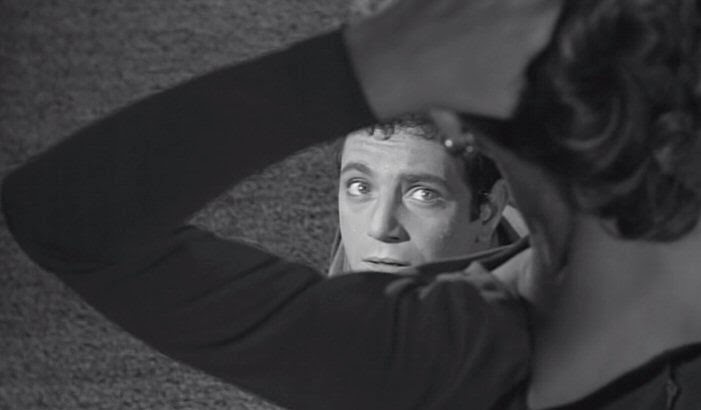
/ Above: Jim (Richard Rust) and Emily (Joan Marshall) in Homicidal /

There’s something ineffably “off” about this woman who is on some inscrutable mission. Her rigid blonde coiffure is obviously a wig, and she seems hesitant to remove her long white gloves. After purchasing a wedding ring, she checks into a hotel using the alias Miriam Webster, then persuades the sexy bellboy (Richard Rust) into marrying her with a $2000 cash bribe on the understanding the wedding will be immediately annulled afterwards. Once the wedding ceremony is hastily completed later that night, to everyone’s shock “Miriam” abruptly pulls out a knife, fatally stabs the justice of the peace and - amidst the screaming and bloodshed - flees the scene. The next time we see her, Miriam is now identified as “Emily” and she’s menacing Helga, a mute, disabled elderly woman confined to a wheelchair. (The scenes of a vulnerable woman in a wheelchair being terrorized anticipate What Ever Happened to Baby Jane? (1962). As Helga, Russian actress Euginie Leontovich manages to overact wildly while never uttering a single line of dialogue).  


What, you may ask, the hell is going on and who are these people? The real Miriam Webster, it transpires, is a virtuous brunette florist (Patricia Breslin), engaged to dreamboat local pharmacist Karl Anderson (Glenn Corbett). The children in the introductory flashback represented Miriam and her half-brother Warren. Warren Webster (Jean Arless) is due to inherit the $10 million family fortune following his upcoming twenty first birthday. (Miriam and Warren shared the same father, who is now dead. Weirdly, the will stipulated only the male heir would inherit anything. Goody two-shoes Miriam is remarkably unperturbed about this). Why their childhood nanny Helga – now an invalid following a stroke – still lives with Warren is never adequately explained, but we do know that William and Helga only recently returned from a long sojourn in Denmark. In fact, they brought back the murderous nurse and housekeeper Emily from Denmark. Just how does she figure in all this?  


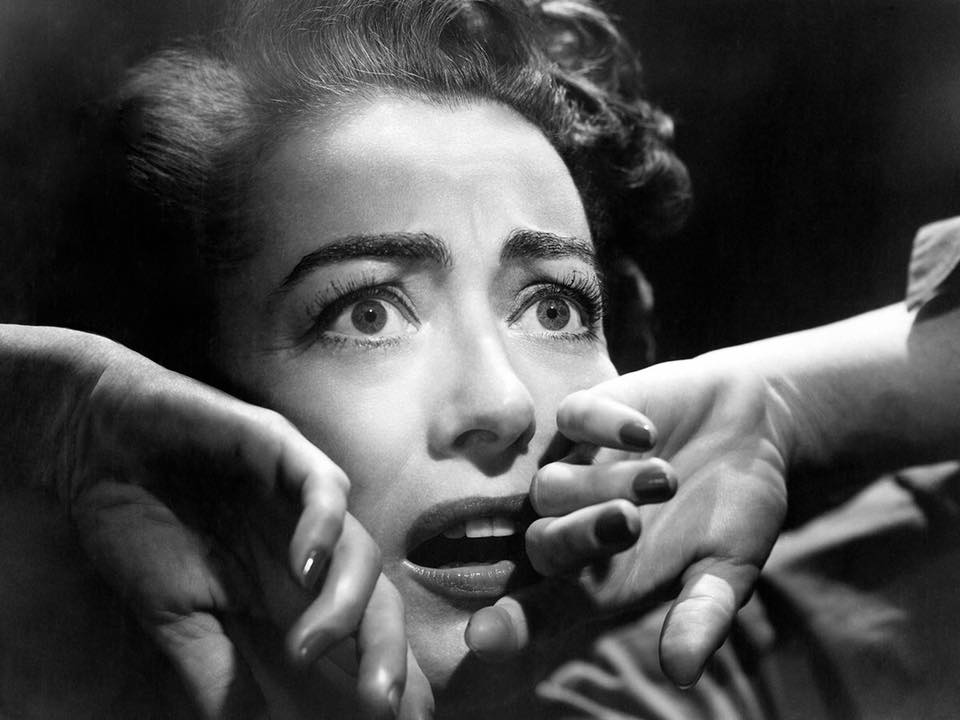
Decapitated heads! A newspaper headline exclaiming “Homicidal Maniac at Large!” Lingering close-ups of knives! Dark family secrets! Wigs! Homicidal has it all! John Waters has been voluble in his praise for William Castle, citing him as a primary influence and even declaring, “In fact, I wish I were William Castle.” (In 2017 Waters portrayed Castle in the TV anthology series Feud: Bette and Joan). Castle is probably best-remembered for hits like House on Haunted Hill (1959) or 13 Ghosts (1960), but I’d argue Homicidal is his meisterwerk, alongside Strait-Jacket (1964) starring Joan Crawford as an ax murderess. Castle was also, of course, the king of the attention-grabbing publicity stunt. The gimmick here is the “fright break”. (As Homicidal builds to its climax, the action pauses for 45-seconds and a clock ticks down as Castle himself announces that if you don’t want to be “frightened to death”, you are eligible for a full refund).   


/ John Waters as William Castle in Feud: Bette and Joan / 

Seen today, Homicidal is most interesting as an exemplar of “transploitation” or “gender reveal horror”. Other examples in this subgenre might include Psycho (1960), The Name of the Game is Kill (1968), Miss Leslie’s Dolls (1972) or Sleepaway Camp (1983). One clue is the repeated references to Denmark: transgender pioneer Christine Jorgensen underwent her reassignment surgery in Copenhagen in 1952. (The Jorgensen story also inspired Ed Wood Jr to make Glen or Glenda? (1953)). You’ll immediately notice that one character has markedly androgynous characteristics. And that no one questions that two certain characters never once appear in the same room at the same time. (But then, no one ever thinks to hand Helga a pen and paper – she could instantly explain everything!). Homicidal hits a crazed pinnacle when Emily runs amok in Miriam’s florist shop, vindictively destroying the floral arrangements. She focuses her rage on the wedding displays, snapping-off the heads of the little groom figurines. Take that, heteronormativity!  


/ Above: Emily (Joan Marshall) and Jim (Richard Rust) in Homicidal /


/ Emily (Joan Marshall) and Karl (Glenn Corbett) in Homicidal /

The cast of Homicidal is noteworthy for the presence of two exceptional paragons of male pulchritude. Early in his career, bodybuilder Glenn Corbett posed for Athletic Model Guild wearing nothing but a posing pouch, a sheen of baby oil and a smile. (Do a Google image search. You’ll thank me!). As the bellhop, Richard Rust possesses the hooded eyes, snarling voice, cruel smirking mouth and greased-back hair of the perfect delinquent thug. But ultimately, it’s the menacing and strange portrayal of Emily by actress Joan Marshall who makes the greatest impression. (Fun trivia: in 1964, Marshall would play Lily Munster (then called Phoebe Munster) in the unaired colour pilot episode of The Munsters. She would subsequently be replaced by Yvonne DeCarlo).

/ Glenn Corbett in his beefcake modelling days, posing for Bob Mizer of Athletic Model Guild /

Homicidal is viewable on Amazon Prime.

Further reading

Read a perceptive and in-depth analysis of Homicidal on the essential Dreams are What Le Cinema is for blog here. 


Sunday, 19 July 2020

Reflections on ... Brigid Berlin (6 September 1939 – 17 July 2020)


/ Portrait of Andy Warhol and his entourage of Superstars by Cecil Beaton, 1969. Left to right: Brigid Berlin, Candy Darling, Warhol and Ultra Violet /

Farewell to one of the last surviving Warhol Superstars (and last links to old-school New York bohemia) Brigid Berlin (sometimes known as Brigid Polk, 6 September 1939 – 17 July 2020), who has died aged 80. 

Like fellow Superstar Edie Sedgwick, Berlin was the wayward daughter from an old money high society family (her father was the chairman of the Hearst media empire) who jettisoned the role of debutante ordained for her to gleefully letting her freak flag fly at the Royal House of Warhol in the sixties and seventies instead. As Berlin herself explained, “My mother wanted me to be a slim respectable socialite … instead I became an overweight troublemaker.” 


/ Portrait of Brigid Berlin by Gerard Malanga, 1971 /

An outsized character in every sense (at one point her weight topped 300 pounds), Berlin is a ferocious, abrasive, frequently naked, sometimes scary and often hilariously funny presence in the underground cinema of Andy Warhol. Her performances in films like Chelsea Girls (1966), Imitation of Christ (1967), and Bad (1977) are rivetingly obnoxious. Berlin was also a notorious speed freak, who terrorized the unsuspecting in the VIP backroom of bohemian haunt Max’s Kansas City by jabbing them with her hypodermic needle of amphetamines. (Warhol films Berlin furiously ranting and shooting-up speed in Chelsea Girls). 


/ Dual Polaroid portrait of Berlin with fellow Warhol Superstar Nico, circa early seventies /

Berlin was also an artist in her own right, using the mediums of Polaroid photography and “tit prints” (dipping her own breasts into paint and pressing them onto paper). Until Warhol’s death, Berlin (who’d kicked amphetamines by this point) worked as the receptionist at his Interview magazine – albeit an extremely unconventional one. (She preferred to eat candy, knit and fuss over her pet dogs than answer telephones). It’s undeniably disillusioning and bizarre to learn that as she aged, the rebellious Berlin gradually reverted to type, ultimately becoming every bit as conservative as her patrician socialite mother. Towards the end of her life, Berlin was even a Trump supporter! I did warm to her, though, when I read that in Berlin’s reclusive housebound later years, she “cleaned obsessively, then cleaned some more.” For me, the unapologetically butch and androgynous Berlin exuded a “big dyke energy”, but the otherwise thorough New York Times obituary doesn’t touch on her sexual preferences or romantic life. Director John Waters was an admirer (Berlin made cameo appearances in Waters’ films Serial Mom (1994) and Pecker (1998) and he wrote the introduction to her coffee table book of Polaroid photography). In the NY Times obit he sweetly recalls, “I was scared of her in the best way.” Berlin is the subject of the 2000 documentary Pie in the Sky: The Brigid Berlin Story, which I clearly need to see.


Saturday, 13 June 2020

Reflections on ... A Cold Wind in August (1961)


A Cold Wind in August (1961). Taglines: " If you care about love, you'll talk about a teenage boy and a woman who is all allure, all tenderness... all tragedy.” “Strange and sensual … a teenage boy and a mature woman, each searching for a special kind of love in the most exciting yet tender picture in your “best picture” experience!” Or as Variety put it: “a short course in the seduction, care and feeding of a healthy 17-year-old boy by a nymphomaniacal 28-year-old stripper.” I’m using this period of enforced social isolation to explore the weirder corners of YouTube for long forgotten and obscure movies. (My boyfriend Pal is accompanying me only semi-willingly). This installment: A Cold Wind in August. 

From the 1983 book Crackpot: The Obsessions of John Waters: "The very first cult film I remember, A Cold Wind in August may not have been a cult film anywhere else in the United States, but it played forever in Baltimore. Every time an art house would book a flop, they’d yank it and bring back Cold Wind in much the same way Harold and Maude is used today. Since I saw the film twenty years ago and never again, my memory of it is quite hazy. Lola Albright (in a smashing performance) plays an over-the-hill stripper who seduces a teenage boy – a sort of poor man’s Marlon Brando, played by Scott Marlowe (what a great name). Lola really gets turned on. Natch, he eventually leaves her for girls his own age and poor Lola becomes an anxiety-ridden chicken queen. It’s a very Method actor-type film, but what I remember most are Lola Albright’s gold lamé Spring-o-later high heels, which I copied and stole for Divine to wear in many of my films."


This underrated, genuinely bold and erotic older woman / younger man melodrama is considerably more nuanced and sensitive than Waters’ outline implies and – although modestly-budgeted and independently-made - most definitely not a salacious exploitation film as sometimes described. I’d argue that Cold Wind hails from that interesting fifties and early sixties period when American filmmakers were increasingly mindful that European art cinema depicting sexually frank “adult situations” was cleaning-up at the box office and winning critical kudos and decided to play catch-up. (You could comfortably slot Cold Wind alongside the likes of Baby Doll, Lolita, Kitten with a Whip and Who Killed Teddy Bear?). It also possesses a definite Tennessee Williams vibe. Iris Hartford (Lola Albright) is an outwardly tough and independent exotic dancer and divorcée in her mid-thirties. (Note: in the original source novel Iris was meant to be 28. Albright was 36 when she played her. The character's age is never specified in the film). One torrid summer, the air-conditioning in her New York city apartment conks out. When Iris asks the superintendent to fix it, he sends up his lanky 17-year old son Vito Pellegrino (Scott Marlowe) instead. The instant frisson between them is palpable and – assisted with a dab of cologne between her cleavage and some freshly-applied lipstick – Iris effortlessly seduces Vito, Mrs Robinson-style. (On their second encounter she serves him a Bloody Mary for breakfast – his first!). Their May-December romance thaws Iris’ hard-boiled boozy façade, revealing concealed hints of emotional fragility. (If Cold Wind was a French movie, Iris would totally be played by Jeanne Moreau). Unfortunately, when Vito belatedly learns what Iris does for a living … let’s just say he doesn’t respond well (think combination of immaturity, blue-collar Italian American machismo and a Roman Catholic Madonna / whore complex).


Alexander Singer directs with real verve (he’d go on to helm the ultra-camp 1965 Lana Turner melodrama Love Has Many Faces with a significantly bigger budget; Cold Wind is better). The film is refreshingly judgement-free about the “age inappropriate” relationship and Iris’ cat-on-a-hot-tin-roof moist womanly needs. Gerald Fried’s noir-ish musical score - with its hints of exotica and finger snappin’ cool jazz - is deeply seductive. The images of Vito hanging out with his teenage buddies in their jeans and t-shirts on the stoop of their building evoke photographer Bruce Davidson’s shots of fifties Brooklyn juvenile delinquents or Danny Fitzgerald. Actor Scott Marlowe is frequently singled-out as Cold Wind’s weakest link, possibly because he was 28-years old at the time playing a teenager (he was in fact only eight years younger than Albright). And his performance is twitchy, mumbling and mannered in the then-fashionable Actors’ Studio / Method acting convention, which hasn’t aged well. But to his credit, Marlowe is undeniably cute and his chemistry with Albright convincing. (Off-screen Marlowe was reportedly bisexual and enjoyed flings with Tab Hunter and Natalie Wood).


It’s impossible to describe smoky-voiced actress and singer Lola Albright’s sultry, sensual, bruised-by-life portrayal of Iris without gushing superlatives. Her performance is soulful, brave and gutsy. What a woman, what an actress. Why wasn’t Albright a bigger star? (She was also memorable as Tuesday Weld’s mother in the strange Lord Love a Duck (1966)). Iris’ climactic striptease number is sensational. For some reason, she is caped, gloved and hooded like Batgirl! Singer films the sequence with darting, teasing cuts, only showing us isolated fetishistic fragments of her body intercut with shots of the lecherous and perspiring voyeurs in the audience. The in-house burlesque band musicians backing her are tight as fuck – very Las Vegas Grind - and seem to be conducted by Iris’ undulations. Iris also wears a killer wardrobe offstage, too: in addition to the Spring-o-later heels that Waters fondly recalls, she also has a penchant for form-fitting cigarette pants. At one point, Iris sports a sensational pair of Jayne Mansfield-worthy gold lamé cigarette pants – which may well have inspired the gold lame outfit worn by Divine in Mondo Trasho (1969)!


Watch A Cold Wind in August here:


Further reading:

I swiped some of these screen grabs from here.

In August 2018 I spoke my brains to To Do List magazine about the wild, wild world of Lobotomy Room, the monthly cinema club – and my lonely one-man mission to return a bit of raunch, sleaze and “adult situations” to London’s nightlife! Read it - if you must - here. 

Follow me on twitter!


"Like" and follow the official Lobotomy Room page on Facebook if you dare! 
 

I have serious issues with the frankly homophobic, puritanical, hypocritical and censorious Tumblr these days, but you can follow me on there.

And I'm now spreading my message of filth on Instagram!

Sunday, 30 June 2019

Reflections on ... Blaze Starr Goes Nudist (1962)


Recently watched: Blaze Starr Goes Nudist (1962), also known as Blaze Starr Goes Back to Nature, Blaze Starr Goes Wild, Blaze Starr the Original and Busting Out.


Blaze Starr is frazzled! In fact, her nerves are shot from the high-pressure rigors of being a famous sought-after actress. Flame-haired and buxom sex goddess Starr (1932 - 2015) plays herself and was of course one of the top striptease headliners of the post-war era (billed as "The Hottest Blaze in Burlesque”), but weirdly, her occupation throughout the film is referred to as “actress” rather than dancer. Happily, the stressed-out Starr unexpectedly finds ecstatic serenity in nudism - naked as nature intended! - at the Sunny Palms Lodge retreat, a sun-kissed nudist camp in Homestead, Florida. To paraphrase Starr herself: she swaps the hot lights of the film studio for fresh air and sunshine, heavy make-up for suntan lotion and the hectic social whirl of glitzy show biz cocktail parties for al fresco picnics! (As the film’s trailer exclaimed: “Yes, it’s finally happened! One of the most beautiful women in the world let’s down her hair and finds relaxation at a nudist camp! In blazing Eastman colour!”). But how will Starr’s suavely-moustached fiancé and manager respond to this new lifestyle choice? Will she lose her film contract if the studio finds out? And is she developing romantic feelings for the nudist camp’s bronzed and hunky director?


Understandably, director Doris Wishman (1912 -2002) is often likened to her b-movie contemporary, boob-fixated trash maestro Russ Meyer (1922 - 2004). Thematically and stylistically their careers overlapped during the atomic-era while both were working in the disreputable realm of low-budget grindhouse and drive-in sexploitation titillation. But by any standards Meyer was a virtuoso filmmaker: his absolute mastery of composition and editing ensure his films zip-along fast and are always exquisite to look at.  By comparison, the endearingly clunky and pedestrian style of Wishman – responsible for lurid titles like Bad Girls Go to Hell (1965) and Another Day, Another Man (1966) - is more like “the female Ed Wood Jr.” Like Wood, I’d describe Wishman as a genuine naïve outsider low-brow artist. (Note: Wishman makes a fleeting cameo appearance as one of Starr's agents. Her acting ability pretty much equals her directing ability). Wishman's approach to storytelling and film-making is painfully literal and plodding.  Wishman’s insistence on never “cutting away” when any other sane and competent director would is borderline avant-garde. (If you’re feeling generous, you’d describe it as “attention to detail”). Starr does loads of uninterrupted walking back and forth. For example, we repeatedly see Starr drive up to her mid-century moderne bungalow, get out and walk to the front door in real time. My boyfriend Pal pointed-out her house has a perfectly good paved driveway – why does she park on the curb and do the lengthy pointless journey? On plus side, this means we get to see Starr do her ultra-femme Jayne Mansfield-style hip-swaying, mincing bombshell sashay – breasts thrust forward and hobbled by her skin-tight clothing - over and over.


About that clothing: because of the film’s el cheapo budget, I suspect Starr is wearing her own personal wardrobe onscreen. And what a wardrobe! Think extreme fetishistic silver stripper heels, mink stoles, conical bullet bras, waist cinchers, sheer peignoirs and negligees, painted-on cocktail dresses with plunging necklines and best of all, a sensational pair of gold lamé  Capri pants – in fact, seemingly the exact same pair Starr wore when Diane Arbus photographed her in that famous 1964 portrait.


/ Burlesque entertainer, Blaze Starr, in her living room, Baltimore, 1964 by Diane Arbus / 

The stark early 1960s interior décor is gorgeous too. And once again, due to budgetary restraints this would have inevitably been filmed on location in someone’s actual home rather than in a studio. Watch for the curving wrap-around sofa and kidney-shaped Formica coffee table in the living room, and Starr’s powder-blue boudoir. At one point a fraught Starr calms herself by mixing a stiff drink and the ultra-desirable swanky cocktail bar (with a mural on the wall behind it) will make you gasp. 


/ Check out Blaze's minimalist living room. Is that a Klaus Nomi doll on the bar stool? /


Blaze Starr Goes Nudist belongs to the “nudie cutie” school (a genre which John Waters has affectionately reminisced about, a precursor to porn), but like most nudist films of its period, seen today it is resolutely un-erotic. The ultra-tame antics at the nudist colony include picnics, archery, splashing and frolicking in water, picking fruit and wildflowers, playing chess, sunbathing and the inevitable volleyball game. There is seemingly one man for every ten women at the Sunny Lodge: Wishman clearly knew that her target audience (horny hetero men hungry for female nudity) had zero interest in viewing naked flesh of the male variety. For example, Andy the camp director keeps his shorts on throughout.  (Bob Mizer of Athletic Model Guild had the homoerotic baby-oiled beefcake / posing pouch market sewn-up anyway). Female boobage and buttage abounds, but no full-frontal, pubic hair or reproductive organs – which means everyone must always unnaturally contort their bodies to ensure there is never a fleeting glimpse of genitals. 

And to make the film feel even more stilted and weird, Wishman’s technique was to film without audio and then “dub” dialogue in afterwards. (To compensate for this, one of her trademarks is to cut to the person being spoken to during dialogue scenes rather than the speaker, which presumably made dubbing easier. In one hilarious instance, Starr makes an urgent telephone call and angles the phone to conceal her mouth while she talks the entire time.  The effect is jarring).


/ Hell-o? Yes, this is Blaze speaking! /

Voluptuous showgirl deluxe Starr (whose measurements at the time were reportedly 38-24-37) is undisputed burlesque royalty, possesses star quality and charisma, and certainly looks gorgeous (albeit a bit heavy-handed with the powdered blue eye shadow). Like her peer Liz Renay, Starr resembles a Frederick's of Hollywood catalogue illustration come to life. It’s a pleasure to watch her disrobe (her flesh has the texture of white marshmallow), swivel her hips, pout and luxuriate in bubble baths. But as an actress she is gloriously wooden and inept. Called upon to emote, she grimaces, rolls and bulges her eyes in the broad style of a particularly pungent early silent movie star. Things reach a kind of zenith (or nadir, depending on your point of view) in a scene where Starr and two female fellow-nudists stop to “converse” at a clothesline. Except none of them bother to even pretend to talk or even mumble “rhubarb, rhubarb” in the accepted style, so Wishman cuts back and forth between the three of them standing and smiling at each other awkwardly and silently for an interminable amount of time. The purpose of this sequence is for Starr to indicate how joyously abandoned and liberated she feels at the nudist colony, worshiping the sun naked. Starr expresses this by throwing her head back, roaring with life-affirming laughter, and stretching her arms outward. You must see it for yourself! Suffused with innocence, Blaze Starr Goes Nudist is an oddity with genuine charm. 

Postscript: Starr was long synonymous with The Block (Baltimore’s gritty neon-lit red-light district) since the 1950s. In 1968 she bought The Two O'Clock Club where she regularly performed until retiring in 1975. John Waters has spoken and written with great fondness about skipping school to sneak-in with Divine when they were both still underage teenagers to watch Starr’s routines (when I attended Viva Las Vegas Rockabilly Weekender this April, Waters emceed the Burlesque Showcase and in his introduction he reminisced about being fortunate enough to have seen old-school legends like Lily St Cyr, Irma the Body and Blaze Starr perform in the 1960s).  Starr was a beloved figure in Baltimore (in her obituaries Waters described her as "the best tourist attraction Baltimore ever had"). Asked later in life if she regretted anything, Starr concluded "Not a thing. I would just do a lot more of it and try a lot harder – and seduce a lot more men."


/ Note: all of the screen grabs above are via / 

/ Below: the trailer for Blaze Starr Goes Nudist /


In August 2018 I spoke my brains to To Do List magazine about the wild, wild world of Lobotomy Room, the monthly cinema club – and my lonely one-man mission to return a bit of raunch, sleaze and “adult situations” to London’s nightlife! Read it - if you must - here. 

Follow me on twitter!


"Like" and follow the official Lobotomy Room page on Facebook if you dare! 
 

I have serious issues with the frankly homophobic, puritanical, hypocritical and censorious Tumblr these days, but you can follow me on there.

And I'm now spreading my message of filth on Instagram!

Tuesday, 1 January 2019

Reflections on ... Polyester (1981)


From the Facebook event page:

Lobotomy Room Goes to the Movies is the FREE monthly film club downstairs at Fontaine’s bar (Dalston’s most unique nite spot!) devoted to Bad Movies We Love (our motto: Bad Movies for Bad People), specializing in the kitsch, the cult and the queer! For the final cinema club of 2018 (on Wednesday 19 December), let’s wind things down with a crowd-pleaser – John Water’s delirious 1981 black comedy Polyester!

A parody of 1950s “women’s pictures”, Polyester sees 300-pound drag monster / leading lady Divine cast against type (and giving one of his definitive performances) in a rare sympathetic role, as long-suffering suburban housewife Francine Fishpaw! It’s an apt choice for last film of 2018 for two reasons: 2018 represented the 100th anniversary of the birth of beloved punk granny Edith Massey (1918 –1984) and Polyester represents her last appearance in a John Waters film. And dreamboat leading man Tab Hunter (1931 – 2018) died earlier this year. 

Doors to the basement Bamboo Lounge open at 8 pm. Film starts at 8:30 pm prompt. Arrive early to grab a seat and order a drink! We can accommodate 30 people maximum. First come, first serve! Note that Fontaine’s Christmas cocktail menu will be available, and the featured cocktail of the night is hot buttered rum!


IMDb’s synopsis: “A suburban housewife's world falls apart when she finds that her pornographer husband is serially unfaithful to her, her daughter is pregnant, and her son is suspected of being the foot-fetishist who's been breaking local women's feet.”


/ Divine as Francine Fishpaw /

A twisted black comedy incorporating divorce, abortion, adultery, alcoholism, foot fetishism, pornography and Christian fundamentalism – Polyester truly has it all! In fact, I’d argue Polyester may be Sultan of Sleaze / The Peoples’ Pervert John Water’s most underrated film. (I won't lie: we had a disappointingly low turn-out for this screening, in fact – which ended the year on a bit of a downer!). I’ve cobbled together below some thoughts, reflections and fun factoids based on my introduction to the film at the December 2018 Lobotomy Room cinema club.

Polyester was filmed over three weeks in October 1979. From the opening shot, the setting is notably posher: the affluent, leafy suburbs of Baltimore this time rather than the gutters, slums and trailer parks featured in Waters’ earlier cinematic atrocities.


In terms of Waters’ filmography, Polyester comes after dystopian lesbian-punk nightmare Desperate Living (1977). There followed a lengthy gap until he made Hairspray in 1988. Polyester can be viewed as a transitional film between Waters’ ultra-raunchy earlier shockers and the relatively more polished and accessible bigger-budgeted films from Hairspray onward. Polyester was the first Waters film to receive an R rating (all his previous ones were slapped with an X).


Obviously, at Fontaine’s we watched Polyester sans the scratch-and-sniff Odorama cards (the original William Castle-inspired gimmick Waters used to promote the film with in 1981). It hardly mattered – Polyester is wildly enjoyable without them. (Trivia: for insurance reasons, Waters was obligated to prove that if anyone ate an Odorama card they wouldn’t die!).


Last time we saw Divine in a Waters film, she was screaming hideously while being electrocuted at the grisly conclusion of Female Trouble (1974). The tone of Polyester is radically different, lovingly referencing and emulating the deluxe 1950s melodramas of Hollywood maestro Douglas Sirk (it plays like a gleefully perverse soap opera) and offers him a rare sympathetic role compared to the monstrous likes of Babs Johnson in Pink Flamingos or Dawn Davenport in Female Trouble. Clad in a wardrobe of garish muumuus and resembling Liz Taylor at her most zaftig, here Divine is long-suffering, much-abused and taken-for-granted 44-year old housewife and mother Francine Fishpaw (“I’m a good Christian woman!”) and he is simply magnificent. Divine never “phoned-in” a performance in his life, but his depiction of Francine’s anguished descent into alcoholism and nervous collapse is an acting tour de force.


Polyester’s heroine Francine is tormented by her dysfunctional family. She is mortified by her sleazy husband Elmer’s hardcore porn cinema. (On the local TV news, a female protester screams, “His theatre caters to sex offenders!” “All the neighborhood women spit at me when I’m at the shopping mall!” Francine wails. “You wouldn’t be at the shopping mall if it wasn’t for my theatre!” Elmer argues). Elmer calls Francine “a fat hunk of cellulite!” and is also brazenly cheating on her with his secretary Sandra (Waters regular Mink Stole, wearing her hair in Bo Derek-inspired cornrow braids, who says things like, “Children would only get in the way of our erotic lifestyle!”). Sexpot teenage daughter Lulu is out of control – and pregnant.  (In the context of Douglas Sirk films, bad girl Lulu in her spray-on Spandex wardrobe and blow-dried Farrah Fawcet hairstyle is in the lineage of Dorothy Malone in Written on the Wind (1956) or Susan Kohner in Imitation of Life (1959)). Lulu aspires to be a go-go dancer. “You dance lewdly for the boys at lunch period?!” Francine demands. “For a quarter I will!” Meanwhile, Francine’s cruel harridan mother LaRue heaps abuse on her for her advanced avoirdupois while pilfering money from her purse. And most worryingly, Francine’s profoundly troubled delinquent son Dexter just may be the Baltimore Foot Stomper!


/ Cuddles (Edith Massey) tries to cheer up Francine (Divine) /

On the plus side, the Fishpaw home is a nouveau riche paradise with powder-blue décor (“French provincial / they do their best to stay neutral …” as the title song puts it). Francine also finds solace in her friendship with Cuddles Kovinsky (Edith Massey), her simple-minded former housekeeper who’s inherited a fortune and reinvented herself as a high-society debutante. (LaRue is horrified by the childlike and cheerful Cuddles. “Your "best friend"? She was your cleaning lady, Francine! Are you that unpopular that you seek out the social company of your maid? She was a scrub woman! Give her carfare, a ham at Easter, but for God's sake, don't hang around with her!” When LaRue encounters Cuddles in Francine’s driveway, she struggles to find conversational common ground. “Scrubbed any interesting toilets lately?”). And just who is the handsome and enigmatic Todd Tomorrow (Tab Hunter) Francine keeps encountering?


/ "Read my lips: I love you ..." Todd Tomorrow (Tab Hunter) and Francine Fishpaw (Divine) /

Waters has pointed out that with the comparatively naturalistic make-up Divine wears in Polyester hiding his five o’clock shadow was a genuine dilemma. At one point, Elmer sneers that Francine is “the hairiest woman I have ever seen!”


For any punk fans, note that Bo-Bo Belsinger (the surly boyfriend of wild child Lulu) is played by Stiv Bators (1949 – 1990), feral frontman of Cleveland punk band Dead Boys.

The major coup for Waters here was luring erstwhile 1950s Hollywood dreamboat Tab Hunter to appear as Francine’s duplicitous love interest, Todd Tomorrow.  Long before Johnny Depp in Cry-Baby (1990) or Kathleen Turner in Serial Mom (1994), this was the first time an established mainstream Hollywood super star would deign to appear in a John Waters film. (Although it must be noted Hunter was considered washed-up at this stage). Hunter (then 48-years old, still devastatingly handsome and in full DILF mode – especially in his ruffled pink formal wear) proves a great sport, happily satirizing himself, and even has an onscreen love scene with Divine. (“Let me kiss away your DTs, honey … let’s make love, you sweet little thing!” Todd purrs to Francine).


An aside: Hunter’s participation in such a brazenly queer, campy film was brave considering he was then still firmly closeted. (He wouldn’t divulge his homosexuality until he released his 2005 autobiography Tab Hunter Confidential: The Making of a Movie Star). He may have been a has-been, but Waters has pointed out Hunter didn’t come cheap - he could only afford Hunter’s services for one week. Hunter and Divine would re-team three years later for the comedy Lust in the Dust (1985) directed by Paul Bartel. (While not in the same league as a Waters film, the Spaghetti Western parody is worth catching). I have one anecdote about the sole occasion I encountered Hunter at The British Film Institute in 2015. He was then 83-years old and his devastatingly rugged good looks were still intact! Read it here.


/ Todd and Francine on their idyllic first date /

I inadvertently misled the audience about something in my introduction: I claimed the opening theme tune was composed by Chris Stein and Deborah Harry of Blondie – and sung by Bill Murray. That’s wrong! It’s Tab Hunter crooning the title song over the introductory credits. (“You know about abundant women / Well, this girl only aims to please / Outside there's a load of noisy neighbours / Upstairs there's a polyester squeeze”). Bill Murray in fact sings the tender ballad “The Best Thing” that soundtracks the romantic first date montage of Francine and Todd frolicking in soft focus. 


Hunter died on 8 July 2018, so this was Lobotomy Room’s end-of-year tribute to him. And 2018 represented the centenary of the birth of Edith Massey (she was born on 28 May 1918), so we celebrated her memory too. I venerate gap-toothed Massey as Waters’ maverick, naive “outsider actress” and punk rock granny. Polyester was Massey’s last appearance in a Waters film (she died aged 66 in 1984) and her performance as house cleaner-turned-socialite Cuddles Kovinsky is simply glorious and a worthy conclusion to her bizarre film career. I especially love Cuddles’ habit of randomly sprinkling high-toned French bon mots into her conversations. She describes Elmer’s mistress Sandra as “straight from the gutter! A regular fille de joie!” “Isn’t it ra sha sha?” she exclaims upon entering a fancy boutique. Later, she screeches at the shop assistant, “You’re a regular little cochon - and that means pig!” The scenes with Divine and Massey together can’t help but feel poignant in retrospect and offer some of Polyester’s highlights. What a lunatic, inspired comedy double-act these two were! The Lucy Ricardo and Ethel Mertz for generations of queers, punks, misfits, drag queens and freaks! 


Further reading: 
Read my epic 2010 interview with John Waters here.
In August 2018 I spoke my brains to To Do List magazine about the wild, wild world of Lobotomy Room, the monthly cinema club – and my lonely one-man mission to return a bit of raunch, sleaze and “adult situations” to London’s nightlife! Read it - if you must - here. 
Follow me on twitter!
"Like" and follow the official Lobotomy Room page on Facebook if you dare!  
Next film club:

Lobotomy Room Goes to the Movies is the FREE monthly film club downstairs at Fontaine’s bar (Dalston’s most unique nite spot!) devoted to Bad Movies We Love (our motto: Bad Movies for Bad People), specializing in the kitsch, the cult and the queer!
For the first Lobotomy Room film club of the New Year, let’s revel in some old-school pagan diva worship with Sudden Fear (1952) starring cinema’s bitch goddess extraordinaire (and eternal Lobotomy Room favourite) Joan Crawford! Wednesday 16 January 2019!
In the 1950s the perennially-fierce Crawford made a cycle of melodramas in which she played middle-aged women-in-peril tormented by younger lovers, including Autumn Leaves and Female on the Beach. All these films are genuinely great, but the zenith is lurid film noir thriller Sudden Fear in which Crawford is a wealthy San Francisco socialite menaced by the duplicitous Jack Palance and the pouty and perverse Gloria Grahame. (Bad girl Gloria Grahame and Joan Crawford in the same film?! You DON’T want to miss this!).
Doors to the basement Bamboo Lounge open at 8 pm. Film starts at 8:30 pm prompt! Event page.