Saturday, 26 February 2011

Only In Archway

I first moved to Archway in North London almost exactly three years ago now (March 2008, I estimate) and used to post the occasional blog about it on Myspace (remember Myspace?). Haven’t written anything about the neighbourhood in ages because either nothing eventful has happened, or I’ve become used to the dysfunctional freakiness of Archway after living here for so long. Until last night ...

Friday night around 6pm after work I was cutting down Marlborough Road (off Holloway Road) on way home from work with my iPod cranked up loud. I noticed a teenage boy walking directly ahead of me. He was only noteworthy because he was strikingly scrawny and unwell-looking: hunched little shoulders, pasty complexion, red-haired, wearing an oversized baggy grey tracksuit that hangs off him.

As I overtake him (I walk fast) he glances back at me and makes burning eye contact, which felt strange and made me almost flinch. Marlborough Road forks in two directions: I walk down Hatchard Road, he stays on Marlborough Road.

But the next thing I know, when I’m almost home, he’s caught up with me and is walking fast to keep pace with me. It feels genuinely odd and almost threatening: he’s right next to me, invading my personal space in a way that brings out the primal skin-prickling fight or flight instinct. Even though he’s an emaciated runt I almost expect him to attempt to mug me, or pull out a knife. I immediately think of the dwarf in the red parka in the film Don’t Look Now ... just because someone is small doesn’t mean they’re innocuous.

I’m naturally a fast walker and keep staring straight ahead and he is really struggling to keep up with me. Finally, he reaches out and taps me on the shoulder to get my attention – which makes me shudder. I stop and turn around. By now am really curious what he wants. I turn and take out my headphones.

Boy: Do you live around here?
Me: (Am so stunned, I answer truthfully) Yeah, on Sussex Way (straight ahead).
Boy: Do you live alone?
Me: Yeah.
Boy: Because I have nowhere to go. Can I come over for an hour?
Me: (Putting headphones back in and walking away) No. Sorry, buddy.

He looks disappointed but doesn’t pursue it. What a strange, David Lynch-ian experience: sexually propositioned on the street around the corner from where I live by this creepy, damaged teenaged waif straight out of a Dennis Cooper novel. It actually felt eerie. He seemed doomed: If he keeps up this kind of behaviour his decomposed remains are destined to be found in a tip or wasteland somewhere.

In a way, it was a flashback to another encounter I had on 11 April 2008. Cutting and pasting from Myspace blog ...

Am still getting accustomed to living in Archway after about five years of living in Finsbury Park, which is only a ten minute walk away but feels like a whole other world. Finsbury Park was pretty impoverished but buzzing and multicultural; Archway seems so defeated, so dysfunctional. Walking home from work last night I estimated every other person I passed on Holloway Road seemed to be either a mentalist or some kind of meths drinker. Most notable was an apparently suicidal, haunted-looking black guy wearing one of those hats with ear flaps who kept wandering into oncoming traffic; he'd stand on the curb until a bus was coming towards him, then turn around and cross the street again, testing his luck. A motorcyclist had to honk at him and swerve.

Tonight after work was cutting down Fairbridge Road to get to Sussex Way and noticed two men walking in the opposite direction across the street. I made the major mistake of making the most fleeting of eye contact with one of them. Sure enough he shouts after me, "Hey! Hey!" and runs across the street to catch up with me. He is compact (shorter than me and I am only 5'6) but tough, Irish and obviously a bit nuts. He is smiling as if he is really pleased to see me. "It's me! I saw you at Mary's last week!" I say, "I don't think we know each other …" and he keeps insisting we do. I was thinking, there are always the alcoholic regulars at The Kings Head on Holloway Road, which is the new venue for the monthly Virginia Creepers rockabilly club. Maybe he saw me there?

He tells me his name, as if reminding me. I instantly forget it because all I can concentrate on is that he is standing too close, he's invading my personal space and rousing that "fight or flight" instinct. He's outwardly friendly, even childlike but volatile, mercurial. He suddenly flings his arms around me and hugs me hard. I brace myself in case he tries to pick my pockets. In a rush he admits he's drinking again, I know what it's like, he's just come out of prison after 11 years. He's got to go meet his probation officer and only has £1 (he holds out his hand with the one pound coin to demonstrate, as if I've asked him for proof), he needs another pound to get there. I thought, I knew that was coming, it was inevitable. He was just setting up the context.

I actually only have small change in my wallet (which is true), which I explain to him as I get my wallet out of my back pocket. He suggests, "You can hit me if you like" and he tilts his head, offering me his jaw to punch, as if this is a fair exchange for him asking me for money. I tell him, "That's OK" and give him handful of small change (maybe 50p). While my wallet is out he clocks that I have a wad of pound notes (my What Katie Did wages, which is what I try to budget to live on during the week) and asks, "Can I have ten pounds until next week?" (As if it's a loan between friends and I will see him again next week), I say "No" and mercifully he bounds off, seemingly happy enough with the small change I have given him.

Am still wondering why he singled me out and stopped me: did he genuinely think he knew me and mistook me for someone else? Was it because he assumed I was a fellow Irishman (people assume I am Irish all the time) and would be sympathetic? Do I look like a soft touch? Anyway, let's hope he isn't a neighbour I bump into on a regular basis.

Friday, 18 February 2011

Valentine's Day 2011 Dr Sketchy Set List


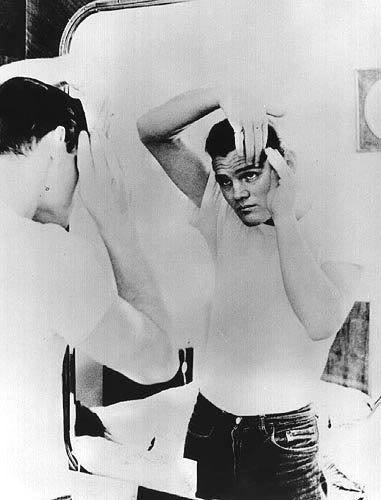
/ Slick it back: Chet. Oh, Chet /

For the Valentine’s-themed Dr Sketchy at The Old Queen's Head I’d intended to use Chet Baker as my template and base the whole night around lush, romantic, lingering 1950s Cool Jazz. Even the most cursory glance at my set list shows I didn’t remotely stick to that idea! It would have felt too slow, downbeat and same-y if I had, but in honour of Valentine’s Day there are definite pockets of elegant swirling 50s make-out music amongst the more usual sleaze and kitsch musical selections.

/ A young Nico in her fashion model days circa 1964 /


I played three versions of Rodgers and Hart’s “My Funny Valentine”: the 1954 Chet Baker vocal, the 1952 Chet Baker instrumental and German angel of death chanteuse Nico’s striking 1985 interpretation. In 1964 when pre-Velvet Underground Nico was still a fashion model and occasional actress aspiring to be a singer, she scored a residency at The Blue Angel cabaret lounge on 55th Street in New York. Billed as “That Girl from La Dolce Vita!” she sang jazz standards backed by a trio of piano, bass and drums. One of her songs was “My Funny Valentine.” By then the song was already synonymous with the exquisite but corrupt James Dean of jazz Chet Baker: his version, whether sung or played on his trumpet, was so hushed, so brooding and desolate it was almost eerie. To me Baker and Nico (as an impressionable teenager I had crushes on both) always seemed like psychic twins: so beautiful and talented, so heroin-ravaged and doomed. They both exuded tragedy and ruined glamour. In his definitive Nico biography (The Life and Lies of an Icon, 1993) Richard Witts quotes Nico recalling:

“I first heard (My Funny Valentine) played by the jazz man Chet Baker. He played his trumpet and then he sang it. I thought this was very clever, like a beautiful magical trick. Do you know that Chet Baker introduced me to heroin? (Unsurprisingly, the journalist interviewing Nico asked her to clarify what she meant: did she actually shoot up with Baker?) No, no. I mean I first saw heroin. He first showed it to me. I was about 24 or so, in New York when I first started to sing – he was around. Of course everyone thinks I started when I was a baby. They know nothing. Chet Baker was so handsome, such a beauty, but he was in love with drugs too much to be in love with me. “

Young man with a horn: Chet Baker


/ Below: Baker in 1959 /


Fast forward two decades: Chet Baker died on 13 May 1988, falling to his death from a hotel window in Amsterdam; Nico would be dead by 18 July 1988, dying of a cerebral haemorrhage after falling off her bike in Ibiza. On her last album (1985’s Camera Obscura) Nico played homage to Chet Baker and her stint at The Blue Angel by recording a stunningly bleak rendition of “My Funny Valentine.” Witts notes in his biography that Nico sings it in Baker’s key of C minor – the lowest she ever sang. Death, heroin, high cheekbones, doom and gloom: hope everyone had a happy Valentine’s Day!


Das Ich Dich Wiederseh (Taking a Chance on Love) - Marlene Dietrich
Les Amour Perdues - Serge Gainsbourg
The Man I Love - Hildegard Knef
Someone to Watch Over Me - Jimmy Scott
If I Should Lose You - George Shearing
Hurt - Timi Yuro
Life is But a Dream - The Harptones
Sleep Walk - Henri Rene & His Orchestra
Don't Do It - April Stevens
Little Things Mean a Lot - Jayne Mansfield
Directly from My Heart - Little Richard
Stop Cryin' - Little Esther
Your Love is Mine - Ike and Tina Turner
Imagination - The Quotations
Tight Skirt, Tight Sweater - The Versatones
Night Scene - The Rumblers
I Fell in Love - Mamie van Doren
Bewildered - Shirley & Lee
Sea of Love - The Earls of Suave
Love is the Greatest Thing - Mae West
Ebb Tide - Al Anthony
I Fall in Love Too Easily - Angel Torsen
Blues for Beatniks - John Barry (Beat Girl soundtrack)
Dansero - Don Baker Trio
The Point of No Return - Diana Dors
It's Only Make Believe - Billy Fury
Kiss Me - Dolores Gray
Cherry Pink - Bill Black Combo
Jezabel - Edith Piaf
Makin' Out - Jody Reynolds
Teach Me Tonight - Wanda Jackson
Pop Slop - Bela Sanders
That's What I Like - Ann-Margret
Make Love to Me - June Christy
That's a Pretty Good Love - Big Maybelle
You Can't Stop Her - Bobby Marchan & The Clowns
Crybaby - The Scarlets
Revellion - The Revels
Chattanooga Choo Choo - Denise Darcel
Jungle Drums - Earl Bostick
Beat Girl - Adam Faith (Beat Girl soundtrack)
When Your Lover Has Gone - Chet Baker
Killer - Sparkle Moore (screaming version)
Take It Off - The Genteels
Let's Go Sexin' - James Intveld
Hot Licks - The Rendells
Men - Lizabeth Scott
Last Night - Lula Reed
My Funny Valentine - Chet Baker (vocal)
Smoke Gets in Your Eyes - Eartha Kitt
My Funny Valentine - Nico
My Funny Valentine - Chet Baker (instrumental)
Cry Me a River - Dinah Washington
I'm Through with Love - Marilyn Monroe
I'm a Fool to Want You - Billie Holiday
I Put a Spell on You - Nina Simone
I've Been in Love Before - Marlene Dietrich
No Good Lover - Mickey & Sylvia
Moi je joue - Brigitte Bardot
Uptown to Harlem - Johnny Thunders & Patti Paladin
Hanky Panky - Nancy Sit
Czterdziesci Kasztanów (Forty Chestnuts) - Violetta Villas

/ Speaking of Violetta Villas -- here's another treasure un-earthed by the sublime Polski sex kitten on Youtube (the title translates as "There is No Love without Jealousy"). I love the little Jayne Mansfield-esque coos and squeals she makes at the beginning /

Thursday, 10 February 2011

31 January 2011 Dr Sketchy Set List


/ No, It's Not Marlene: Marilyn Monroe photographed by Richard Avedon in 1958, styled to resemble Dietrich as Lola Lola in The Blue Angel /

It was a nicely laidback Dr Sketchy at The Paradise this time. The featured burlesque performer was Bettie Bottomdollar (who did a Charlie Chaplin tribute act). The other model was Mam’ Zelle Celine, who more usually is our resident photographer. Clare Marie (the brains / promoter / stage manager behind London Dr Sketchy) hosted the proceedings herself and is becoming an ever more effortless and sparkling emcee.

Some rhetorical questions: Is it possible to play too many versions of “Fever” or “Mack the Knife” in a single night? (The answer: of course not, don't be silly). How did Kurt Weill’s 1920s Weimar Republic murder ballad about a serial killer become a finger-snapping cocktail lounge standard, anyway? I played The Bill Black Combo’s laid-back and swinging instrumental version and Eartha Kitt’s sublimely alluring and feline interpretation, which should be far better known. Maybe because she actually is German, one of the most authoritative versions of “Mack the Knife” you’ll ever hear, though, is by Dietrich-esque Teutonic diseuse Hildegard Knef. She sings it with a steely demeanour over pattering bongos. It's very dramatic, with a sense of building coiled tension. Check out Die Knef’s wonderfully guttural voice and piercing eyes here...


I also played a few tracks from The Party Ain’t Over, First Lady of Rockabilly Wanda Jackson’s “comeback” CD produced by White Stripe Jack White. She’d performed two songs from it as a tantalising teaser when I saw her at Viva Las Vegas in 2010 (Amy Winehouse’s “You Know I’m No Good” and “Shakin’ All Over” by Johnny Kidd and The Pirates) and it was definitely intriguing. Promisingly, Jackson had been quoted as saying she wanted to be challenged by Jack White, for him to force her to make a real 21st century album and not rest on her laurels – how refreshing and inspiring to hear a 73- year old legend say that?

So I had high expectations for The Party Ain’t Over. I put the CD on pre-order on Amazon to ensure I got it as soon as it was available. And finally getting to hear it, it’s ... strange. One of the first things you notice is that for an album by the Queen of Rockabilly – there’s virtually no rockabilly songs. It’s perhaps to his credit that White takes such a provocative and unpredictable musical approach (he did a similar collaboration with Country and Western royalty Loretta Lynn on the 2004 CD Van Lear Rose, but don’t know enough about that CD to comment on it), but then you hear opening song “Shakin’ All Over”. The arrangement seems to be striving for a sleazy punk/soul/lounge revue vibe (think of Jackson’s ex-boyfriend Elvis Presley in his dissolute, baroque 1970s Vegas phase) but its shrill horns and weird stop-start tempo are jarring, and from there the album only occasionally seems to gel. Perversely, White’s production cranks up the abrasive irritation value, seemingly intended to deliberately annoy: the songs are submerged in noise and distortion (even Jackson’s still warm and powerful rasping, caterwauling voice is filtered for a weird echoed effect). In particular the overly-dominant and intrusive soul / funk horn section eventually starts to feel like nails on a blackboard and never meshes with Jackson’s voice.

The mature Jackson’s trademark hairstyle is a gravity-defying, teased bouffant which she keeps dyed jet black. Perhaps inspired by her coiffure, the accompanying artwork in the CD case feature some deliberately kitsch glamour shots of Jackson having her nails painted, and rocking a pair of diamante-studded cat’s eye sunglasses. When this camp aesthetic infects the music (i.e. a gimmick-y calypso novelty version of The Andrews’s Sisters “Rum and Coca Cola”) it’s disastrous. And strangely, even the few rockabilly songs (Little Richard’s “Rip It Up”, Eddie Cochrane’s “Nervous Breakdown”), which should be terra firma for Jackson, feel forced and inorganic.

But with people this talented, things are bound to cohere occasionally and sometimes brilliantly. Jackson re-interpreting “You Know I’m No Good” shouldn’t work, but somehow it does. The disconnection between the 70-something born again Christian gospel singer and debauched skank Winehouse seems insurmountable (they both have big hair, though), but both Jackson and White clearly (correctly) recognise the song is a modern torch song standard in waiting. Over the languid beats, Jackson treats Winehouse’s lyrics about infidelity and tough, hurt feelings like they’re a country & western lament; when she rues, “I cheated myself / like I knew I would” it packs a genuine ache, with Jackson emerging as a blue honky tonk angel. “Like A Baby” and “Teach Me Tonight” radiate with Jackson’s uncontrived charm, and on the closing “Blue Yodel #6” she finally gets the stripped-down, roots-y and sympathetic setting Jackson should have had all along.

/ Below: Wanda Jackson and I when she performed in London in 2007. She couldn't have been sweeter /


/ Present-day Wanda Jackson with Jack White /


/ La Jackson in her raucous late 50s / early 60s rockabilly prime /


Heart to Heart - Little Esther
Everywhere I Go - Ted Taylor
Jean and Dinah - Robert Mitchum
Rum & Coca Cola - Wanda Jackson
Go Calypso - Mamie van Doren
Scorpion - The Carnations
Love Potion # 9 - Nancy Sit
Groovy - The Groovers
Hush Your Mouth - Huey "Piano" Smith
Sick and Tired - Lula Reed
I'm Not a Juvenile Delinquent - Frankie Lymon & The Teenagers
Skull & Crossbones - Sparkle Moore
A Cheat - The Earls of Suave
Night Scene - The Rumblers
Willow Weep for Me - The Whistling Artistry of Muzzy Marcellino
I Ain't in the Mood - Helen Humes
Don't Be Cruel - Bill Black's Combo
I Was Born to Cry - Dion
Nobody Taught Me - Eartha Kitt
The Beast - Milt Buckner
The Rat - The Ventures
Like a Baby - Wanda Jackson
Fever - Richard Marino & His Orchestra
Go Slow - Julie London
Shangri-La - Spikes Jonez & His New Band
You're My Thrill - Dolores Gray
Les Amours Perdues - Serge Gainsbourg
I'm in Love for the Very First Time - Diana Dors
Slowly - Ann-Margret
Wondrous Place - Billy Fury
The Stripper - John Barry (Beat Girl soundtrack)
Give Me Love - Lena Horne
Mack the Knife - Eartha Kitt
Blues in My Heart - John Buzon Trio
You Go to My Head - Marlene Dietrich
Jungle Drums - Earl Bostick
Drums-A-Go-Go - Hollywood Persuaders
Esquerita & The Voola - Esquerita
Peter Gunn Twist - The Jesters
Peter Gunn Locomotion - The Delmonas
She Wants to Mambo - Johnny Thunders & Patti Paladin
Deep Dark Secret - Lizabeth Scott
Crazy Horse Swing - Serge Gainsbourg (Strip-tease soundtrack)
C'est Si Bon - April Stevens
That Ole Devil Moon - Chet Baker
Black Coffee - Peggy Lee
Fever - Timi Yuro
Lunar Rhapsody - Les Baxter
La Javanaise - Juliette Greco
Mack the Knife - Hildegard Knef
Mack the Knife - Bill Black's Combo
Falling in Love Again - Billie Holiday
Honey Rock - Barney Kessel
Caterpillar Crawl - The Strangers
Bossa Nova Baby - Elvis Presley
Coquette - Dinah Washington
Dancing on the Ceiling - Chet Baker
Work Song - Nina Simone
Tall Cool One - The Wailers
Pink Champagne - The Tyrones

Finally: two public figures close to my heart and who definitely helped shaped my twisted vision died recently. Rest in peace, ace film soundtrack composer John Barry and one of the screen's greatest bad girls / villainesses, Tura Satana.

Obviously Satana will be forever remembered for her vicious performance as homicidal go-go dancer Varla in Russ Meyer's Faster, Pussycat! Kill! Kill! (1965). But here she is doing a nice striptease routine from the more obscure 1973 film The Doll Squad. If you can tear your eyes off Tura, check out the strange little lounge band combo (with standing female drummer) accompanying her.


I've blogged before about how much I love John Barry's soundtrack for the 1960 sexploitation / juvenile delinquent flick Beat Girl. Funnily enough, I had the DVD on loan from LOVEFiLM when I heard about his death -- watching it again felt like a nice tribute. And the film is every bit as lurid and kitsch as I remembered.


Beat Girl promo from xbbtv on Vimeo.

/ The American trailer (in the US the film was re-titled Wild for Kicks) /

Wednesday, 26 January 2011

19 January 2011 Dr Sketchy Set List


/ Sweater Girl: A sultry, hair-hopping young Violetta Villas working the projectile bullet bra look /

The second Dr Sketchy of the New Year: It was great to be back at The Royal Vauxhall Tavern where the sound system is loud and powerful, and I’m finally getting to grips with setting up the decks myself and working the stage lights (seriously, all the buttons in the DJ booth looks like the control panels of a helicopter!). And I didn’t once turn on the dry ice machine by mistake this time, which definitely represents progress. The only screw-up was the wrong music got played for our burlesque performer Annette Betty’s performance. I was told to play track one and I did, but it turned out it was the wrong song (there was more than one song burnt onto the CD). Fortunately, Betty is such a consummate pro that when she realised it was the wrong music, she just did the routine meant for that song, it looked spectacular and no one was any the wiser!

Annette Betty's Showreel:


As per usual, the emphasis musically was on creating a vibe somewhere between desperate vintage sleaze and punk lounge. Midway along the set list you may you notice a glut of sex-wracked female singers like Sparkle Moore, Ann-Margret and Mamie van Doren wailing about how they’re desperate for a man/boy/daddy, etc -- that was background music for our male model Luke’s pose.

Beaver Shot - The Periscopes
Baby, Scratch My Back - Slim Harpo
Intoxica - The Centurions
Bikini with No Top on the Top - Mamie van Doren & June Wilkinson
Vesuvius - The Revels
The Deacon Moves In - Little Esther
The Whip - The Originals
Fujiyama Mama - Annisteen Allen
Bewildered - Shirley & Lee
My Daddy Rocks Me - Mae West
Baby Come Back - Esquerita
Where Yo Is? Fat Daddy Holmes
Stop Talking, Start Walking - Annie Laurie
Hot Licks - The Rendells
Unitar Rock - Willie Joe & His Unitar
Honky Tonk - The Bill Black Combo
Harbour Lights - Dinah Washington
A Cheat - The Earls of Suave
Fever - Nancy Sit
Mack the Knife - Ann-Margret
Trash Can - Ken Williams
Suey - Jayne Mansfield
Blockade - The Rumblers
Crawfish - Johnny Thunders & Patti Paladin
Tall Cool One - The Wailers
Dansero - The Don Baker Trio
Tuxedo Junction - The Bill Black Combo
Tico Tico Samba - Don Swan & His Orchestra
Tiger - Sparkle Moore
Big Man - Carl Matthews
Jim Dandy - Ann-Margret
Daddy Daddy - Ella Mae Morse
I Need a Man - Barbara Pittman
Oh Honey - Gloria Wood
Seperate the Men from the Boys - Mamie van Doren
I Want a Boy - Connie Russell
Tony's Got Hot Nuts - Faye Richmonde
Her Love Rubbed Off - Carl Perkins
No Good Lover - Mickey & Sylvia
Chicken Grabber - The Nite Hawks
Boss - The Rumblers
Champagne Taste - Eartha Kitt
Lonely Hours - Sarah Vaughan
Harlem Nocturne - Martin Denny
Blondie's Strip - John Barry (Beat Girl soundtrack)
Do It Again - April Stevens
You're My Thrill - Chet Baker (instrumental)
Love Me or Leave Me - Lena Horne
Blues in My Heart - The John Buzon Trio
The Flirt - Shirley & Lee
Little Girl - John & Jackie
Intoxica - The Revels
That Makes It - Jayne Mansfield
Don't You Feel My Leg - Blue Lu Barker
Honey Rock - Barney Kessel
Kiss - Marilyn Monroe
Willow Weep for Me - The Whistling Artistry of Muzzy Marcellino
A Guy Who Takes His Time - Marlene Dietrich
Chattanooga Choo Choo - Denise Darcel
The Girl Can't Help It - Little Richard
Torture Rock - Rockin' Belmarx

/ Below: astonishing Polish diva Violetta Villas /


An artist who I didn’t play, but who’s become something of an obsession recently is the demented Polish diva Violetta Villas. I first read about her on the reliably excellent The Homoerratic Radio Show blog, was intrigued and did some Googling – and uncovered a treasure trove! Violetta Villas (nee Violetta Élise Cieślak, born 1938) is a real find and surely a cult figure (and kitsch gay icon?) in waiting. In the 1960s Villas was an international singing sensation, acted in Hollywood films and headlined at casinos like The Dunes in Las Vegas, where she did duets with the key superstars of the era: Frank Sinatra, Paul Anka, Barbra Streisand, Charles Aznavour, Sammy Davis, Jr., Eartha Kitt, Dean Martin. (Please God let there be footage somewhere of Villas and Kitt duetting!) But (outside of Poland) Villas seems almost completely forgotten today. Because of her astonishing operatic vocal range Villas is routinely and understandably described as the Polski Yma Sumac (she’s also been called "the singing toast of the continent", "a voice like French champagne” and my personal favorite, "the voice of the atomic age": Vallas certainly is explosive) – but that only hints at her strange allure. Judging by some of the clips on Youtube, Villas is a berserk outsider artist; a wild low-budget Eastern European hybrid of Jayne Mansfield/Anita Ekberg in La Dolce Vita / Brigitte Bardot / Charo; a punk (her image and un-hinged performances can suggest Nina Hagen or Jayne County); and a self-parodic possessor of a camp /kitsch drag queen sensibility (is it deliberate or naive? Certainly her persona evokes the films of the Kuchar brothers and John Waters. There’s something wonderfully grotesque about how Villas deliberately buries her own natural beauty under the matted bouffant wigs and thick transvestite/ clown-like make-up).

/ The divine Violetta at her make-up table: "the natural look?" Bollocks to that! /


/ This jaw-dropping video represents Violetta Villas (a vision in red chiffon) in full-throttle sex kitten mode. It’s from a 1971 Polish film called Dzieciol. The song she’s singing is “Oczy czarne”: I’ve been reliably informed it’s Russian, not Polish and it translates as something like “Black Eyes” or “Dark Eyes." Note: this essential video keeps getting deleted from YouTube. I'll replace it as frequently as I can! /


Wait! It gets even better. I work with a Polish woman called Marta and she’s been filling me in on what Violetta Villas is up to today. It turns out Villas actually lives in Marta’s village! According to Marta, Villas lives in a mansion with a menagerie of something like 70 dogs and 40 cats. Villas seems to have taken Brigitte Bardot as a role model: certainly in her youth Villas obviously styled herself to look like Bardot (or a parody of Bardot?), and now she’s an animal rights activist, too. Marta is obviously based in London now but visits Poland frequently; she says she hasn’t seen Villas in several years but every time she does, even when Villas is just going out to buy groceries, she’s always the diva, dolled up with her signature thick showgirl false eye lashes and long tousled bouffant wigs (or extensions or weave, whatever she’s got going on up there: it doesn’t look organic to any human scalp). I imagine the 72-year old Villas now as an Eastern European hybrid of Baby Jane Hudson / Barbara Cartland / Zsa Zsa Gabor – which may sound cruel, but I mean it with affection. Like many a show business diva, apparently over the years Villas has had issues with drugs, alcohol and romantic and career disappointments. Let's hope she's found serenity back in Poland surrounded by her pets.

Viva, Violetta Villas!

/ A tired and emotional Violetta Villas - perhaps after a few too many glasses of Polski Wodka? /


To end with, a lovely softcore clip of burlesque legend Blaze Starr having a bubble bath. I love how she inspects herself in the mirror afterwards, and how straight out of the tub her cotton candy bouffant hair and thick make-up are immaculate .

Sunday, 9 January 2011

8 January 2011 Dr Sketchy Set List


/ Happy New Year! /

The first Dr Sketchy of the New Year! This time it was upstairs at The Old Queen's Head in Angel. Annoyingly, I was bedevilled by technical hitches for the first hour or so: the sound was coming out muted no matter how loud I cranked up the volume on the decks, which is frustrating when you’re playing desperate 1950s rhythm and blues and grinding titty shakers that need to be LOUD! At one stage early on our glamorous burlesque performer Sophia St Villier stood in a corner under a speaker across the room to test the audio for me and came back to report “it’s one step above mood music!” Luckily one of the Old Queens Head employees figured out the problem (he just whacked everything up in another room where the controls are!) and the sound quality improved dramatically for the rest of the day. Loud and confrontational – that’s the way I like it!

As previously mentioned, the featured burlesque artiste was Rita Hayworth-style redhead Sophia St Villier, who was great as always. She performed a dazzling routine that ended with her drenching herself, the stage and probably the first row of the audience with silver glitter. The other model was Bomb Voyage, our versatile door girl who occasionally steps in to model. Bomb rocks a punkier look than the average Dr Sketchy model (skintight rubber leggings, tattoos) so if you notice the music turning a bit darker and more aggressive at some points, that’s probably while she was modelling!

Intoxica - The Revels
Last Night - Lula Reed
Loberta - Bobby Marchan & The Clowns
Fool I Am - Pat Ferguson
Strange Love - Slim Harpo
Everywhere I Go - Ted Taylor
Trashcan - Ken Williams
Suey - Jayne Mansfield
Don't Do It - April Stevens
Tight Skirt, Tight Sweater - The Versatones
I Was Born To Cry - Johnny Thunders
Salamander - Mamie van Doren
Boss - The Rumblers
Little Ole Wine Drinker Me - Robert Mitchum
St Louis Blues - Eartha Kitt
Vesuvius - The Revels
Baby Let Me Bang Your Box - The Bangers
Don't Fuck Around with Love - The Blenders
Jungle Walk - The Dyna-Sores
Beat Girl - John Barry (Beat Girl soundtrack)
Rockin' the Joint - Esquerita
Yogi - Bill Black Combo
Poontang - The Treniers
I Need Your Lovin' - Don Gardner & DeeDee Ford
Turquoise - Milt Buckner
Mondo Moodo - The Earls of Suave
I Feel So Mmmm - Diana Dors
The Whip - The Frantics
Fever - Richard Marino & His Orchestra
Sweet Little Pussycat - Andre Williams
8 Ball - The Hustlers
Blue Moon Baby - Dave "Diddle" Day
Caravan - The Dell Trio
The Swinger - Ann-Margret
Black Tarantula - Jody Reynolds
Cherry Wine - Little Esther
One, Two, Let's Rock - Sugar Pie & Pee Wee
Baby, I'm Doin' It - Annisteen Allen
Rip It Up - Little Richard
Peter Gunn Twist - The Jesters
Esquerita and The Voola - Esquerita
Chicken Grabber - The Nite Hawks
Taki Rari - Yma Sumac
If I Should Lose You - George Shearing
Willow Weep for You - The Whistling Artistry of Muzzy Marcellino
Strip-tease - Juliette Greco (Strip-tease soundtrack)
Street Scene '58 - Lou Busch & His Orchestra
Crazy Horse Swing - Serge Gainsbourg (Strip-tease soundtrack)
Go Slow - Julie London
Give Me Love - Lena Horne
I Put A Spell on You - Nina Simone
You're My Thrill - Dolores Gray
Petite Fleur - Chet Baker
I'm in the Mood for Love - Denise Darcel
Love Me - Marlene Dietrich
Sleep Walk - Henri Renee & His Orchestra
Shangri-la - Spike Jones New Band
Do It Again - April Stevens
Sometimes I Wish I Had a Gun - Mink Stole
Love for Sale - Hildegard Knef
The Whip - The Originals
Gizmo - Jimmy Heap
The Girl Can't Help It - Little Richard
Ain't That Lovin' You Baby - The Earls of Suave
Begin the Beguine - Billy Fury
Hound Dog - Little Esther
Destination Moon - Dinah Washington

A while back I wrote about the doomed jazz vocalist Ann Richards. Another obscure singer I love to play at Dr Sketchy is Denise Darcel, the French actress and singer, whose story luckily isn’t quite so tragic. I discovered Darcel by accident because I wanted to track down Lizabeth Scott’s 1957 album Lizabeth.(The elusive Lizabeth Scott is my all-time favourite film noir actress and merits a whole blog entry of her own). It turned out that when Lizabeth was reissued on CD recently, it came as a package with Denise Darcel’s album Banned in Boston. Which was a real bonus, as Denise Darcel is a blast!


Born Denise Billecard in 1925 in Paris, after suffering a turbulent period during World War II (her father died when the Nazis occupied the family home) she won a beauty contest as a teenager that garnered her publicity as “The Most Beautiful Girl in Paris” and “The Most Photographed Girl in Paris”. Darcel parlayed this notoriety into a successful career as a Parisian nightclub chanteuse before heading to Hollywood in 1947 (with a quickly-dropped American husband in tow) to pursue international stardom. While Darcel’s leading men in Hollywood would include the likes of Burt Lancaster, Gary Cooper, Robert Taylor and Glenn Ford, she never achieved A-list success and her filmography reads like a real mixed bag: a few Westerns, a Tarzan film (Tarzan and The Slave Girl, with Lex Barker in 1950), an Esther Williams musical (Dangerous When Wet in 1953).

Darcel, though, proved to be a pragmatic and durable tough cookie: when the acting stint in Hollywood fizzled out (her last film was the intriguingly-titled Seven Women from Hell in 1961), she returned to night club and cabaret singing. When singing, too, stopped being lucrative, Darcel – by then in her 40s – showed true grit by turning to stripping. (The attached photo of her as burlesque artiste was taken in 1967). “Zat is where ze money is,” she reportedly explained to a reporter.


/ Shake it! Denise Darcel in her striptease years/

As a burlesque artist she performed in Las Vegas. When Darcel presumably became too old to strip, she eventually returned to Vegas and worked as a casino dealer. Darcel is now 86 and although in the few photos I’ve seen of her online she appears to be wheelchair-bound, she otherwise looks good. Someone should track Denise Darcel down and interview her before it’s too late: I bet she has a few stories to tell!

Her album Banned in Boston was recorded sometime in the 1950s (the details seem vague: The original release date is not even listed in the liner notes of the CD!) and heard today is incredibly enjoyable. It’s a risqué collection of sexy songs, heavy on the Cole Porter and Rodgers and Hart, which in theory represents what Darcel’s nightclub act would have been like. On the comedic songs she works a thick French ‘Allo! ‘Allo! accent pitched somewhere between Pepe le Pew and a female Maurice Chevalier. On the more serious and sensual songs like “Love for Sale”, “I’m in the Mood for Love” and “Boulevard of Broken Dreams”, Darcel emerges as a genuinely talented and emotive torch singer. All of the songs she delivers with real verve and individuality. The best track is the strangest: the album is predominantly tinkly cocktail lounge music, but it ends with a driving quasi-rockabilly rendition of “Chattanooga-Choo-Choo”, propelled by wonderfully sleazy blurting saxophone. Sounding like a French Marlene Dietrich, a pissed-off Darcel snarls the lyrics as if she’s simmering with anger. The results are strikingly weird – and sexy as hell. I have to admit I play this a lot, and people almost always ask, “What was that?” That was Denise Darcel!

Keep track of upcoming Dr Sketchy's here.

Sunday, 2 January 2011

When John Waters Met Nico


It turns out that cult filmmaker extraordinaire John Waters and I have something in common: we both revere the late, great German chanteuse Nico. I bought his riotous 1981 book Shock Value: A Tasteful Book about Bad Taste in the late 1980s when I was still a university student and it had a profound impact on me. In it he briefly and tantalisingly recalls meeting...

“... Nico, my favourite singer, who was so out of it when I met her that she asked, “Have I ever been here before?” (I had to tell her I really had no idea).”


I wanted to know more about this historic meeting between cinemas’s Sleaze King and the heroin-ravaged Marlene Dietrich of punk. I interviewed Waters (a life-long hero of mine) for Nude magazine in December 2010 when he was in London promoting his excellent new book Role Models, so I was finally able to get him to elaborate on his encounter with Nico. It was the end of the interview and this was only for my own personal interest and never intended for the final article (which you can read here).

So here it is: when John Waters Met Nico...

Graham Russell: Before you go, tell me about the time you met Nico.

John Waters: Nico ... I met her when she played in Baltimore. Well, (before that) I saw her play with The Velvet Underground at The Dom on St Marks Place (in New York) with The Exploding Plastic Inevitable. I have the poster still. But I met her much later when she had her solo career, which I loved. She was a total heroin addict. Did you ever read that book The End? (The 1992 book is a jaundiced and not exactly objective account by her former keyboardist James Young). It’s so hilarious. It was that – although it wasn’t that, that was later when she was touring England. She played at this disco, and I went. And people went, but not a lot, it wasn’t full. And she was heavy and dressed all in black with reddish dark hair, and she did her (makes guttural moaning noise). Afterwards I said, “It’s nice to meet you, I wish you’d play at my funeral”, and she said (mimics doom-laden Germanic voice), “When are you going to die?” I told her, “You should have played at The Peoples Temple; you would’ve been great when everyone was killing themselves!” Then she said, “Where can I get some heroin?” I said, “I don’t know.” I don’t take heroin, so I don’t know. But even if I did, I wasn’t copping for Nico!

“But that was basically it. But I’ll always remember her, and I love Nico. I remember when she died, when she fell off the bicycle (in 1988). Every summer my friend Dennis and I, we play Nico music on the day she died (18 July). I saw that documentary Nico-Icon (Susanne Ofteringer, 1995), which was great. It’s a shame: she was mad about being pretty! She was sick of being pretty, being a model. And I remember her when she was in La Dolce Vita (1960), even before. Nico ... great singer; and even the Velvet Underground hated having her. And her music can really get on your nerves. You have to be in the mood. Sometimes it gets on my nerves. You have to be in the mood to listen to it. To put on a whole day of Nico can be ... my favourite song of Nico ever, and I only have it on a tape that someone made, it’s a bootleg. Did you ever hear her sing “New York, New York”? It’s great! I wish she’d done a whole album of show tunes! Like “Hello Dolly” or “The Sound of Music”! (Mimics Nico singing “Hello Dolly”).


/ Nico in the 1980s at New York's Chelsea Hotel singing a punk-y and dramatic version of her classic song "Chelsea Girls" /


/ Nico with Marcello Mastroianni in Federico Fellini's La Dolce Vita (1960) /


/ Rare shot of Nico and Fellini during the filming of La Dolce Vita /


/ John Waters: The Maestro /


/ Hog Princess: The Filthiest Woman in the World -- Divine. RIP /


 / John Waters and I at his book launch party in London in December 2010 /


The Nude website is now defunct, sadly, but you can still read my full interview with John Waters here

Saturday, 1 January 2011

Juliette Greco at The Royal Festival Hall


/ Juliette Greco in the 1960s: trademark black dress and black eyeliner /

“When I was a young girl, Juliette Greco was my absolute idol ... If I want to be anybody, I want to be Juliette Greco.” Marianne Faithfull

I last saw Juliette Greco perform in June 2000 at The Barbican – one of the most mesmerising concerts I’ve ever seen. After a decade-long gap, she returned to London to cast another spell, this time at The Royal Festival Hall on 21 November 2010 to conclude the 2010 London Jazz Festival. My initial impression at seeing the now 83-year old grand dame of French chanson take the stage was to note that she looks regal but frail– until she opened her mouth. Greco’s impossibly deep and sensual voice, saturated in a lifetime of Gauloises (or Gitanes?) smoke and vin rouge, is still lacerating. (Someone once described Marlene Dietrich’s voice as sounding like autumn leaves being crunched under leather boots. It equally applies to Greco’s expressive throaty rasp). Then, that she is reassuringly still beautiful and her incredible charisma and sense of drama more potent than ever. Onstage, chanson’s great living exponent remains a torrent of seething emotion and volcanic intensity.

A quick summary for any newcomers to the magic of Juliette Greco: She emerged from the smoky cellar dives of post-war Left Bank Paris like Le Tabou and La Rose Rouge to achieve international stardom as both a chanteuse and an actress. Greco and her family had been active in the French Resistance, and her music and image are steeped in the rebellious, politicised bohemian French intellectual life centred around Saint-Germain-des-Prés. From early on she was encouraged to sing by the likes of by Jean-Paul Sartre and Boris Vian, and besotted leading French poets and philosophers wrote lyrics specially tailored for her (wonderful songs like “"Si tu t'imagines”, her first hit), establishing Greco as the black-clad high priestess of existentialism and a strong, enduring female presence in French popular culture. In the late 1940s she began an interracial affair with visiting American jazz star Miles Davis. Author Lewis MacAdams argues “the offspring of their three-year, long-distance liaison – of the marriage of bebop and existentialism – was the birth of cool.”

/ Beatnik icon: a very young Greco at the beginning of her career in the early fifties /


/ The birth of cool: Miles Davis and Juliette Greco in the fifties /


But hey I’m superficial, so it doesn’t hurt that in the 1950s Greco was lusciously, wantonly beautiful and nailed a timeless, striking almost Morticia Addams-esque look: tousled mane of dark hair, all-black wardrobe, kohl-blackened eyes under a Bettie Page fringe. The liner notes to one of her 1950s albums swoons about “the fascinating child-woman with the wild black hair and the deep-set burning eyes ...” Greco’s magnetic image set the template for female beatniks worldwide, who ironed their hair and donned winged black Cleopatra eyeliner and black polo neck sweaters in emulation. (As a fashion icon Greco belongs up there with countrywoman Brigitte Bardot and Edie Sedgwick. These days, fashion stylists and photographers probably reference the Greco style without realising where it originated).

/ Juliette Greco eyeliner technique /


/ Juliette Greco paper doll: weirdly, there's no black dress in the wardrobe selection! /


/ Various Greco faces over the years (during her fifties Hollywood stint, she had two nose jobs, which dramatically changed her appearance) /


/ Greco in Hollywood: co-starring with Richard Todd in the 1958 film The Naked Earth /


Anyway, it could have been a nostalgic trawl through Greco’s greatest hits, written for her by the likes of Jacques Brel and Serge Gainsbourg – which would still have been spellbinding. Instead it was an evening of stark minimalism: a black stage, Greco in her signature severe black dress (a floor-length bat wing-sleeved velvet shroud worthy of Vampira), and the formidable Greco songbook stripped down to just accordion (accordionist Jean-Louis Matinier) and piano (her husband and long-time accompanist Gérard Jouannest, who composed the music for many of Jacques Brel’s classics).

And while Greco has over 60 years of songs to chose from (she made her singing debut in 1949), she obviously chose the songs that have the greatest personal meaning for her, drawing largely from her majestic late-period work (like 1998’s Un jour d’ete et quelques nuits... and 2006’s Le temps d’une chanson) rather than solely 1950s and 60s crowd-pleasing material (for example, no “Sous les ciels de Paris”, and instead of "Les feuilles mortes", she sang Gainsbourg’s song about “Les feuilles mortes”,” La Chanson de Prevert”), although the set was certainly generously studded with Greco’s classics.

With her commanding theatrical gestures, Greco is as much an actress as she is a singer. Certainly she acts as much as she “sings”: melody definitely isn’t one of her priorities. Over the years Greco’s voice has coarsened and darkened, and is noticeably harsher and more guttural than on her old recordings. But it’s something she works to her advantage: Greco belongs to that elite group of female song stylists whose husky ravaged tones were powerful rather than pretty, and ideal for conveying romantic suffering and world weariness: think late-period Billie Holiday, Nina Simone, Hildegard Knef, Lotte Lenya, Dietrich, and younger singers like Nico and Marianne Faithfull, who very much followed in Greco’s tradition.

Greco hurled herself into every song, transforming each one into performance art. Her songs evoke a variety of moods: she tore into Brel’s "Bruxelles" with an almost angry glee, whereas Gainsbourg’s “La Javanaise” was spine-tingling, slowed-down and delicate. One thing she demonstrated is that at 83 she still retains her sensuality. Introducing “Deshabillez Moi” (Undress Me) she joked she really shouldn’t be singing it at her age, but it’s such a great song she will anyway – and then became the consummate self-mocking sex kitten, which she maintained for the rousing “Jolie Mome” and “L'Accordeon” (during which she played her own body with her fingertips as if it were an accordeon). Greco still has the erotic confidence of a great beauty (whose admirers included Miles Davis, Marlon Brando, Prince Aly Khan, Serge Gainsbourg, Sacha Distel and the film mogul Darryl F Zanuck, who tried to launch her as a Hollywood star in the 1950s), and clearly doesn’t doubt her allure. (In this regard, she reminded me of another slinky octogenarian chanteuse of the same vintage,Eartha Kitt, who we saw perform in 2007).


JULIETTE GRECO - Déshabillez-moi
Uploaded by currerbell. - Watch more music videos, in HD!


"Jolie Môme" Juliette Greco
Uploaded by lemondedeyanis. - Explore more music videos.

Ultimately, though, Greco is the consummate tragedienne and the most affecting songs were the bleak dirges. The old Edith Piaf standard “Les Amants d’un Jour” told the eerie story of the suicide pact between two doomed lovers. In her intro to “C’Etait un Train de Nuit” she explained that torture, war and death are all encompassed in the song, and then sang it with her eyes squeezed shut as if in horror. In it, she repeatedly gasps, “Je me souviens” (“I remember ...”) and describes scenes of prisoners on a train en route to a concentration camp. Brel’s tender “La chanson des vieux amants” ended with her covering her face in her hands as if in agony. Greco originally recorded another Brel masterpiece, “J’Arrive” in 1970, but the song – in which she confronts death, imploring, “Pourquoi moi? Pourquoi déjà?”(Why me? Why now?) -- obviously has added poignancy and greater intimations of mortality now that she’s singing it towards the end of her own life.

/ Greco performing "La chanson de vieux amants" in 2004 at The Olympia in Paris /


/ Autumn Leaves: Greco photographed by Pierre et Gilles in the eighties /

After seeing one of Marlene Dietrich’s last concerts in the 1970s, the film critic Kevin Thomas reflected, “she regarded her talent as a rare and precious wine that she would pour out drop by drop, and until it was gone it would be the most perfect, most refined of all.” Before Greco’s 2000 Barbican concert, she hadn’t performed in London since 1989 and then she waited a decade before returning. It was bittersweet knowing it was unlikely we’d ever see Greco again. For her Royal Festival Hall finale she sang a devastating “Ne Me Quitte Pas”. Greco’s is the angriest version you’ll ever hear of this Brel standard, shredding the elegant melody until it’s a savage plea (she virtually stamps her foot and shakes her fist when she sings it). Afterwards, drinking at the bar and reflecting on Greco’s artistry, commitment and urgency, we appreciated that we may have been born in the wrong era to have seen Edith Piaf, Billie Holiday or Dietrich perform, but we got to see Juliette Greco – every bit their equal. If this is the defiant but vulnerable Juliette Greco’s last performance in London, it was one none of us who saw it will ever forget.

/ Greco singing "Ne me quitte pas" on Italian TV /


/ Obviously photography was strictly forbidden, but at the very end of the night when La Greco came back out to take her curtain calls (and got a standing ovation), I managed to snatch this shot./


/ And Christian took this one: /


/ Someone shot this surprisingly good video of Greco performing "Avec le temps" at The Royal Festival Hall /


/ Strange, interesting litte clip of Greco filmed in 1966 in which she sings two of the songs she performed at The Royal Festival Hall: "Jolie Mome" and "Un Petit Poisson, Un Petit Oiseau." Most fascinating is the glimpses of her backstage in her dressing room, applying her thick black Cleopatra eyeliner /

A LOOK AT JULIETTE GRECO


The Royal Festival Hall concert didn't get much coverage in the press, but it got reviewed in The Telegraph. Not exactly the hippest publication (!), but you can read it here. To their credit they also interviewed her.

Excellent, very thorough overview of Greco's career here

I wrote this piece about Greco for the American punk website Razorcake way back in the early 2000s. I'd write it very differently now -- but here it is