On Thursday 15 December the Lobotomy Room
film club returns with a festive presentation – with an occult twist!
I don’t
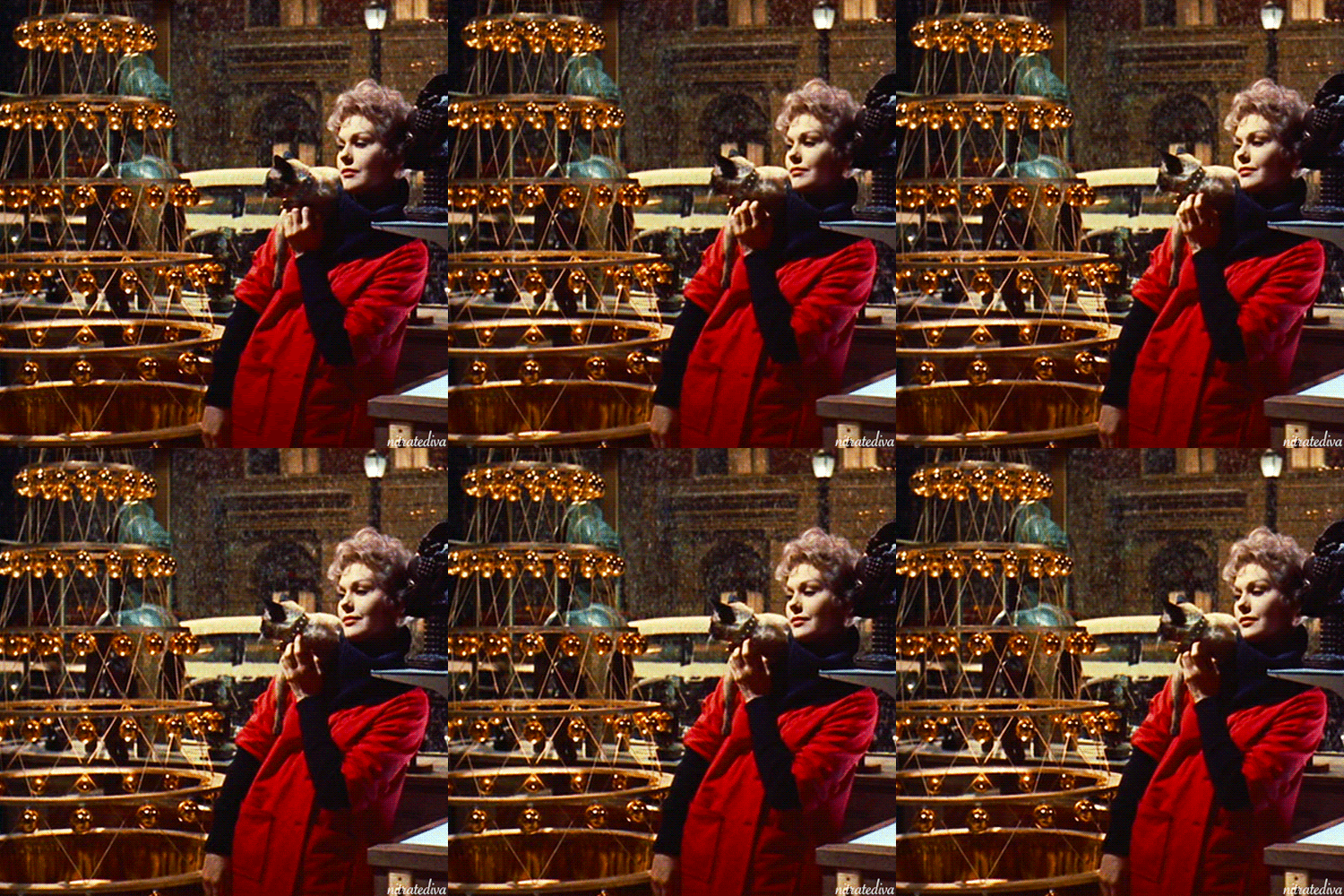
know if anyone but me considers ultra-stylish 1958 romantic comedy Bell, Book
and Candle a “Christmas movie”. It stars ethereal Kim Novak as a sultry
barefoot beatnik witch who casts a love spell on her neighbour James Stewart –
even though he’s engaged to another woman! (Yes – this represents the second
onscreen pairing of Stewart and Novak. Earlier the same year they memorably
starred together in Alfred Hitchcock’s masterpiece Vertigo!). But the action of
Bell, Book and Candle opens on Christmas Eve, the first music we hear as the
credits end is “Jingle Bells”, and the film premiered in New York on Christmas
day 1958!
The supporting cast includes Jack Lemmon and Elsa Lanchester (yes –
the Bride of Frankenstein). And for connoisseurs of chic fifties fashion and
décor, Bell, Book and Candle is a dream! In short: it’s the perfect seasonal
choice for our last film club of 2022! (If this selection elicits a sense of
“déjà vu all over again” – we tried to show it in 2020 but cancelled due to
lockdown. Then we scheduled it for Christmas 2021 but had to cancel when the
Bamboo Lounge was reserved at the last minute for a private party. Hopefully
the third attempt is the charm!).
Lobotomy Room Goes to the Movies is the
FREE monthly film club devoted to cinematic perversity! Third Thursday night of
every month downstairs at Fontaine’s bar in Dalston! Two drink minimum (inquire
about the special offer £5 cocktail menu!). Numbers are limited, so reserving
in advance via Fontaine’s website is essential. Alternatively, phone 07718000546
or email bookings@fontaines.bar to avoid disappointment! The film starts at
8:30 pm. Doors to the basement Bamboo Lounge open at 8:00 pm. To ensure
everyone is seated and cocktails are ordered in time, please arrive by 8:15 pm
at the latest.
/ Pictured: Marilyn Monroe photographed by
Ben Ross, 1953 /
Quick thoughts on Blonde (2022), Andrew Dominik’s
ultra-divisive speculative Marilyn Monroe Netflix biopic. Because you MUST have an
opinion and post it, right?
It’s not a routine biopic, thank God.
Rather, it’s a nightmarish hallucinatory swoon through the degradation and
suffering of Marilyn Monroe. In Dominik’s interpretation, Marilyn’s life was nothing
but uninterrupted relentless torment and you are forced to wallow in it. And it’s
almost three punishing hours. I persisted until the bitter end, but I was eventually
just willing it to END!
Objectively, though, this is virtuoso adventurous
film-making with moments worthy of David Lynch (one friend has compared Blonde
to Inland Empire, another to Mulholland Drive. Blonde definitely presents
Marilyn as a doomed Laura Palmer figure).
Lead actress Ana de Armas is astonishing.
The recreations of Marilyn’s onscreen performances are eerie and spectacular. De Armas’ finest moment: she’s a weeping mess
but must perform. Seated at the make-up table she “summons” in the mirror the
smiling, radiant Marilyn persona. It’s spine-tingling. But interestingly, for me
the stand-out performance is from Julieanne Nicholson as her abusive mother.
“I’m 2 hours into this Marilyn Monroe movie
and I don't know if I can make it much further. There is still 45 more minutes
of degradation to endure and I'm exhausted. What's the safe word, Daddy? The
movie is real arty and all with its play on the whole iconography and the
actress is surprisingly excellent. But if she doesn't have an Eraserhead baby
by the end of this, I'm gonna be sorely disappointed.”
Finally, I never want to see a “from-the-womb”
camera POV again. Blonde is a must for aficionados of onscreen vomiting scenes.
The Sex Symbol (1974) with Connie Stevens and Shelley Winters is a lot more fun
(and less traumatic).
October means Halloween (or “gay Christmas”
for those in the know) – which means as per tradition, this month the Lobotomy
Room film club is presenting a horror movie on 20 October. And boy have we dug
up an oddity for you this time!
Nasty, grubby, gruesome but perversely
captivating, low-budget exploitation slasher flick Dear Dead Delilah (1972) conveys
a genuinely bizarre vibe: think Southern Gothic horror as directed by William
Castle, with verbose and meandering faux Tennessee Williams-like dialogue and
scenery-chewing soap opera acting punctuated by blood-splattered decapitations.
In other words, Dear Dead Delilah has something for everyone!
Filmed on location in Nashville, Tennessee,
it stars that reliably fierce ne plus ultra of Golden Age Hollywood character
actresses Agnes Moorehead (Endora from TV’s Bewitched) in her final appearance
in the titular role of Delilah Charles, a wealthy and shrewish dying Southern
matriarch confined to a motorized wheelchair. (Moorehead herself was in
declining health and would die two years later aged 73).
Firmly in the post-What Ever Happened to
Baby Jane? hagsploitation tradition (although updated for the splatter-hungry
drive-in circuit), Delilah calculatingly references earlier films like Hush …
Hush, Sweet Charlotte (1964) (in that one, Moorehead had a secondary role as
Bette Davis’ housekeeper. Here, she gets to play the ageing Southern belle
lead) and Strait-Jacket (1964) (they share the same premise of a mentally
unstable axe murderess freshly-released from an insane asylum). When we get a glimpse of Delilah ascending in
her “personal elevator”, it can’t help but recall Katharine Hepburn in
Suddenly, Last Summer (1959) or Olivia de Havilland in Lady in a Cage (1964)!
Lobotomy Room Goes to the Movies is the
FREE monthly film club devoted to the cult, the kitsch and the queer! Third
Thursday night of every month downstairs at Fontaine’s bar in Dalston! Two
drink minimum. Inquire about the special offer £5 cocktail menu! Numbers are
limited, so reserving in advance via Fontaine’s website is essential. Alternatively, phone
07718000546 or email bookings@fontaines.bar to avoid disappointment! (Any
difficulties reserving, contact me on here). The film starts at 8:30 pm. Doors
to the basement Bamboo Lounge open at 8:00 pm. To ensure everyone is seated and
cocktails are ordered in time, please arrive by 8:15 pm at the latest.
I was in Canada (for the first time since
2017) between 31 August – 7 September. On the Air Canada flight from London to Montreal I
finally watched Aline, the notorious French-Canadian 2020 CélineDion biopic. (Even though the film’s tone is insanely worshipful, this
is an unauthorized biopic so “Céline Dion” is referred to
as “Aline Dieu.” But the Quebecoise diva’s management apparently signed-off on
the project because all her hits are used. The singing is provided by Victoria
Sio but you’d swear it was via Dion herself).
Anyway, Aline cleaves to every conventional
rags-to-riches show biz cliche. One major obstacle for the film is how to
smooth-over and make palatable Aline’s romance with Guy-Claude (Sylvain Marcel),
the much older record producer / mentor who first meets her aged nine, guides
her to stardom and then marries her once she reaches adulthood. Another
considerable downside if – like me – you’re not a fan of Dion’s power ballads is
suffering through the multiple loving recreations of Dion in concert. (Her
version of Tina Turner’s "River Deep Mountain High" is a crime against music!).
In the tradition of Barbra Streisand, French
actress Valérie Lemercier stars, writes and directs. Aline is clearly a labour
of love for Lemercier and you can’t fault her commitment. But she makes a
truly nutty creative decision that ensures Aline some degree
of Bad Movies We Love-style infamy. The 57-year-old Lemercier opts to portray Aline
throughout all her life – including early scenes as a 9-year-old and 12-year-old. Watching a wide-eyed and “Facetuned” Lemercier nibblingon a cookie is so genuinely
freaky it feels like an Amy Sedaris parody.
In a final flourish
of craziness, it ends with Aline delivering the most bombastic ballad
imaginable direct to camera, insisting she's just an ordinary woman who loves
her neighbour and just wants world peace. (It turns into a plea for humanity). In
conclusion, Aline needs to be seen to be believed. Frustratingly, it’s still
not available for streaming in the UK!
Oldshowbiz is the essential Tumblr
account of comedian turned author and astute show business historian Kliph Nesteroff devoted to “Showbiz Imagery and Forgotten History.” He regularly exhumes
a treasure trove of mid-twentieth century kitsch curiosities and obscurities – including
THIS delectable high camp bonanza.
Turns out brassy burlesque legend Gypsy Rose
Lee hosted her own talk show in the sixties (The Gypsy Rose Lee Show, 754
episodes, aired 1965–1968). As the ads exclaimed, “Gypsy is Fresh! Delightful!
Mad-cap! Cheery! Glittering! Irrepressible! Provocative! INCOMPARABLE!” The
summary for this 1965 installment: “Singer-actress Eartha Kitt talks of men and
love and singer-actress Lainie Kazan sings a tongue-in-cheek love song “Peel Me
a Grape””. Thrill as these three camp
icons let their hair (wiglets?) down and dish some “girl talk” over coffee (although my boyfriend Pal suggests their coffee cups appear empty. There’s also a bottle of champagne
on the table but it goes untouched). The episode captures intense, fiercely
glamorous Kitt around the same time she portrayed Catwoman on TV’s Batman
series, while Kazan purrs a sex kitten anthem with lyrics like “Peel me a grape
/ Crush me some ice / Skin me a peach / Save the fuzz for my pillow … Pop me a
cork, French me a fry / Crack me a nut, bring a bowl full of bon-bons …” It
culminates in the three women joining forces to belt-out Lee’s signature tune “Let
Me Entertain You.” If you weren’t gay already, you will be after watching this!
Sure, excitement is buzzing over Blonde (Netflix’s
adaptation of Joyce Carol Oates’ speculative 1999 Marilyn Monroe biography
drops on 23 September). But I doubt Blonde will be anywhere near as much fun as
The Sex Symbol (1974)!
Not streaming on any legit platform and
never issued on DVD, this thinly veiled made-for-TV roman à clef / Monroe biopic
starring kitschy sex kitten Connie Stevens surely qualifies as a “lost film”.
But a serviceable bootleg print of The Sex Symbol is currently viewable onYouTube - and I’m ecstatic to confirm it’s every bit as gloriously tasteless, exploitative
and deranged as I could have dreamed!
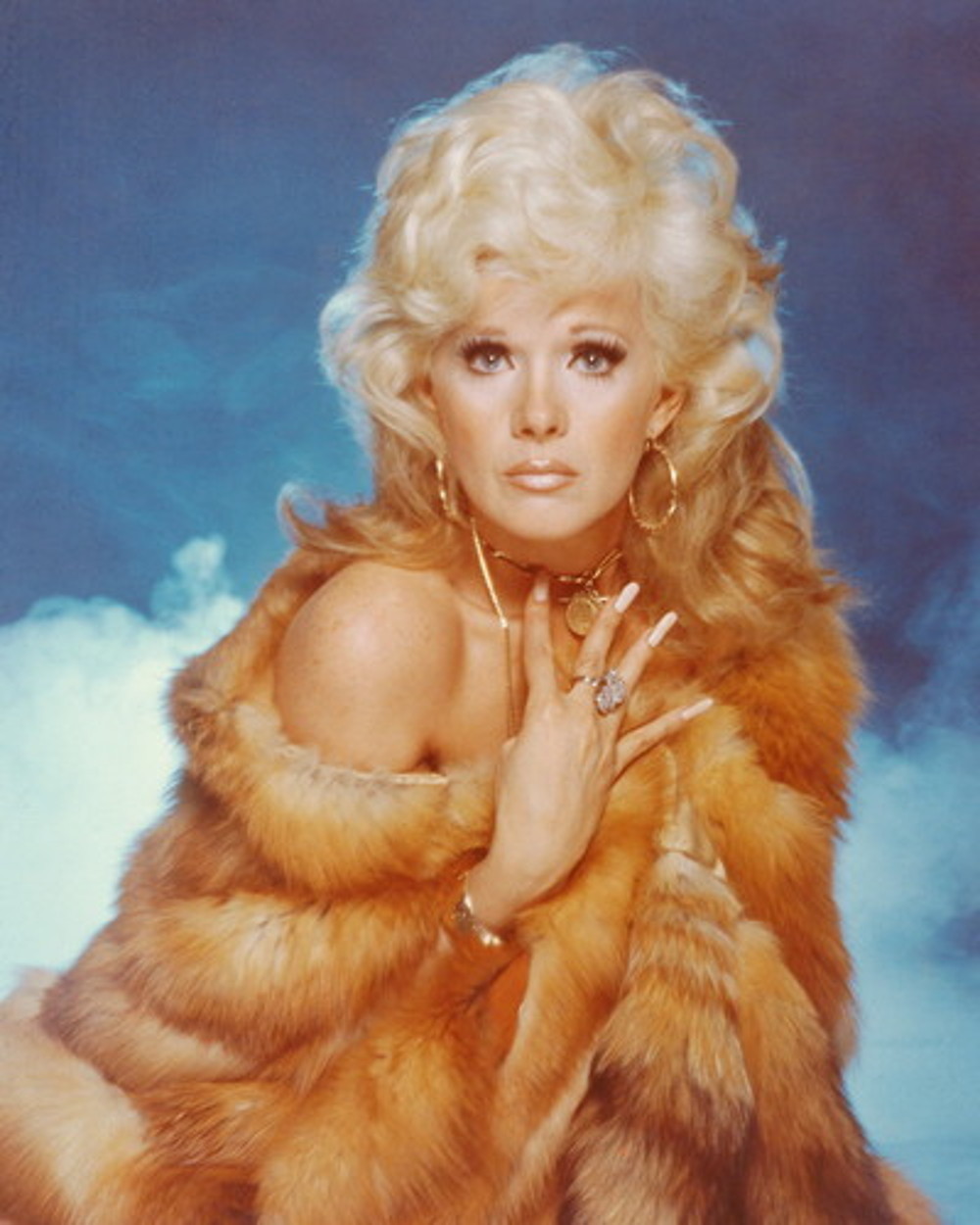
/ Connie Stevens is Marilyn Monroe. I mean, Kelly Williams /
“Agatha Murphy from golden Hollywood with
the biggest scoop 1957 has yet brought us!” jeers a vicious show business television
presenter (played by shameless hambone Shelley Winters as a hybrid of Old
Hollywood gossip columnists Hedda Hopper and Louella Parsons). “Kelly Williams,
one of the most sex-sational movie stars of our time, is through! She has been
reporting late for work or not all on the Phoenix production of Will You Be
Mine? claiming to be ill …” Williams, Murphy announces, has been fired by Nick
Fortis (Nehemiah Persoff), head of Phoenix studios. “She
fled to her Bel Air home and is reported to be secluded there near hysteria!”
“Hysteria” is an understatement! Incognito
in headscarf, dark sunglasses and white pantsuit, our ersatz Monroe Kelly
Williams pushes past the mob of press and fans gathered outside her front door.
Once safely installed inside her sumptuous purple boudoir, she sloshes vodka (or
is it gin?) into a tumbler and watches Murphy’s broadcast. When Murphy crows, “It
is such a shame that in less than ten years, a young fresh once-great beauty
has disintegrated into a neurotic alcoholic mess!” it represents the last
straw. Kelly hurls the liquor bottle at the TV screen. It shatters. “I finally
found a way to shut that Aggie’s fat ugly mouth!” Kelly screams to Joy Hudson (Madlyn
Rhue), her infinitely patient confidante and personal assistant. (Some viewers
have discerned a Sapphic aspect to the women’s relationship. Later we see Joy giving a nude Kelly a rubdown
on massage table – just what’s in her job description? – and Joy always seems
vaguely disapproving of Kelly’s gentleman callers).
Even worse, just then Agatha Murphy’s
people phone requesting an exclusive interview. “Why don’t you tell her I have
sclerosis of the liver!” Kelly screeches to Joy. “Or I’m a dope fiend! That oughta
give her a story for tomorrow!”
“You can’t keep wallowing in self-pity!” long-suffering
Joy explodes. “A dozen doctors have told you there’s nothing wrong with you
physically except you keep stuffing yourself with barbiturates and booze!”
Predictably, Kelly doesn’t respond well to Joy’s truth bomb. “Get out of here!
Don’t you tell me how to run my life! You’re nothing but a vulture, like the
rest of Hollywood! You leech!”
Cut to the delayed opening credits. Over
the Henry Mancini theme song, we see a procession of garish faux Warhol Pop Art
portraits of various doomed Hollywood Babylon-type female stars: Marilyn
Monroe. Jayne Mansfield. Veronica Lake. Carole Lombard. Betty Grable. Ann
Sheridan. Jean Harlow. Maria Montez … and finally Kelly herself.
By now it’s evident The Sex Symbol has been
made “on the cheap”. Minimal effort is taken to conjure the forties or fifties
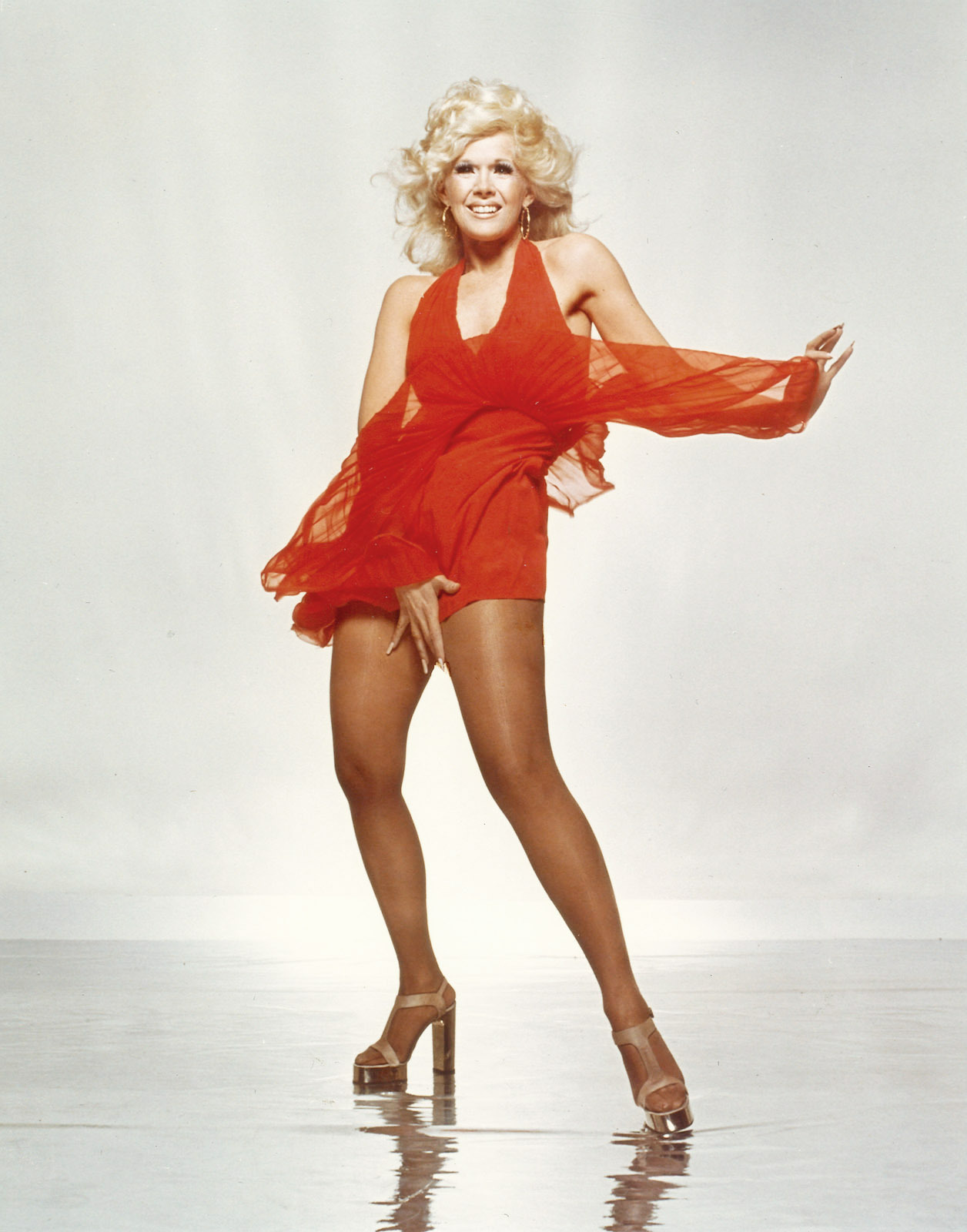
time periods. As Kelly, Stevens always resembles what she was at the time: an early
seventies Las Vegas headliner with a shaggy frosted blonde coiffure, frosted blue
eye shadow, frosted pink lipstick and costumes (and wigs and hairpieces) straight
out of a Frederick’s of Hollywood catalogue.
/ At one point, we see a flurry of "glamour shot" pin-ups of Kelly Williams, including these. Weirdly and confusingly, these exact photos would be recycled two years later to promote Stevens' subsequent film Scorchy (1976) /
The Sex Symbol’s premise is that we’re witnessing
Kelly’s dark night of the soul. In fact, the final night of her life. We’re
presumably meant to find Kelly a tragic figure, but she’s insufferable. Her
breathless baby doll voice quickly grates. Kelly rages, “Canned from one
stinkin’ movie! Anyone would think I was dead!”, swills booze, pops fistfuls of
pills, goes on crying jags and lashes out at her Spanish-speaking maid (“No!
I’m not hungry!”). Much of the time she’s in bed shrieking into a pink
telephone, like the worst-possible adaptation of Jean Cocteau’s La Voix Humaine.
In terms of acting, Stevens’ guiding principle seems to be: “Patty Duke didn’t
go nearly far enough as Neely O’Hara in Valley of the Dolls.” (Speaking of Dolls,
Kelly is pitched as Neely and Jennifer North rolled into one).And as my friend Kevin spotted, Stevens in
full rampage in her bedroom anticipates Mink Stole’s tantrums as Peggy Gravel
in John Waters’ Desperate Living (1977).
In the present, Kelly frantically phones
(harasses? Terrorizes?) the men in her life, which prompts flashbacks. The main
victim is her psychiatrist. “I don’t mean to be rude calling you at home,” she
begins. “I’m just beside myself. The studio has fired me. And that television
witch says I’m finished! You heard me complaining often enough that my first
husband claimed that I wasn’t very good in bed. Now I’m just a lush who’ll go
with any man who asks!” Kelly then becomes gripped by paranoia the doctor might
commit her into a mental institution – like what happened to her mother. “I’m
not a nobody!” she bellows. “I’m a star! I made myself a star so no one could
tell me what to do!”
Our first flashback rewinds to World War II
when pre-fame Kelly (still known as Emmaline Kelly) is toiling at an airplane
factory. This may be unchivalrous to note, but at 36 (the age Monroe died)
Stevens fails to convince in these scenes as a dewy wannabe starlet in her early
twenties. Kelly’s photo has appeared in the newspaper captioned “Miss Blowtorch
1945” and Kelly vows to her soldier boyfriend Tommy that she’ll send the pic to
modelling agencies and pursue her show biz dreams: “I got this thing burning in
me. I just gotta be someone!” Unimpressed, Tommy implies she’ll wind up
“auditioning in hotel rooms”. “I’m gonna be a star, Tom!” Kelly insists. “And
I’ll do it standing up!”
Kelly rapidly abandons this principle, because
next time we see her she’s the protegee and mistress of hot shot agent Phil
Bamberger (Milton Selzer). Clearly
modeled on Johnny Hyde (the talent agent who initially discovered and molded
Monroe), kindly and significantly older Phil is a father figure, mentor, champion
and lover. “There’s something pure about you,” Phil gushes. “It can’t be
changed or violated.” Kelly (who describes herself as “an orphan kicked around
from foster home to foster home”) confesses that one of her foster fathers did
indeed violate her, then insists, “Cuddle me!” “Go slow, kitten!” Phil
chuckles. “I’m an old man!” Worryingly, he also has a “bum ticker” – and promptly
dies of a heart attack. Before that, Phil connects Kelly with cigar-chomping
producer Jack P Harper (exploitation / horror director William Castle, who delivers
one of the better performances). “Aggie Murphy started the rumour he died in
bed with me!” Kelly wails to him.
Harper dispatches Kelly on a cross country
personal appearance publicity tour (“We’re selling a product here. A very
lovely product, I must say!” In this sequence, Stevens wears a bouffant wig
very similar to Monroe’s look in the unfinished Something’s Got to Give or the
1962 Bert Stern photo shoot - the sole time she’s styled to resemble Monroe). Kelly
is a star-in-the-making! (The titles of her films - Midnight Madness. Will You
Be Mine? Sex Bomb. Deep Purple. That Lady from Cincinnati – are hilariously
generic).
Back in the present-day, the doctor hangs
up on Kelly. Affronted, she calls him right back. “Kelly, it’s after midnight!”
“I pay you to be there to help me!” Kelly updates him that she’s she tracked
down the phone number of her long-lost biological father via the county
orphanage. Ignoring that bombshell, he counsels her, “As I’ve told you before,
you shouldn’t ever take barbiturates if you’ve been drinking!”
We watch Kelly’s first encounter with
Agatha, when the gossip maven invites the newcomer over for tea. “This industry
lives on gossip and scandal,” Agatha clucks. “You can expect to be called a
promiscuous tramp. A nympho. And even worse!” Speaking of “promiscuous tramp”, Kelly
is juggling two men: married Senator Grant O’Neal (Don Murray impersonating
John F Kennedy) and retired football star Buck Wischnewski (William Smith), a
Joe DiMaggio substitute. It’s Buck she marries, swayed perhaps when he says he does
charity work for orphanages (the news makes Kelly tremulous: “I was an orphan!”).
Their honeymoon, though, is a bust. Kelly is frigid. “Don’t you enjoy making
love with me?” Buck inquires hesitantly. “Not very much, Buck. It isn’t your
fault. It’s me. I just never … I mean, I’ll try harder next time. I’m sorry”. Kelly
inexplicably consoles Buck by serenading him with the lullaby “Hush, Little
Baby” in a little girl voice. Within minutes of announcing their marriage,
Agatha proclaims their divorce. (It lasted 10 months).
In the present, Kelly phones her manager
Manny Fox (Jack Carter), waking him up. “Jeez, do you do know what time it is?”
“What the hell do you mean do I know what time it is? I pay you ten percent to
answer the phone any time!” Afterwards, Kelly mutters to herself, “Everybody in this whole
stinkin’ town needs love. Nobody even knows the meaning of the word” while smearing cold cream onto her face.
At Agatha’s Christmas cocktail party,
Fortis introduces Kelly to “America’s greatest living artist” Calvin Bernard
(James Olson, the intellectual Arthur Miller equivalent). “You possess deep
spiritual beauty,” Calvin rhapsodizes. “You’re a great beauty. A brilliant
mind. A tremendous strength. All waiting for you to learn how to use them – and
I intend to be your teacher!” He urges her to go to New York with him: “It’s
the only civilized place to live in this country! Hollywood, California is a
vulgar mirage, but New York … you’ll see!” Cut to the newspaper headline: “Sex
Symbol to Wed Art Great.” In New York, Calvin pressures Kelly to abandon movies
to study acting and perform Chekhov and Ibsen onstage. Emboldened, Kelly dares
to complain about the quality of her latest script to Fortis. “She can’t act
her way out of a paper bag!” Fortis thunders. “Pretty face. Good rear. Great
chest. Period! She’s a piece of meat that I buy and sell just like the rest of
them!”
/ Shelley Winters, Connie Stevens and Nehemiah Persoff in The Sex Symbol (1974) /
Back in Hollywood, Kelly is invited to add her
autograph and hand prints to the Hollywood Walk of Fame outside Grauman’s
Chinese Theatre. To Calvin’s horror, in front of the assembled press she “goes
rogue” and also presses her boobs into the wet cement as observers whistle and
cheer lasciviously! (“Oh, my goodness!” Agatha swoons. “What is she doing?”).
This stunt spells the dissolution of their marriage.
Watching Kelly wash down pills at bedtime with alcohol, Calvin asks, “When
did you get on the tequila kick?” “In Mexico. On our honeymoon.” “That must’ve
been your first husband. We’ve never been to Mexico together.” “That’s right.
(Laughs). That’s funny!” Glugging it back, Kelly toasts (and mispronounces) “Salut!”
“Your ear for foreign languages is as lacking as your sense of good taste!” Calvin
mocks.
The action is catching up to Kelly getting
fired from Will You Be Mine? “What happened? Booze or an orgy?” the queen-y
disapproving director snaps as Joy guides a late and hungover Kelly onto the
set. In the make-up chair, a dazed Kelly starts applying cold cream to her
face while staring at her reflection – and then smears it all over the mirror,
obliterating herself.
That night, Kelly reaches her father by
phone – at 2 am! It’s not the reunion she hoped for. “You must have the wrong
number, lady!” “Daddy? Daddy? Daaaaad?” she howls when he hangs up. When she
calls him back later, he shouts, “Listen, you! It’s almost five in the
morning!” Abandoned by every man in her life, the end is neigh for Kelly
Williams …
Perversely, some of the participants (like Winters and Murray) in
this debacle knew the real Marilyn. Stevens’ shrill “I’m-a-victim”
portrayal never evokes Marilyn (and she’s inept in the drunk scenes). The sequence
where Kelly beguiles reporters with her ditzy blonde comedy schtick feels like
a chapter from the Jayne Mansfield story rather than Monroe’s. Stevens does,
though, recall Pia Zadora, Liz Renay, Carroll Baker in Harlow (1965), Joey
Heatherton, Catherine O’Hara parodying Joey Heatherton as Lola Heatherton – and
Connie Stevens herself! Startlingly, there’s a totally gratuitous tits-and-ass nude
scene towards the end. (The Sex Symbol received a European cinematic release
padded with bonus material, which is the version on YouTube. The original ABC cut
was one hour and 14-minutes. This one is one hour and 47-minutes). In
conclusion: The Sex Symbol is required viewing!
This month the Lobotomy Room film club (our
motto: Bad Movies for Bad People) presents for your delectation tense,
irresistibly trashy black-and-white British b-movie Passport to
Shame (1958)! See the film described by Radio Times as “a cheap, tawdry
and utterly fascinating piece of vintage sexploitation” that aims to expose the
shame of London’s prostitution rings! As a bonus: Passport co-stars 26-year-old
Diana Dors - British cinema’s reigning bad girl - at her pouting sex goddess
zenith! Thursday 28 July 2022 downstairs
at the fabulous Fontaine’s bar in Dalston! (Note: the film club is normally third Thursday of every month - but this month it got bumped to the following Thursday! Don't get it twisted!).
Lobotomy Room Goes to the Movies is the
free monthly film club devoted to the cult, the kitsch and the queer! Third
Thursday night of every month downstairs at Fontaine’s bar (Dalston's most unique nite spot)! Two
drink minimum. Inquire about the special offer £5 cocktail menu! Numbers are
limited, so reserving in advance via Fontaine’s website is essential. Alternatively, phone
07718000546 or email bookings@fontaines.bar to avoid disappointment! (Any
difficulties reserving, contact me on garusell1969@gmail.com). The film starts at 8:30 pm. Doors
to the basement Bamboo Lounge open at 8:00 pm. To ensure everyone is seated and
cocktails are ordered in time, please arrive by 8:15 pm at the latest.
Timebomb (1991)
-
*Timebomb* is a 1991 action movie with some major science fiction elements.
It might be more accurate to describe it as a techno thriller.
It was written...
NEGATIVES 1968
-
Spoiler Alert. This is a critical essay, not a review, so plot points are
revealed for discussion
*Vivien: “Something is going on, and I want to know what...
The end is near
-
Cookie has, for some time now, thought about closing up shop on this blog.
I mean DHTiSH has had a good run, but after 15 years, it's time for a
diff...
Grace Jones
-
Artist: Grace Jones
LP: 7" single
Song: "I've Seen That Face Before (Liber Tango)"
[ listen ]
The incredible Grace Jones turned 76 one month ago today. ...
National Silent Movie Day: Manhandled (1924)
-
Wednesday, Sept. 29, 2021, is National Silent Movie Day. New York City's
beloved Film Forum is celebrating with a screening of Allan Dwan's 1924
silent...
SHABLAM:
-
While we are speaking in onomatopoeia,
"Girl, what did that girl just say, girl?" This queen is giving basic boot
camp for drag queens as she throws an a...
Who was Tamara Matul?
-
[image: Marlene Dietrich, Josef von Sternberg, Rudolf Sieber, Tamara Matul
at Olympic Auditorium, Los Angeles, 1934]
Rudolf Sieber, Tamara Matul, Marlene...
-
Welcome Refugees from tumblr!
[image: Christofascists.]
I'm busy exporting what's left of Drifting over the Ether & A Long Lunch. I
will be posting upda...
My Baking Supervisor
-
Meet Mr. Caspurr Burgers. He says:
"I helped you get up three hours earlier than usual this morning and this
is how you repay me? What is with this glass...
Béatrice Dalle Day
-
'Driving south on the A7 from Lyon to Marseille, I find my thoughts turning
to some of the scenes associated with the name of Béatrice Dalle. They
incl...
A BOGUS SPEECH BY A BOGUS PRESIDENT
-
Yesterday, Obama spoke in New Orleans at the 10 year anniversary of
Katrina. I'm not quite sure why we celebrate disasters' anniversaries, but
it was a ch...
DJ. Journalist. Greaser punk. Malcontent. Jack of all trades, master of none. Like the Shangri-Las song, I'm good-bad, but not evil. I revel in trashiness