Showing posts with label melodrama. Show all posts

Saturday, 2 March 2024

The Next Lobotomy Room Film Club ... Butterfield 8 (1960) on 21 March 2024

“The John O'Hara novel that seemed perfect for the movies, plus the role that seemed perfect for Elizabeth Taylor - and this is the garish mess it became,” is how the reliably terse Pauline Kael dismissed Butterfield 8. “Daniel Mann's direction is maybe even worse than the Charles Schnee-John Michael Hayes script. With Laurence Harvey; Dina Merrill, doing a noble wife to end all noble wives; and a vacuum on the screen that is said to be Eddie Fisher.” 
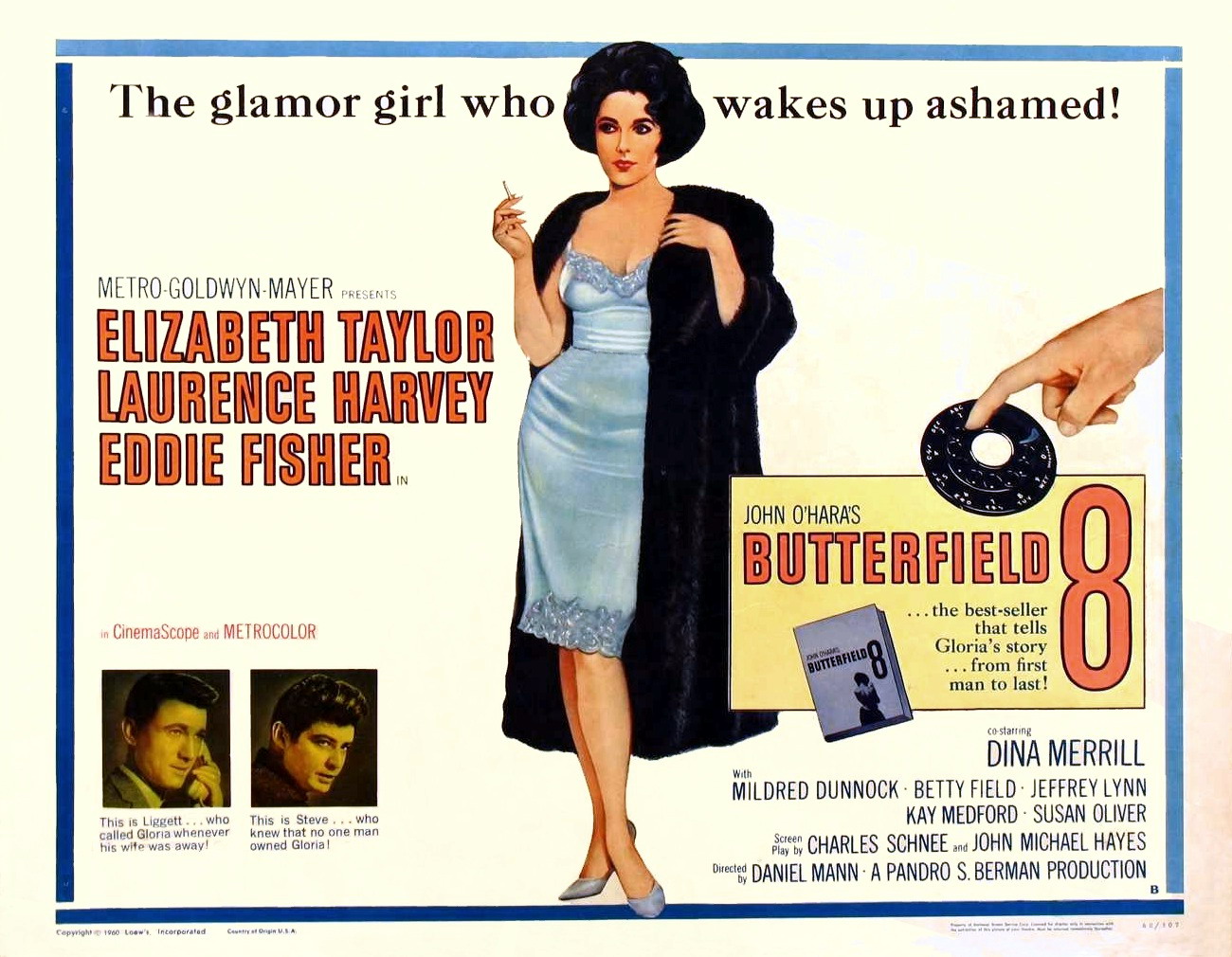
Almost no one has a good word to say about this lurid, wildly entertaining 1960 melodrama (including leading lady Taylor herself) – so of course Butterfield 8 is absolute catnip for me and it’s the March 2024 selection for the Lobotomy Room cinema club devoted to Bad Movies for Bad People! 


To its advantage: Taylor is sublime as wanton high-priced, high-class New York call girl Gloria Wandrous (tagline: “Gloria is the glamour girl who always wakes up ashamed!”). And the script co-authored by John Michael Hayes (the genius behind camp classicks (sic) Torch Song, Peyton Place, The Carpetbaggers, Where Love Has Gone and Harlow) features dialogue like “Face it, mama! I was the slut of all time!” and “I’ve had more fun in the back of a ’39 Ford than I could ever have in the vault of the Chase National Bank!” 


The opening moments alone are spellbinding: as Edward Margulies and Stephen Rebello recount in their 1993 book Bad Movies We Love, “Taylor awakens alone in her married lover’s bed, wraps herself in only a sheet, lights a cigar, drains a glass of whiskey, discovers her torn dress on the floor, brushes her teeth with booze, finds an envelope with $250 cash, scrawls “No Sale” in red lipstick across a mirror, leaves the money and instead steals the absent wife’s mink coat, calls her answering service and hails a cab to the apartment of … Eddie Fisher (by then, he was the real life Mr. Taylor).”  


So, join us on 21 March 2024 to watch Butterfield 8 over cocktails at Fontaine’s in Dalston! In my intro, I’ll provide context on Eddie Fisher leaving his then-wife Debbie Reynolds for Taylor in 1958 (the red-hot showbiz scandal of its time) and how Taylor almost dying of pneumonia helped win her a “sympathy Oscar” for her performance in Butterfield 8 in 1961! 

Lobotomy Room is the FREE monthly film club devoted to cinematic perversity! Third Thursday night of every month downstairs at Fontaine’s cocktail lounge in Dalston. Numbers are limited, so reserve your seat via Fontaine’s websiteAlternatively, phone 07718000546 or email bookings@fontaines.bar. The film starts at 8:30 pm. Doors to the basement Bamboo Lounge open at 8:00 pm. To ensure everyone is seated and cocktails are ordered on time, please arrive by 8:15 pm at the latest.


“By the odds, it should be a bomb. But a bomb it is not, let us tell you. At least, it is not the sort of thing to set you to yawning and squirming, unless Elizabeth Taylor leaves you cold. In the first place, it has Miss Taylor, playing the florid role of the lady of easy virtue, and that's about a million dollars right there. "I was the slut of all times," she tells her mother in one of those searing scenes wherein the subdued, repentant playgirl, thinking she has found happiness, bares her soul. But you can take it from us, at no point does she look like one of those things. She looks like a million dollars, in mink or in negligĂ©e. When she sits at a bar with Laurence Harvey, who is not just any Joe but a millionaire with a ten-room Fifth Avenue apartment and "caves all over town," and she lets her eyes travel up and down him, measuring not the bulge of his pocketbook but the bulge of his heart - well, all we can say is that Miss Taylor lends a certain fascination to the film. Then, too, it offers admission to such an assortment of apartments, high-class bars, Fifth Avenue shops and speedy sports cars, all in colour and CinemaScope, that it should make the most moral status seeker feel a little disposed toward a life of sin. Brandy, martinis and brittle dialogue flow like water all over the place.”  

/ Bosley Crowther reviewing Butterfield 8 in The New York Times, 17 November 1960 /


“In both Cat on a Hot Tin Roof and Butterfield 8, Taylor appears in a tight white slip that looks as if it were sewn onto her body. What a gorgeous object she is! Feminists are currently adither over woman’s status as sex object but let them rave on in their little mental cells. For me, sexual objectification is a supreme human talent that is indistinguishable from the art impulse. Elizabeth Taylor, voluptuous in her sleek slip, stands like an ivory goddess, triumphantly alone. Her smooth shoulders and round curves, echoing those of mother earth, are gifts of nature, beyond the reach of female impersonators. Butterfield 8, with its call-girl heroine working her way down the alphabet of men from Amherst to Yale, appeared at a very formative moment in my adolescence and impressed me forever with the persona of the prostitute, whom I continue to revere.” 

/ From "Elizabeth Taylor: Hollywood’s Pagan Queen" by Camille Paglia, Penthouse magazine, March 1992 /


Wednesday, 22 February 2023

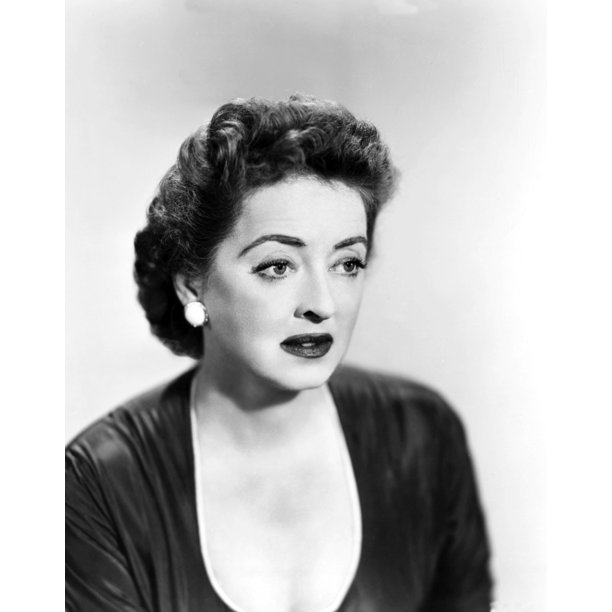
Next Lobotomy Room Film Club: The Star (1952) on 16 March 2023


/ “Never has the Hollywood story been told so frankly … so boldly … so completely! Here is every woman who ever climbed the stairway to the stars – only to find herself at the bottom, looking up!” /


/ “She fought for the power to stay on top … and almost lost the privilege and glory of being a woman!” Bette Davis and Sterling Hayden in The Star (1952) /

To commemorate “Oscar season” (full disclosure: we don’t actually care or pay attention to the Academy Awards!), on 16 March the free monthly Lobotomy Room film club presents The Star (1952)! Featuring the perennially fierce Bette Davis as Maggie Elliot, a faded fifty-something actress on the skids struggling to reignite her stalled career. “One good picture is all I need!” she screeches to her manager. Later, she confronts a parasitic sponging relative with, “Can’t you get it through your thick head that I’m broke? Dead, flat, stony broke!” 

/ “The orchids … the furs … the diamonds that were the star’s were all gone now … and nothing remained …  but the woman!” /


“ONLY Bette Davis – the star of stars – could accept the challenge of such a role! Only the WOMAN within her could find the penetrating insight to play it! ONLY the two-time winner of the Academy Award could give it such greatness!” /

The Star is comprehensively overshadowed by two other films where Davis played troubled ageing actresses: All About Eve (1950) and What Ever Happened to Baby Jane? (1952). But it’s one of my favourite unsung Davis performances and the film has an appealingly harsh low-budget ambiance that lends it a gritty almost documentary feel.  Years later, Davis herself would argue “I have always felt The Star was very underrated by critics and the public.” 

/  Davis with Sterling Hayden / 

And just wait until you see the camp highlight: slurring “C’mon, Oscar! Let’s you and me get drunk!” and strapping it to the steering wheel, Maggie takes her Academy Award for a drunken joyride - and winds up in a prison cell! (In a “meta” touch, the statuette in question is one of Davis’ own).  Rounding out the cast: Natalie Wood as Maggie’s daughter and hunky Sterling Hayden as a younger actor (who just may be Maggie’s romantic saviour …). And speaking of Oscars: Davis did get nominated for Best Actress for The Star (her ninth nomination), but she lost to Shirley Booth for Come Back, Little Sheba.
 

/ “The story of a woman who thought she was a star so high in the sky … that no man could touch her … until she was no longer … THE STAR!” /


Lobotomy Room Goes to the Movies is the FREE monthly film club devoted to cinematic perversity! Third Thursday night of every month downstairs at Fontaine’s bar in Dalston! Two drink minimum (inquire about the special offer £6 cocktail menu!). Numbers are limited, so reserving in advance via Fontaine’s website is essential. Alternatively, phone 07718000546 or email bookings@fontaines.bar to avoid disappointment! The film starts at 8:30 pm. Doors to the basement Bamboo Lounge open at 8:00 pm. To ensure everyone is seated and cocktails are ordered in time, please arrive by 8:15 pm at the latest.

Facebook event page.


To whet your appetite ... the outrageous trailer! 

Friday, 24 June 2022

Reflections on ... Summer Storm (1944)


Recently watched: Summer Storm (1944). Tagline: “The Most Beautiful Woman God Ever Forgot to Put a Soul Into!” 

“George Sanders and Linda Darnell drifting to their destruction in the best Hollywood adaptation of a Chekhov story.” 

/ Andrew Sarris in his groundbreaking essay “Those Wild and Crazy Cult Movies” published in The Village Voice in 1978 / 

“Before this adaptation of Chekhov’s 1884 novel The Shooting Party, Linda Darnell was valued for her beauty rather than her acting ability, but her role here as Olga, a peasant girl who ruins the lives of three men in her quest for wealth and social standing, relaunched her career. She’s brilliant, particularly in her wedding scene, where she is aware of the patronising scorn of the aristocrats around her, adding fuel to her plan to improve her station. George Sanders gives one of the best male performances in Sirk’s canon, as the weak judge who falls in love with Olga. The critique of the limited options available to women is pure Sirk, while there is a moment of suspense that recalls Hitchcock, when a maid sees something disturbing from her changing room. The ending, where the judge has a life-changing decision to make, shows Sirk’s eye for human fallibility at its keenest.” 

/ From Douglas Sirk: 10 Essential Films by Alex Davidson, 2016 /


I’ve always wanted to see this early Douglas Sirk curiosity, which seems to be entirely out of circulation. (Summer Storm isn’t streaming anywhere. The DVD that Cinema Paradiso sent me dates to 2009 and is probably long out of print). In the Andrew Sarris article cited above, he lists Summer Storm as a film that should be embraced by cult movie aficionados. Obviously, that never happened. It’s minor Sirk, but hell, minor Sirk is more fascinating than most filmmakers on their best day!


Monday, 22 February 2021

Reflections on ... Of Love and Desire (1963)


Recently watched: Of Love and Desire (1963). Tagline: “If you are an adult in every sense of the word, you will probably understand about Katherine and Paul – and why there were so many men in her life!” I’m using this period of enforced social isolation to explore the weirder corners of YouTube for long forgotten and obscure movies. (My boyfriend is accompanying me only semi-willingly).  

When smolderingly handsome American civil engineer Steve Corey (Steve Cochran) lands his private plane in Mexico City to work for the mine owned by wealthy industrialist Paul Beckman (Curd Jurgens) and his half-sister Katherine (Merle Oberon), Bill Maxton - the man Corey is replacing - is quick to tip him off about Katherine. "All you have to do is touch her! She goes off like fireworks!” he leers. “There were plenty of guys before me - and there'll be plenty after me." After encountering her at a chichi cocktail party (complete with a mariachi band and female guests all wearing bouffant Jacqueline Kennedy-style helmet hair), Corey is indeed sucked into Katherine’s voracious sexual web. Maybe it’s the dramatic way she descends the staircase, or how she inscrutably murmurs, “I may look like champagne – but deep down I’m scotch and soda.” Their first date, though, is cataclysmic. When it comes for the goodnight kiss, Katherine lunges at Corey’s mouth, pawing him while hungrily gasping, “Please! Please!” then takes offence at his startled response. “Did I give in too fast for you?” she demands. “Didn’t I play the game right? I didn’t set the stage right, did I? I should have turned off the lights! Put on soft music! I should have pretended longer, but just how much longer? One hour? Two?! Just what do you need to make you feel like I’m a conquest?!” 

Despite Katherine’s whiplash mood swings, transparent neediness and “scarlet” past, gallant Corey is no slut shamer and finds himself genuinely falling in love with this troubled temptress. “I like you,” he assures. “I think you deserve to be treated like a woman.” (Is Katherine glamorously neurotic? Neurotically glamorous? You be the judge!). The sun rises and church bells toll as they make love for the first time. But what’s the deal with Katherine and Paul’s oddball relationship? At the party, Paul had leaned-in and sniffed Katherine’s perfume, inquiring, “Black orchid?” in a most unbrotherly gesture. And why is he taking such an unhealthy interest in Corey and Katherine’s burgeoning romance? 

Today Merle Oberon is best remembered for portraying Cathy opposite Laurence Olivier’s Heathcliff in Wuthering Heights (1939) and for her secretive origins (during her lifetime the Bombay-born Anglo-Asian Oberon concealed her biracial identity, allegedly passing-off her sari-clad mother as her maid). In the thirties and forties Merle Oberon had been hailed as one of golden age Hollywood’s great beauties. By the early sixties, movie offers had sputtered to a halt (she hadn’t made a film since 1956) and she was residing in Mexico as a jet-setting socialite with her Italian millionaire husband.  Perhaps surprisingly, Oberon decided to resume her film career aged 53 and the result was this bizarre comeback vehicle / vanity project.  Of Love and Desire is a candy-hued, lushly appointed melodrama in a similar vein to the deluxe soap operas that producer Ross Hunter was then concocting for aging screen divas like Lana Turner and Susan Hayward. Sammy Davis Jr croons the bossa nova-tinged opening theme tune over the opening credits of lush tropical flowers. The travelogue-style footage of mid-century Mexico is gorgeous. All the key players are well into in their late forties or fifties. Oberon’s close-ups twinkle with flattering Vaseline and gauze, she sports a fabulous wardrobe (including – memorably – a bikini) and she may well be wearing her own jewelry collection. Many of the interior scenes were reportedly filmed in in Oberon’s own sumptuous Mexican hacienda. 

But what’s most unique about Of Love and Desire is its prurient focus on incestuous attraction and the agony of nymphomania. This was the era when popular culture was titillated by “oversexed women”, treating the topic as both a genuine psychological condition and an alarming social issue. In her romantic lead heyday Oberon’s roles were mainly decorative and ladylike. While her tremulous performance here isn’t “good” by most standards, there’s something undeniably gutsy about how Oberon commits to the messy, sexually insatiable Katherine. It helps that she’s partnered with rugged film noir tough guy Steve Cochran. Who couldn’t be “oversexed” near Cochran’s pheromones? A 46-year-old DILF here, Cochran is a soupçon beefier and fuller-faced than he was in the forties and fifties, but his allure is most definitely undimmed (and we get to see him in revealing swimming trunks). 

Anyway, for enthusiasts of camp Of Love and Desire teems with moments to treasure. Prepare for overwrought dialogue like, “Oh, darling! I wish I were as young as you make me feel!” Corey had commented of Katherine’s long opulent upswept beehive coiffure (clearly a wiglet): “I can’t run my fingers through it …” In response, Katherine spontaneously instructs a barber to lop it off into a perkily youthful shorter ‘do (a makeover sequence shamelessly swiped from the Audrey Hepburn film Roman Holiday). “Now you can run your fingers through my hair any time you want!” she simpers. Watch for a bathtub sequence in which Oberon daringly reveals a surprising amount of tanned naked flesh. Best of all, in a climactic moment, Katherine is overcome by self-loathing and has a psychological freak-out while in public. Running through the street and then a hotel lobby, she is horrified that everywhere she looks there are MEN ogling and approaching her (and they’re saying things like “Hey, lady!” “Is something wrong?” and “Que pasa?”). Hilariously, it culminates with Katherine becoming trapped in a revolving door. In closing: extramarital sex and female desire lead to nothing but heartache, but don’t judge nymphomaniacs – they have their reasons.

Watch Of Love and Desire here.

Further reading:

Stunningly ageist and misogynistic contemporary review of Of Love and Desire in the New York Times.

Amusing analysis (with some great pics) in the reliably great Poiseidon's Underworld blog. 


Sunday, 17 January 2021

Reflections on ... Carnival Story (1954)

Recently watched: Carnival Story (1954). Tagline: “The story of a woman’s shame!” I’m using this period of enforced social isolation to explore the weirder corners of YouTube for long forgotten and obscure movies. (My boyfriend is accompanying me only semi-willingly). 

A traveling American carnival is touring through post-war Germany. In Munich, the carnival barker Joe Hammond (Steve Cochran) encounters desperate local woman-on-the-skids Willi (Anne Baxter) when she pickpockets him. (Baxter instills Willi with an almost Joan Crawford-level lip-twisting intensity, but her German accent falters). Perversely, when Joe catches her, the attraction between them is immediate. Willi’s criminal act charms Joe (“You feel sorry for everything that wears skirts!” another character spits) - probably because Joe is an amoral conman, and he assumes Willi is a soulmate. He impulsively hires the guttersnipe to scrub dishes in the cook tent. Within no time, the circus’ new female arrival catches the eye of dashing high-diving artist Frank Collini (Lyle Bettger), who recruits Willi as his assistant, training her in the death-defying art of high-diving. Soon, Willi has swapped toiling in the cook tent to performing under the big top in a glamorous sequined leotard with the carnival’s headline act. The besotted Frank asks Willi to marry him. He’s thoroughly decent as well as handsome (Lyle Bettger’s butt and thighs look sensational in his one-piece costume), but Willi is conflicted: the suavely duplicitous Joe still exerts a powerful sexual hold over her. And it’s tinged with sadomasochism: Joe alternates between slapping Willi around and hungrily kissing her – which to be fair, seems to excite her. “Until I met you, I never knew how rotten I was!” Willi pants. “We belong together,” Joe growls back. “We’re two of a kind!” Willi is horrified, though, when Joe assures her, “We’re not going to let a little thing like you being married come between us!” With hideous inevitability, things soon spiral into jealousy, violence and tragedy … 

Filmed on location in Germany and set in the tattered milieu of itinerant carnie folk, Carnival Story is an overwrought, amusingly sordid melodrama via RKO Radio Pictures. (We see titillating glimpses of the sideshow acts, including Siamese twins, a bearded woman, a snake handler and a sword swallower – very Diane Arbus. Note Groppo the hulking mute strongman, who observes everything silently and gradually emerges as a significant figure. As Groppo, Ady Berber presages Ed Wood stalwart Tor Johnson from Plan 9 from Outer Space). Kurt Neumann’s direction is creakily old-fashioned (rapturous music crashes and swells on the soundtrack when characters embrace or erupt into fistfights). But with the depravity, homoeroticism and emotional cruelty cranked-up a few more notches, it’s weirdly easy to imagine R W Fassbinder remaking Carnival Story. (The early scenes of Fassbinder’s Fox and His Friends (1975) unfold in a low-rent German carnival). And you’ve got to love a film with dialogue this pungent: "If you were starving to death, howling for food, I wouldn't throw you a rotten bone!" “You love to wallow in the mud!” “If you touch me again – I’ll kill you!” “We’re both bad, baby … that’s why we’re good for each other!” 

Many of these lines are snarled by mid-century cinema’s supremely sexy bad boy, Steve Cochran. Carnival Story succeeds best as a “star vehicle” for the alluring Cochran, who specialized in depicting amoral anti-heroes, heels and tough guys you-love-to-hate with surprising complexity, even delicacy. A swarthy charmer with pomaded hair and an impressively lustrous chest pelt, Cochran effortlessly radiates testosterone and animal magnetism. Just try to tear your eyes off him when he’s onscreen. If you keep your expectations low, Carnival Story is the tawdriest of circus-set thrillers until a sixty-something Joan Crawford donned hot pants and top hat to play a ringmistress in Berserk (1967). Note that Carnival Story was filmed in a process called “Agfacolour”. The faded public domain print circulating online looks like it’s been overlaid with a retro Instagram filter.

Watch Carnival Story here:


Further reading: this Poseidon's Underworld blog post features an appreciation of Lyle Bettger's "ass flank."

Monday, 14 December 2020

Reflections on ... Blowing Wild (1953)


Recently watched: Blowing Wild (1953). Tagline: “Fighting wild! Loving wild!” I’m using this period of enforced social isolation to explore the weirder corners of YouTube for long forgotten and obscure movies. (My boyfriend is accompanying me only semi-willingly). 

Golden age Hollywood royalty Gary Cooper and Barbara Stanywck memorably appeared onscreen together in the justly celebrated comedies Meet John Doe and Ball of Fire (both 1941). There’s a minor but interesting collaboration the duo made much later in their careers that rarely gets cited: the frankly tawdry, hard-boiled melodrama Blowing Wild. (Don’t let the title mislead you: it’s not an exploration into the heartbreak of flatulence). Blowing Wild deserves to be better known. At its best, it reaches a fever pitch of baroque, operatic lunacy that anticipates the 1954 Nicholas Ray Western Johnny Guitar.

Cooper is Jeff Dawson, a taciturn drifter searching for employment in Depression-era South America. Dawson’s luck seems to improve when local oil baron Paco Conway (Anthony Quinn) hires him as a foreman – but sparks fly when he discovers that Conway’s wife Marina (Stanwyck) is an old flame. And the highly volatile Marina makes it extremely clear she’s still carrying a torch for him.  Even when Dawson tells her, “You’re no good, Marina! You’re just no good!” she still lunges at him for a kiss. After Dawson contemptuously brushes her lipstick off his mouth with the back of his hand, she growls, “You tried to wipe me off before - and you never could!” 

Blowing Wild boils with hints of dysfunctional perversity. Paco knocks a guy out in a fistfight while Marina (a dominatrix in jodhpurs) observes approvingly on horseback. “She likes to see me fight!” a grinning Paco assures Dawson. Later, one of the laborers confides to Dawson that Marina has a history of sleeping with Paco’s workmen. Marina sublimates her pent-up sexual frustration with reckless high-speed horseback riding. A furiously pumping oil derrick outside the Conways’ mansion (the source of their wealth) seemingly represents the couples’ inner turmoil. 

Hugo Fregonese’s direction is terse and muscular. In terms of acting and charisma, you can’t fail with a cast like this. The performances from Quinn and Stanwyck are ferocious (Cooper is his usual laconic cowboy self). As Paco the cuckolded husband, the unfailingly intense Quinn oozes swarthy machismo and a constant patina of sweat. And Stanwyck is simply majestic as hot-pool-of-woman-need Marina. When Marina cracks-up spectacularly towards the denouement (Dawson to Marina: “It makes me sick to even look at you!” Marina: “You’ll never get away from me! I won’t let you!”), Stanwyck suggests a crazed Lady Macbeth figure. And then there’s Ruth Roman in the secondary female lead as Sal Donnelly, waiting in the wings to claim Dawson for herself. A sensual and earthy actress with a distinctive nicotine-stained voice, Roman elevates every film she appears in. There’s a deliciously bitchy encounter when Marina goes to the casino where Sal works to confront her rival. (It culminates with Marina sneering, “You're a liar, a cheap little liar. What can he see in you?”). Actually, I'd happily watch a 90-minute movie of just tough broads Stanwyck and Roman exchanging insults. 


Early on, there’s one gloriously noir moment that justifies Blowing Wild’s existence: Paco roughly embraces Miranda from behind while she’s seated at her make-up table. Marina (clad in a black negligee) furiously snarls, “You smell like the gutter!” and Paco responds, “That’s just where I’ve been!”

You can watch Blowing Wild on YouTube (just ignore the Spanish subtitles):

Monday, 30 November 2020

Reflections on ... Paid in Full (1950)


Recently watched: Paid in Full (1950). Tagline: “The story of a woman’s bitter victory.” I’m using this period of enforced social isolation to explore the weirder corners of YouTube for long forgotten and obscure movies. (My boyfriend is accompanying me only semi-willingly). 

Paid in Full opens on a note of panicked urgency, instantly plunging the viewer into the action. A pregnant woman in agonizing labour and on the verge of collapse manages to drive herself to the hospital on a stormy night. We learn that she’s Jane Langley (portrayed by magnetic film noir queen Lizabeth Scott). Due to life-threatening medical complications, Jane must undergo an emergency cesarean, but the dilemma is stark: either mother or baby will survive – but not both! Jane is asked for the father’s identity so the hospital can contact him, which prompts a flashback to explain just how we got to this crisis point. 

The luminous Scott alternated between bad girl (Dead Reckoning (1947), Too Late for Tears (1949)) and good girl (The Strange Love of Martha Ivers (1946), Desert Fury (1947), Pitfall (1948)) roles with equal conviction. But calling the supremely virtuous, long-suffering Jane Langley “good” barely beings to cover it! Jane, you see, is hiding a painful secret (actually, multiple painful secrets – but that doesn’t become apparent until later). Her mother died tragically after giving birth to Jane’s little sister Nancy (foreshadowing alert!). Dutifully stepping into the maternal role, Jane raised Nancy herself. As adults, Jane is a clothing designer and Nancy (Diana Lynn) is a model who sashays around a department store showroom flourishing her sister’s creations. Jane is secretly, unrequitedly in love with Nancy’s fiancĂ©, dashing advertising executive Bill Prentice (blandly handsome Robert Cummings. He’s like a walking ad for Brylcreem). In fact, Bill is so oblivious he rehearses his marriage proposal spiel on Jane! Stoically swallowing her heartbreak, Jane wishes the couple well. Did I mention that toxic Nancy is a spoiled rotten, selfish little bee-yatch? (Kudos to Lynn, who imbues Nancy with an almost Gloria Grahame-like surly petulance. Jane’s unwavering devotion to the undeserving Nancy has echoes of the Joan Crawford / Ann Blythe dynamic in Mildred Pearce (1945)).  


Paid in Full positions Nancy as the glamorous, sexually irresistible-to-men sister, whereas unlucky-in-love, married-to-her-career, always-the-bridesmaid singleton Jane is meant to be comparatively plain. But this is relative! Paid in Full is, after all, a golden age Hollywood production, and Jane is portrayed by the impossibly sultry Scott (Oh! That raspy voice!), who is exquisitely costumed (by Edith Head) and coiffed throughout. (In fact, the willowy Scott better resembles a fashion model than Lynn. Like her contemporary Lauren Bacall, Scott’s entryway into films was via modelling). The ever-sardonic Eve Arden offers comic relief as Tommy Thompson, Jane’s wise-cracking gal pal and work colleague. But Tommy also serves as a warning to Jane. As Bill cautions, Tommy “waited too long to get married. Now she’s too eager.” 

/ This smiling threesome is wildly unrepresentative of Paid in Full /

Mid-century melodramas routinely romanticized the notion of a woman’s noble self-sacrifice. Paid in Full stretches this to the point of lunacy. The film begins as an absorbing if conventional romantic triangle.  After a shocking and hideous tragedy occurs towards the end, the tone of Paid in Full goes full-tilt nuts, with Jane tipping into complete martyrdom and masochism. (The full significance of the title gradually becomes horribly apparent!). As a social document of its era, Paid in Full offers some fascinatingly archaic attitudes towards conceptions of matrimony, motherhood, fertility and “spinsterhood.” Watch the film here: 


Saturday, 26 September 2020

Reflections on ... Wild is the Wind (1957)


/ Anthony Franciosa and Anna Magnani in Wild is the Wind /

Recently seen: Wild is the Wind (1957). Tagline: “A storm raged within them … his wife and the boy he called his son!” I’m using this period of enforced social isolation to explore the weirder corners of YouTube for long forgotten and obscure movies. (My boyfriend is accompanying me only semi-willingly). 


/ Anna Magnani and Anthony Quinn in Wild is the Wind /

I’ve never heard anyone say a good word about Wild is the Wind. The film dates from the mid-fifties period when volcanic Italian screen diva Anna Magnani (7 March 1908 - 26 September 1973) had achieved such international acclaim that Hollywood imported her for a series of English-language American movies (the most successful was the Tennessee Williams adaptation The Rose Tattoo (1955), for which she won the Best Actress Oscar). Wild is the Wind – Magnani’s second Hollywood effort - feels weirdly forgotten and unloved today, which is a shame as it’s an absorbing, deeply enjoyable family melodrama notable for exceptional acting (Magnani and Anthony Quinn were both nominated for Academy Awards for their performances). It also represents an interesting departure for George Cukor, usually celebrated as a cosmopolitan “woman’s director”: this is a rough-hewn, hard-scrabble naturalistic rural realm of farmers and horses (we see a lamb being born with documentary realism), and with an equal emphasis on male and female heartbreak. 


Anthony Quinn is Gino, a widowed middle-aged Italian American sheep rancher in rural Nevada. He goes to Italy to bring back a new wife from “the old country”: Gioia (Anna Magnani), who happens to be the sister of his late wife Rosanna. The newlyweds are almost instantly embroiled in tension: brusque Gino is simultaneously controlling and neglectful towards Gioia, and still fixated on the memory of Rosanna. Suffering from culture shock and initially unable to speak English, Gioia feels stifled living on the isolated ranch. To considerably further complicate things, a powerful attraction ignites between Gioia and sensitive Bene (Anthony Franciosa), the strapping young farmhand Gino has raised like a son. 


/ The torment of Magnani: Gioia grows to resent constantly being compared to her late sister Rosanna /


Quinn exudes brutish machismo and wounded sensitivity as Gino (although he admittedly lays on the cliched Italian mannerisms a little thick). Wild is the Wind is an ideal star vehicle for she-wolf Magnani (who – coincidentally – died on this day 47 years ago) and Cukor showcases her beautifully. With her disheveled mane of hair and soulful “I-haven’t-slept-in-a-week” eye bags, she looks gloriously ravaged. Watch Magnani seethe with inner torment! She’s a rampaging torrent of raw Mediterranean emotion! Although Magnani has some poignant quiet moments too – and even gets to huskily warble a traditional Italian ballad in a party scene. Magnani is, of course, a fiercely sensual presence, but the film’s primary sex object is gorgeous Anthony Franciosca. His ass looks majestic in tight jeans, and Cukor’s appreciative camera ensures you notice it. The alluring Italian American actor was married to Shelley Winters at the time, but off-screen he and Magnani enjoyed a torrid fling during the production of Wild is the Wind. In addition to Magnani, during his marriage to Winters the serially unfaithful Franciosca had affairs with Ava Gardner and Lauren Bacall. While I don’t condone adultery, I can’t say I blame them!


Postscript: Magnani and Quinn were due to reunite for the 1959 film Black Orchid. Due to Magnani’s unavailability, the female lead went to another Italian actress – Sophia Loren. Then at her luscious sex goddess pinnacle, Loren’s innate glamour had to be downplayed with a frumpy all-black wardrobe of shapeless shawls, cardigans and sensible flat shoes to portray a downtrodden working-class widow. While Loren is genuinely good in Black Orchid, it would have been undeniably fascinating to see Magnani tackle the part. Eventually Magnani and Quinn would be partnered onscreen again in The Secret of Santa Vittoria (1969).  

Watch Wild is the Wind here:


Further reading:

My analysis of what I would argue is Anna Magnani's definitive role - Mamma Roma (1962). 

Saturday, 25 July 2020

Reflections on ... Flame of the Islands (1956)


Flame of the Islands (1956) shares the same basic premise as many another fun kitschy film: a brassy libidinous good-time girl (usually some variation of “nightclub singer”, which is Old Hollywood shorthand for “scarlet woman”) rocks-up in some torrid exotic locale and her mere presence - and disruptive sexuality - can’t help but wreak havoc. Think of Marlene Dietrich in Seven Sinners (1940), Rita Hayworth in Miss Sadie Thompson (1953) or any number of Jane Russell vehicles like His Kind of Woman (1951), Macao (1952) or The Revolt of Mamie Stover (1956).


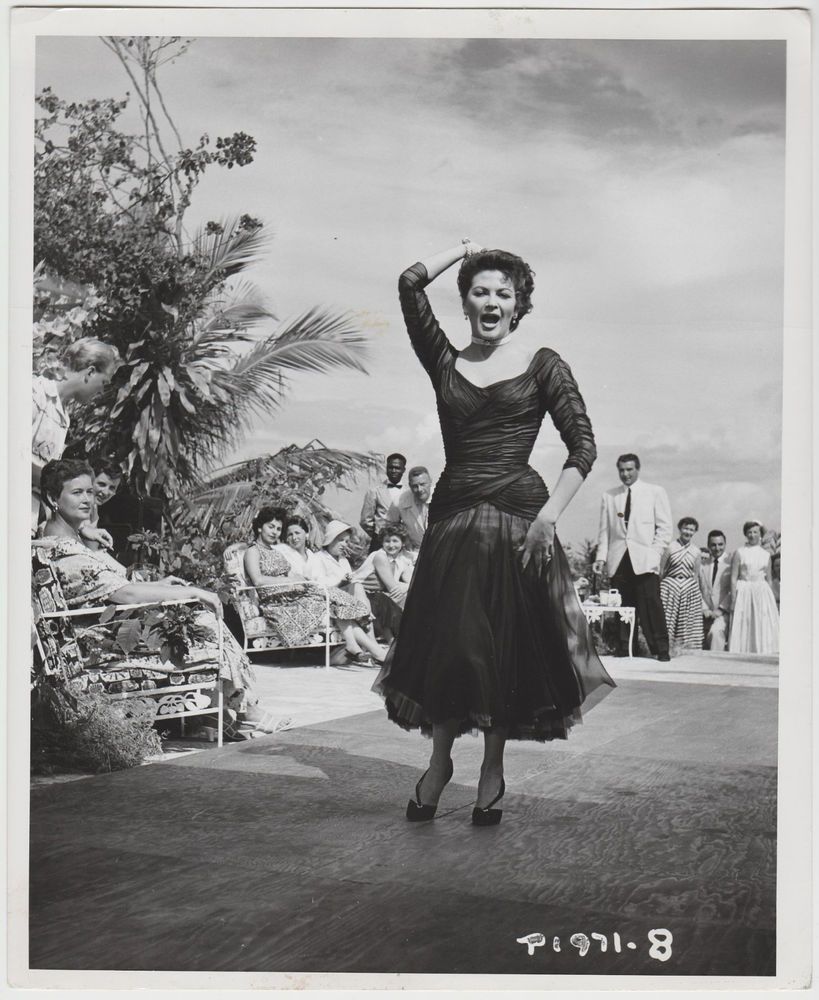
In fact, it’s easy to picture Russell in the lead role in Flame of the Islands, a lurid 1956 melodrama via poverty row Republic Pictures. (Synopsis: "An ambitious, sultry cabaret singer invests in an upmarket club in the Bahamas and tries to rekindle an old romance"). But I’m glad the part went to that other sublime atomic-era brunette sex goddess Yvonne DeCarlo (the future Lily Munster), who had comparatively fewer opportunities to shine than Russell. Flame certainly makes for a persuasive showcase for DeCarlo’s allure. She’s a tough, sensual and glamorous presence as hard-boiled heroine Rosalind Dee. DeCarlo gets to sing (she has two high-camp calypso musical numbers, one of which is entitled “Bahama Mama”), emote (including a convincing drunk scene), carry the burden of a painful secret in her past (she has multiple identities: Rosalind Dee is really Linda Darcy!), fight-off unwanted romantic overtures from multiple men (seen today, these look alarmingly like sexual harassment) and tenaciously pursue the man she really loves, complete with spectacular wardrobe changes (watch for a fluffy white angora sweater that Ed Wood Jr would covet). 


/ French language poster for Flame of the Islands (1956) /


/ Zachary Scott and Yvonne DeCarlo in Flame of the Islands (1956). Photo via /

And Flame is filmed in Republic Studio’s signature glorious Trucolour process, the poor man's Technicolour. (If you’ve seen Nicholas Ray’s perverse and operatic 1954 Western Johnny Guitar, you’re au fait with the wonders of Trucolour). The better-than-life colours (like the blue of a swimming pool, DeCarlo’s ice-pink dress) really sizzle. In fact, for a relatively low-budget film, Flame is a gorgeous viewing experience. Because the action is set in the Bahamas there are lots of heavenly bamboo Tiki moderne-style interiors (DeCarlo's minimalist bungalow is all rattan furniture, tropical prints, sprays of gladioli and a jungle of cheese plants). And some of the action takes place over Christmas, so you get to see what tropical Tiki mid-century Christmas decor is like. (Watch for the silver aluminum tree). Even though the main characters seemingly spend a hell of a lot of time in front of "green screens" (and when they get in a car, it's rear projection a-go go), Flame was definitely filmed on location in Bahamas, which makes for a sun-kissed  and idyllic backdrop.


/ Photos via /

It must be noted: Flame is a product of its era. For a film set in the Bahamas, it’s entirely apathetic about the actual Bahamian populace, who are confined to the margins in servile roles - usually carrying a tray of cocktails - throughout. I cringed when DeCarlo’s housekeeper (filmed from behind) warns her about the dangers of voodoo. The only time we see black faces in close-up is when a group of adorable little black boys sing “Yes Jesus Loves Me” at a church service on the beach. And of course, when DeCarlo warbles her calypso numbers she adopts faux-Jamaican patois - cultural appropriation alert!


/ Rosalind scandalizes the snobby local blue bloods by bustin' out a raunchy musical performance at the Christmas cocktail party! / 


/ Above: Yvonne DeCarlo and Howard Duff in Flame of the Islands /

Howard Duff is pallid as Doug Duryea, the rich boy from an entitled old money background who broke DeCarlo’s heart years before years - and who she yearns to reunite with. The reliably intense character actress Barbara O'Neil (aka Scarlett O’Hara’s mother in Gone with the Wind) wrings maximum drama from every second she’s onscreen as Duff’s heart attack-prone, needy and neurotic socialite mother Charmaine. Of course, Charmaine is mortified that her son is entangled with a disreputable nightclub chanteuse with a scandalous past. There are delicious incidences where her hoity toity high society matron friends give DeCarlo horrified, disapproving “well I never!” glares. 


/ You might remember scene stealer par excellence Barbara O'Neil from supporting roles (usually as brittle, bitchy mothers) in films like All This and Heaven Too (1940) and Angel Face (1952) / 

Lanky James Arness is ruggedly handsome as Reverend Kelly Rand (those broad shoulders! Those tousled blond curls! That lantern jaw!). The scene where Kelly takes DeCarlo marlin fishing on his boat - with blatantly fake and mismatched use of stock footage - is one of Flame’s kitsch highlights. Best of all, that consummate lounge lizard and mustache role model Zachary Scott plays Wade Evans, DeCarlo’s gay best friend who tags along for the adventure. At least, that’s how Wade comes across in Scott’s campily indolent performance. Watch for Scott’s sartorial zenith in one sequence where he lounges in a red-and-white striped Breton shirt with pink trousers. Fiercely chic! With its jolting lurches in tone and unexpected narrative twists (there's an entire confusing organized crime subplot I haven't even touched on), Flame of the Islands represents the irresistible acme of juicy, pulpy and garish fifties b-movie melodramas. It hypnotized me into a trance of pleasure! 


/ A flaming Zachary Scott lounging in Flame of the Islands (1956). Photo via /

Watch Flame of the Islands here! But remember ...


... it's not suitable for children!